



Organic 10-10-10 Fertilizer: What It Is, When to Use It, and What's Actually Better

Short answer: a true organic 10-10-10 fertilizer is rare. Organic ingredients let go of their nutrients slowly, through soil biology, so honest organic feeds usually land somewhere lower and lopsided — 4-3-2, say. Getting to an even 10-10-10 nearly always takes added synthetic salt.
And for most home gardens, that balanced number is answering a question your soil never asked. Feeding the microbes gets you further.
If you've ever stood in the garden aisle squinting at a bag of 10-10-10 fertilizer, wondering what those three numbers even mean — and whether there's an organic version that won't dump chemicals all over your tomatoes — you're in good company. This one lands in my inbox constantly. Twice last week, actually.
So let's take it apart.
What Does 10-10-10 Mean on Fertilizer?
Those three numbers on the front of every bag are the NPK ratio. They tell you the percentage by weight of the three nutrients plants burn through fastest.
- N — Nitrogen: drives green, leafy growth.
- P — Phosphorus: supports roots, flowers, and fruit.
- K — Potassium: the all-around toughness nutrient, for stress and disease resistance.
So a bag of 10-10-10 is 10% nitrogen, 10% phosphate, 10% potash. Equal thirds, which is where the words "balanced" and "all-purpose" come from.
Now do that math with me. Ten and ten and ten is thirty. Which leaves seventy percent of the bag as… what, exactly?
Filler. Mississippi State Extension says it right out loud — the inert material is in there so the granules spread evenly instead of clumping in your spreader. Which is a perfectly good reason, honestly. It just startled me the first time I sat down and did the arithmetic, and I've never quite unseen it since.
If you want to get better at reading the rest of the label, I went through it line by line in how to read an organic fertilizer label.
Is There Really an Organic 10-10-10?
A few products do print organic 10-10-10 on the front. I've held them. They're just uncommon, and there's a reason for that.
Real organic ingredients — worm castings, feather meal, kelp, fish — don't hand their nutrients over on day one. Something living has to break them down first. That's the whole point, that's what keeps it gentle, but it also means a genuinely organic feed usually comes in low and uneven. 4-3-2. 3-2-2. Numbers in that neighborhood.
So here's what I do standing in the aisle: flip the bag over. If the front is shouting "organic" and the back is showing numbers that big and that even, somebody added synthetic salt to get there. Check whether it's actually certified or just borrowing a word that isn't regulated on the front of a bag. For a look at how wide that gap can get on a name everybody knows, I pulled apart what's really in Miracle-Gro.
I read spec sheets for years before I ever bottled anything, and I still read fertilizer labels the way other people read the back of a cereal box. My husband considers this a personality flaw. But it does mean I've noticed the pattern: high, even numbers and the word "organic" don't often share a bag.
When Should You Use 10-10-10 Fertilizer?
I'm not going to sit here and tell you 10-10-10 is evil. It's a tool, and it does what it says. My gripe is how often it gets grabbed for a job it isn't actually doing.
| 10-10-10 can help when… | But watch out because… |
|---|---|
| You want a quick, even boost across a whole yard | Most soils aren't low on all three nutrients at once |
| You don't have a soil test and want "something general" | Without a test you may pile on phosphorus your soil already has plenty of |
| You need fast green-up before an event | Synthetic salts can burn roots and run off into waterways |
That middle row deserves more room than a table cell gives it.
Oklahoma State Extension has an image for this that I've never been able to shake. A faucet dripping into a bowl. Season after season of complete fertilizer, drip, drip, and phosphorus builds up in the soil profile until the bowl overflows. Past that point your plants can't touch it. It just leaves — down the driveway, into the storm drain, and then it goes and feeds algae in the water instead of feeding anything you planted.
There's a creek about four blocks from our house. My kids have been wading in it since they could walk. So no, this one isn't theoretical for me. I got into it more in fertilizer runoff solutions, and made the bigger case in 5 reasons to stop using synthetic fertilizers.
The fix here is boring and cheap, which is probably why nobody does it. Get a soil test. Twenty-some dollars and a couple weeks, and then you actually know what your dirt is short on instead of guessing at it in an aisle. I compared the mail-in kits against a real lab in DIY vs. lab soil testing, because they are not the same thing and the cheap ones will tell you so if you read the fine print.
The upshot: if your soil is only hungry for nitrogen, a balanced bag hands it a pile of phosphorus and potassium it never asked for, and you paid for all three.

What Can You Use Instead of 10-10-10?
Here's the thing that changed how I garden, and it took me an embarrassingly long time to come around to it. Plants don't eat numbers. They trade with microbes.
My daughter was about six months old, sitting in the grass while I pulled weeds, and I turned around to find her with a fist halfway in her mouth and dirt smeared across her chin. Any parent knows that specific jolt. She was fine — the pediatrician was very kind about it — but I'm an engineer, and I couldn't put the question down. What had she just eaten? What is actually in the dirt in my own backyard?
That question ate about two years of my life. The short version is that healthy soil isn't really dirt at all. There's a whole population living down there, bacteria and fungi and a few things I'd genuinely never heard of, and they feed plants better than anything I know how to mix.
A few of the jobs they handle that no bag of 10-10-10 can:
- Nitrogen out of thin air. Azospirillum and Rhizobium pull nitrogen straight out of the atmosphere and pass it to the root, on the plant's schedule rather than yours. It's the nitrogen cycle, running for free, in your beds.
- Phosphorus that's already down there. This is the one that surprised me most. Most soils are sitting on plenty of phosphorus, it's just chemically locked up where roots can't reach. Microbes release organic acids that pry it loose. A review in Biotechnology Advances puts Pseudomonas, Bacillus, and Rhizobium among the strongest solubilizers going. Rahnella and Acinetobacter do it too.
- Bodyguard duty. Trichoderma and Pseudomonas physically crowd out the organisms that cause root rot. They get to the real estate first.
- Growth signals. Strains like Bacillus subtilis produce actual plant hormones. Not nutrients — instructions.
Which is the whole reason Plant Juice exists in the shape it does. It's a CDFA Certified Organic liquid biofertilizer built on worm castings, and I sent it out to an independent lab called BiomeMakers because I wanted somebody who doesn't work for me counting what's in the bottle. Report CUX005, if you ever want to look it up.
They found 291 species. Of those:
- 80% contribute to nitrogen release
- 84% produce auxin (IAA), the hormone behind root and shoot growth
- 82% make ACC deaminase, which is how plants shrug off drought and transplant shock
- 27% solubilize phosphorus that's already in your soil
- 56% show antifungal or biocontrol activity against root pathogens
What that adds up to on a Saturday morning is this: you're not measuring anything. No pounds per thousand square feet, no worrying that you went heavy and cooked the roots. You mix it into the watering can and water like you were going to anyway.
If you're wondering how that stacks up on speed against a synthetic bag — because it's a fair thing to wonder — I ran the comparison in organic vs. synthetic fertilizer speed.
Skip the NPK guessing game
Plant Juice feeds your soil's living biology so your plants get what they need, when they need it. CDFA Certified Organic. Gentle enough for every watering.
Shop Plant Juice — from $19.95
How to Actually Feed Without a Balanced Bag
Fair question at this point — if you're skipping the all-purpose bag, what does a normal week even look like? Less complicated than the bag version, is the honest answer.
- Every week or two through the growing season. Mix it into the watering can, water as usual. The full rhythm is in the Elm Dirt feeding schedule.
- Pots are their own animal. They dry out faster and flush nutrients out the bottom every time you water. More on that in feeding plants in pots and planters.
- Lawns don't want what garden beds want. Different plant, different appetite. Here's what actually works on an organic lawn.
- Spring vegetables get a little extra attention. Start with the best organic fertilizer for spring vegetables.
No calculator anywhere in that list, which I consider a feature.
Real Gardeners, Real Results
I could talk soil biology until everybody's eyes glaze over. I'd rather let our gardeners say it.
Charlotte P.
"I cleared the rich ground and set out to have a butterfly & bee garden. After 10 days or so they all seemed happy; still, they looked very tired. The "cat whiskers" especially; it hadn't had any bloom since planting. I gave all these shown a healthy dose of Elm Juice...They're fortified! What a joy to behold how they've responded."

Gina W.
"Elm Dirt is a wonderful product! My plants have never looked better or grown so robust and shiny. Elm Dirt has helped with new growth and prevents bug infestations. This is the best product in my green house. It wont burn your plants like other plant foods do."

Timothy M.
"I have never had tomato roots grow out of the pot as strong as this. This stuff is amazing, it definitely makes root production much faster then miracle grow. I love it."

Lisa C.
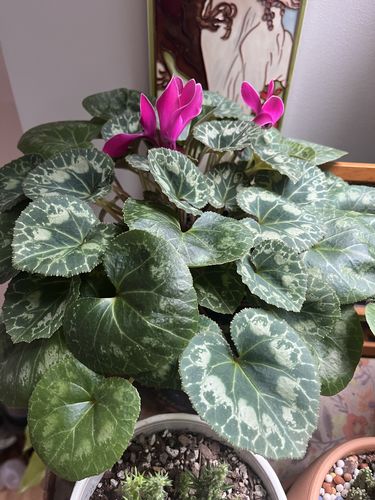
"I give all my indoor plants (over 175 plants) & outdoor gardens Elm Dirt Plant Juice. My exotic, succulents & cactuses receive a weekly watering with the juice. Every plant is pushing new growth & is healthy thriving. This Cyclamen has been receiving weekly (as directed) waterings. She has flowered recently & I am delighted how healthy she has progressed."
So, Should You Buy Organic 10-10-10?
If you turn up a genuinely certified organic 10-10-10 and you've got a soil test in hand telling you you're low across the board, then sure. Buy it. That's the situation the product was built for and there's no shame in it.
But most of us aren't running acreage. We're growing tomatoes and zinnias and a windowsill full of green things we've given names to. For that, hunting down a perfectly balanced number is solving a problem we don't actually have — and it costs money and sometimes costs the creek.
Get the biology right and the soil does the feeding for you. That arrangement was running a long time before any of us started buying fertilizer in bags.
If you want to keep going: my beginner's guide to organic fertilizer is the ground floor, liquid vs. granular sorts out the format question, and if tomatoes are your whole personality in July, here's how to fertilize tomatoes organically.
Frequently Asked Questions
Is there a true organic 10-10-10 fertilizer?
A few exist, but they're rare. Organic ingredients release their nutrients slowly, through soil life, so they usually land on lower, uneven numbers like 4-3-2. An even 10-10-10 punch almost always means synthetic salt was added to get there.
What do the numbers 10-10-10 mean on fertilizer?
They're the NPK ratio — percentage by weight of nitrogen, phosphate, and potash. A 10-10-10 bag is 10% of each, and the other 70% is filler that helps the granules spread evenly.
When should I use 10-10-10 fertilizer?
It's built for an even, all-around boost when you don't have a soil test telling you what's low. The catch is that most soils aren't short on all three at once, so you can end up adding phosphorus your garden never needed — and phosphorus that builds up eventually runs off into waterways.
What can I use instead of 10-10-10 fertilizer?
Feed the soil biology that makes nutrients available in the first place. Plant Juice carries 291 verified microbial species: 80% help release nitrogen, 84% produce auxin growth hormones, and 27% unlock phosphorus that's already sitting in your soil. No excess salt.
Will Plant Juice burn my plants like synthetic 10-10-10 can?
No. Synthetic 10-10-10 is concentrated salt, so overdoing it can scorch roots and yellow the leaves. Plant Juice is a gentle, CDFA Certified Organic biofertilizer. Pour a little heavy and you're still just feeding soil biology.

Lauren started Elm Dirt after her 6-month-old daughter grabbed fistfuls of dirt and ate them. As a chemical engineer and a mom, she couldn't just shrug it off, so she dug into the science of what's really in our soil. What she found led her to build a fertilizer line around beneficial microbes instead of synthetic chemicals. Today Elm Dirt's products are used by home gardeners, rose show champions, and organic growers all across the country.