



Rahnella: The Little-Known Bacteria That Releases Phosphorus and Zinc From Soil

Most of the phosphorus and zinc sitting in your soil right now? Your plants can't touch it. Not because it's missing. It's there, usually plenty of it. It's just locked up in mineral compounds that roots can't pry apart on their own. That drove me a little nuts when I first worked it out, as a chemical engineer and as somebody who just wanted her tomatoes to quit sulking.
Which brings me to a little bacterium named Rahnella. Nobody talks about it. You won't see it on a fertilizer label or in most gardening books. But what it does with that locked-up phosphorus and zinc is worth knowing, so let's give it a minute.
And if you've been feeding your plants and still ending up with yellow leaves, runty growth, or tomatoes that won't set fruit — locked nutrients are probably part of why. Rahnella is part of how you fix it.
First, Why Does Soil Lock Up Nutrients in the First Place?
This one took me a while to get, and I have a chemistry degree. We tend to picture soil nutrients like a gas tank — either there's some in there or there isn't. Soil doesn't work that way.
Phosphorus is one of the most chemically reactive elements in soil. It bonds readily with calcium, iron, and aluminum to form compounds like hydroxyapatite, strengite, and variscite — none of which your plant roots can directly dissolve. Research published in Soil Biology and Biochemistry estimates that up to 95% of soil phosphorus exists in these insoluble or slowly soluble forms at any given time.
Zinc has a similar problem. In alkaline soils especially, zinc binds to carbonates and oxides and essentially disappears from the plant's perspective. You can have soil with technically "adequate" zinc levels on a test report and still have zinc-deficient plants. I see this all the time in questions from gardeners who are doing everything right and still can't figure out why their tomatoes are struggling.

What Is Rahnella, Exactly?
Rahnella is a genus of Gram-negative bacteria in the family Yersiniaceae, most commonly represented by the species Rahnella aquatilis. (The name comes from D.J. Rahn, an early microbiologist — I always love knowing where these names come from.) It's a facultative anaerobe, which means it can function with or without oxygen, making it adaptable to a range of soil conditions.
It shows up naturally in healthy soil, in the zone right around plant roots (the rhizosphere), in river water, even in some foods. It's not a lab invention. It's been doing this job in good soil for a very long time — we've only recently gotten the tools to actually watch it work.
Rahnella is what's called a phosphate-solubilizing bacterium, or PSB — a group of soil microbes that evolved ways to dissolve mineral phosphates roots can't use. Plenty of bacteria can do a little of this. What makes Rahnella stand out is how well it does it, and everything else it throws in alongside.
How Rahnella Unlocks Phosphorus: The Chemistry Behind It
Stick with me on the mechanism for a second. It's the whole reason building soil biology beats just dumping on more synthetic fertilizer.
Rahnella releases phosphorus from mineral bonds primarily through two pathways:
1. Organic Acid Production
The bacteria produce and secrete organic acids — gluconic acid, citric acid, and oxalic acid are among the most documented. These acids lower the pH of the immediate soil environment around the root zone and, more critically, they donate protons that displace phosphate ions from their mineral bonds. Think of it like a tiny chemical key that fits the lock holding phosphorus in place.
A 2020 study in Frontiers in Microbiology documented Rahnella aquatilis producing gluconic acid at levels sufficient to solubilize significant concentrations of tricalcium phosphate — one of the most common insoluble phosphate forms in soil. That's not just theoretical. It's measurable, reproducible, and it happens right in your plant's root zone.
2. Phosphatase Enzyme Secretion
Beyond mineral phosphorus, there's also a massive pool of organic phosphorus in soil — trapped in decomposing plant matter, fungal biomass, and other organic compounds. Rahnella produces phosphatase enzymes (particularly acid and alkaline phosphatases) that break down these organic phosphorus compounds into plant-available inorganic phosphate.
This is huge for vegetable gardeners and anyone amending soil with compost or worm castings. You're adding organic phosphorus, but the question is always: can your plants actually access it? With active phosphatase-producing microbes in your soil, the answer is yes — and much faster than waiting for slow passive decomposition.
And the Zinc? That's Where It Gets Even More Interesting
The zinc story is a little different but equally important. Rahnella has been studied specifically for zinc solubilization — a trait that's actually relatively rare among soil bacteria and makes this genus particularly valuable.
The same organic acid production mechanism that frees phosphorus also helps mobilize zinc from zinc oxide (ZnO) and zinc carbonate (ZnCO₃) — the forms zinc most commonly gets locked into in neutral to alkaline soils. The acids complex with zinc ions, pulling them into soil solution where roots can actually take them up.
Research published in journals focused on plant-microbe interactions has demonstrated measurable zinc solubilization by Rahnella strains isolated from rhizosphere soils, with effects on plant zinc uptake that translate to real growth differences. Penn State Extension has documented that zinc deficiency affects everything from enzyme activity and chlorophyll synthesis to pollen viability in fruiting crops — so this isn't a minor nutrient we're talking about.
If you've ever grown corn that looked pale and stunted, or had tomatoes with poor fruit set, or noticed your young vegetable seedlings with oddly distorted small leaves — zinc deficiency is a very real possibility, and Rahnella is one of the microbial tools that directly addresses it.

What Rahnella Does Beyond Nutrients
Rahnella isn't a one-trick pony, either. The research points to a few other things it does for the soil ecosystem beyond phosphorus and zinc, and they're worth a mention:
Plant growth hormone production. Some Rahnella strains have demonstrated the ability to produce indole-3-acetic acid (IAA), a form of auxin that directly stimulates root cell elongation and branching. More root surface area means more nutrient uptake — so Rahnella's contribution compounds. (Our BiomeMakers lab report for Plant Juice showed 84% auxin/IAA production capacity across the microbial community — pretty remarkable.)
Biofilm formation in the rhizosphere. Rahnella forms biofilms — essentially structured microbial communities — around plant roots. This isn't a problem; it's actually protective. These biofilms create a zone of biological activity right where the plant needs it most, and they can help exclude pathogenic organisms from root surfaces.
Interactions with other beneficial microbes. Like most soil bacteria, Rahnella doesn't work alone. It functions best as part of a diverse microbial community where different species handle different jobs. This is exactly why I built Elm Dirt products around biodiversity, not just adding one strain of one species. A single inoculant with one or two microbes is like hiring one employee to run an entire factory.
Why Most Gardens Are Rahnella-Depleted (And It's Not Your Fault)
Here's the part that actually bothers me: a lot of how we garden now has quietly wiped out the very microbes that make nutrients available in the first place.
Synthetic fertilizers, especially high-phosphorus ones, actually suppress phosphate-solubilizing bacteria like Rahnella. When plants don't need microbes to acquire phosphorus (because it's being handed to them in soluble form via synthetic fertilizer), the microbes that evolved to provide that service get outcompeted and decline. This is part of why I wrote about the real costs of synthetic fertilizers — the soil biology damage is real and cumulative.
Soil disturbance from tilling also breaks apart the fungal networks and microbial colonies that bacteria like Rahnella depend on for habitat. Add in pesticide runoff, compaction from foot traffic, and the sheer lack of organic matter in many suburban soils — and you've got conditions where beneficial bacteria simply can't establish and thrive.
The good news is that soil biology is remarkably resilient when you give it the right conditions. You can turn this around. And you don't need to be a chemist to do it.
Rahnella and the Bigger Picture: Your Soil's Microbial Team
One of the things I love about soil microbiology is that no single microbe works in isolation. Rahnella is part of a community — and the community is what makes a garden truly functional.
Think about how phosphorus-solubilizing bacteria work alongside nitrogen fixers like Azospirillum and Rhizobium. Pseudomonas putida, another species we cover in our Pseudomonas spotlight, handles biocontrol and also contributes to phosphorus cycling. Bacillus species (see our Bacillus post) produce a completely different set of enzymes that break down organic matter, releasing nutrients that Rahnella can then help mobilize.
This is why our BiomeMakers lab-verified Plant Juice contains 291 microbial species — not because more is always better (though diversity does matter), but because each group handles different functions in a healthy soil ecosystem. Rahnella handles nutrient solubilization. Flavobacterium handles organic matter decomposition. Trichoderma handles fungal pathogen suppression. And on and on.
When all those players are present and supported, your soil runs itself. That's the goal. Less work for you, better results for your plants.
Put Living Soil Biology to Work for Your Plants
Plant Juice is a CDFA Certified Organic liquid biofertilizer verified by BiomeMakers to contain 291 microbial species — including phosphorus-solubilizing bacteria that unlock the nutrients already in your soil. From $19.95.
Shop Plant Juice →Signs Your Plants May Be Dealing With Phosphorus or Zinc Lockup

I get a lot of emails from gardeners describing symptoms they can't figure out. A lot of them come down to nutrient availability — not nutrient absence. Here's what to look for:
Phosphorus deficiency signs:
- Purple or reddish coloring on the undersides of leaves (especially in tomatoes and peppers)
- Dark green foliage that looks almost too saturated
- Poor root development in seedlings
- Delayed flowering and fruit set
- Slow overall growth even in otherwise healthy-looking plants
Zinc deficiency signs:
- Interveinal chlorosis on young leaves (yellowing between the veins, veins stay green)
- Small, distorted, or abnormally narrow leaves
- Very short internodes — leaves clustered close together on the stem
- Poor fruit set in corn, tomatoes, and beans
- Delayed maturity
Here's the tricky part: these symptoms can overlap with other nutrient issues, pH problems, and even overwatering. But if you've ruled out the obvious stuff and your soil test shows adequate phosphorus and zinc "present," the problem is almost certainly availability — and that brings us right back to soil biology.
How to Actually Support Rahnella and PSB Populations in Your Garden
This is the practical part. You don't need to go buy some single-strain Rahnella inoculant (those are expensive and often don't survive well anyway). What you need is to build the conditions where these bacteria can thrive as part of a diverse community.
Stop using high-phosphorus synthetic fertilizers. I know it feels counterintuitive, but bombarding your soil with soluble phosphorus tells your plants they don't need PSBs — so the PSB population crashes. Organic phosphorus sources and biofertilizers give microbes a reason to exist. You can read more in our guide to synthetic vs. organic fertilizers.
Add organic matter consistently. Worm castings, compost, and aged mulch feed the microbial community and create the habitat structure PSBs need. Our Ancient Soil worm castings are Class A certified and loaded with microbial-feeding organic compounds — a great companion to any liquid biofertilizer.
Reduce tillage. Even just switching from full tilling to shallow cultivation protects the fungal networks and microbial colonies that anchor populations like Rahnella. Our soil health guide goes deeper on this.
Inoculate with a diverse living biofertilizer. This is where a product like Plant Juice earns its keep. It introduces a verified community of 291 microbial species into your soil with every application, supporting the conditions where phosphorus-solubilizing bacteria including Rahnella-type organisms can flourish alongside nitrogen fixers, biocontrol agents, and growth-hormone producers.
Keep soil moisture consistent. Most beneficial soil bacteria are sensitive to drought stress. Mulching around plants and watering consistently (especially in raised beds, which dry out fast) keeps the microbial community active. Check out our article on organic vegetable gardening for practical moisture management tips.
What Our Customers Are Seeing
I could talk science all day — and clearly I do — but the real proof is in actual gardens. Here's what real customers have shared:

My Gala apple tree suffered catastrophic root damage after a late-winter wind storm this February: tragically, its third "blown over" incident since I planted it five years ago. Hoping its tap root was still intact, I uprighted it, repaired its tie-down supports, pruned away damaged branches, and fed it B1 with rooting hormone. It gave me "proof of life" in March with a few scattered, tiny leaves...

This ivy has struggled to live. I've done everything I know to keep it alive. (I received this when my mother passed away) I've been ready to throw in the towel until I found your website. I read all the reviews and thought I'm going to try it. It was a bit pricey but I wanted to give it a shot. The reviews were saying awesome things about the product. Well: they are true all true.
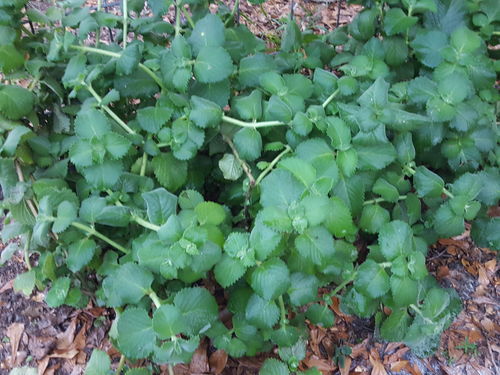
This product took my pale, struggling organic Cuban Organo Plant to a prize winning specimen. I utilized 1 oz of both (Elm Dirt Plant Booster & Bloom Booster) per gallon of non-chlorinated water, two times a week for 8 weeks in the ground through foliar feeding. Of course a healthy plant requires more watering, as the microorganism activity & digested amino acids is what restored this plant.
The Synthetic Fertilizer Trap (And How Rahnella Is Part of Breaking It)
When I started Elm Dirt, I wasn't trying to crank out one more bottle of organic plant food. I was trying to fix a problem I could see at the molecular level: the phosphorus cycle is broken in most home gardens, and synthetic inputs make it worse the longer you lean on them.
Every bag of synthetic 10-10-10 you apply gives your plants phosphorus this season. But it does nothing to build the biology that would make phosphorus available next season, and the season after that, and indefinitely — without you constantly buying more inputs. That's not a conspiracy theory; it's just chemistry and business incentive working in the same direction.
Bacteria like Rahnella represent the alternative: a self-sustaining system where your soil biology does the work of nutrient mobilization, you feed the biology with organic matter and minimal disturbance, and your plants thrive without you becoming dependent on a fertilizer subscription forever.
That's the kind of garden I wanted for my own family. It's what I want for yours too.
Frequently Asked Questions About Rahnella and Soil Nutrients
Rahnella bacteria solubilizes (dissolves) bound phosphorus and zinc that are locked in soil mineral compounds, making them bioavailable to plant roots. It does this by secreting organic acids and enzymes that break mineral bonds.
Yes. Rahnella aquatilis is a naturally occurring soil bacterium with no known plant pathogenicity. It's found in healthy soils, river water, and plant rhizospheres worldwide and is safe for vegetables, flowers, and indoor plants.
The best way is to apply a living biofertilizer containing diverse beneficial microbes, reduce synthetic fertilizer use, add organic matter regularly, and minimize soil disturbance. Elm Dirt Plant Juice is a CDFA Certified Organic liquid biofertilizer verified by BiomeMakers to contain 291 microbial species, which supports a rich microbiome environment where phosphorus-solubilizing bacteria can thrive.
Phosphorus binds tightly to soil particles, especially in clay soils or soils with high calcium or iron content. Even if you've added phosphorus fertilizer, much of it can become chemically unavailable within days. Microbes like Rahnella release organic acids that break these chemical bonds and free the phosphorus for plant uptake.
Zinc deficiency commonly shows up as interveinal chlorosis (yellowing between leaf veins) on young leaves, stunted growth, small distorted leaves, and poor fruit set. Tomatoes and corn are especially sensitive to zinc deficiency. If your soil test shows zinc is "present" but these symptoms appear, availability — not absence — is likely the issue.
Ready to Unlock What's Already in Your Soil?
Plant Juice brings 291 lab-verified microbial species to your soil — bacteria that fix nitrogen, solubilize phosphorus and zinc, produce plant growth hormones, and fight off disease. CDFA Certified Organic. Starting at $19.95.
Shop Plant Juice → Explore Ancient Soil →