



Container Garden Fertilizer: Feeding Plants in Pots & Planters

Here's something most gardeners don't realize until their pots start looking sad: container plants are essentially on their own. Cut off from the bigger soil ecosystem, they depend entirely on you to keep them fed. No earthworms migrating in to stir things up. No deep root systems reaching for nutrients. Just the finite amount of soil inside that pot—and whatever you give it.
I learned this the hard way back when I first started gardening. My patio tomatoes looked okay for about six weeks, then just... stopped. Yellowing leaves, no fruit set, just kind of hanging on. Turns out I was treating my container garden exactly like my in-ground beds. Big mistake. Pots need a whole different fertilizing approach. So let's talk about what actually works—especially if you're trying to keep things organic and safe.

Why Container Plants Need More Fertilizer Than In-Ground Plants
This surprises a lot of gardeners, but it makes total sense once you think about it. Every time you water a container—which should be pretty often—some nutrients get flushed right out the drainage holes. In a garden bed, those nutrients stay in the soil profile and get recycled. In a pot, they're gone.
On top of that, most potting mixes start with very little inherent nutrition. They're designed for drainage and aeration, not feeding. And even the ones with added fertilizer? That runs out faster than the bag suggests, usually within 4–6 weeks. After that, your plant is basically surviving on whatever was dissolved in your water. (Not much.)
What this means practically:
- Container plants need fertilizing 2–4x more frequently than in-ground plants
- Slow-release granular fertilizers alone usually aren't enough for pots
- Liquid fertilizers work especially well because they reach roots quickly through the limited soil volume
- The bigger the plant relative to the pot, the faster it depletes nutrients
Choosing the Right Container Garden Fertilizer
Walk into any garden center and you'll find a wall of options. It's genuinely overwhelming. Here's how I think about it—especially for parents and health-conscious gardeners who want to avoid synthetic chemicals near food or kids.
Liquid vs. Granular for Pots
Both can work, but liquid fertilizers have some real advantages for containers. They absorb into the limited root zone quickly, you can dial up or down the concentration easily, and there's no risk of salts building up in your soil the way some granulars can cause. Granulars are great as a slow-release base, but liquid fertilizers are almost always part of the picture for serious container growers. I wrote a whole breakdown on this if you want the full picture: Liquid vs. Granular Fertilizer: Which is Right for Your Garden?
Synthetic vs. Organic
Synthetic fertilizers deliver nutrients fast, sure. But here's the thing—they do nothing for the soil biology that helps your plant actually use those nutrients. In a container, where the soil ecosystem is already limited, this matters even more. You can end up with a cycle where you keep adding more fertilizer because the soil biology isn't there to help absorb it efficiently.
Organic fertilizers—especially ones that contain living microbes—actually build the biology in your container soil. Over time, a living pot of soil outperforms a chemically-fed pot every single season. See what's really at stake: What Gardens Using Synthetic Fertilizer Are Missing.
And if you're growing vegetables or herbs in those containers? Organic is an easy call. You're literally eating what those plants produce. No need to add synthetic chemicals to something you're going to serve at dinner.

How Plant Juice Works Differently in Containers
I want to talk about Plant Juice specifically here, because it's what I reach for first with all my container plants—patio pots, indoor planters, window boxes, the whole lot.
Plant Juice is a CDFA certified organic liquid fertilizer built around 291 species of living beneficial microbes, verified by third-party BiomeMakers lab testing. That's not marketing language—that's a laboratory report confirming what's actually in the bottle. These aren't just nutrient molecules; they're living microorganisms that go to work in your soil.
Here's why that's a big deal for containers specifically:
- Azospirillum bacteria fix atmospheric nitrogen directly—so your plant gets a constant trickle of nitrogen even between feedings
- Pseudomonas putida and other phosphorus-solubilizing microbes unlock nutrients already in your potting mix that the plant couldn't access on its own (27% phosphorus solubilization rate, per BiomeMakers testing)
- Mortierella fungi improve how roots absorb water and nutrients—especially important when you've got a limited root zone in a pot
- 80% of strains in Plant Juice support inorganic nitrogen release, meaning nutrients get delivered right when the plant needs them
Basically, you're not just feeding the plant—you're building a tiny living ecosystem inside the pot. One that gets more efficient over time rather than needing more and more input. Here's what that looks like in real life:
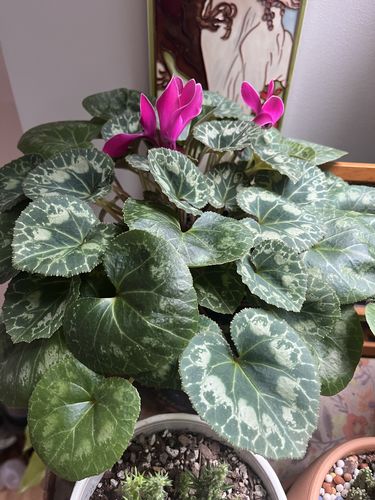
I give all my indoor plants (over 175 plants) & outdoor gardens Elm Dirt Plant Juice. My exotic, succulents & cactuses receive a weekly watering with the juice. Every plant is pushing new growth & is healthy thriving. This Cyclamen has been receiving weekly (as directed) waterings. She has flowered recently & I am delighted how healthy she has progressed. I advise all my friends & plant community by this weekly routine. I've also had a recently repotted well established fairy castle cactus that I nurtured with plant juice watering & she is revived, healthy & going strong. Thank you Elm Dirt for your continued commitment of sharing your knowledge & magic with us consumers. I will continue to give my plants the opportunity to thrive to the best of their potential by giving them the cleanest, healthiest nourishment from Elm Dirt Plant Juice.
Ready to try a fertilizer that actually builds your container soil?
→ Try Plant Juice for Your ContainersWhen to Use Bloom Juice for Flowering Containers
If you've got flower pots, window boxes, or hanging baskets—or if you're growing tomatoes, peppers, or cucumbers in containers—this section is for you.
Plant Juice handles overall growth and root health beautifully. But flowering and fruiting plants have a different set of needs. They require more phosphorus and potassium during bloom time, and they benefit from specific microbes that actually trigger the flowering process itself.
That's what Bloom Juice is designed for. It contains 192 microbial species specifically selected to support blooming, with biological signals that cue the plant to shift energy toward flowers and fruit. Not sure which one to use when? I put together a detailed comparison here: Plant Juice vs. Bloom Juice: Which One Does Your Garden Need?
The way I use them together in containers:
- Early in the season / vegetative stage: Plant Juice every 1–2 weeks
- As plants approach bloom / active flowering season: Switch to Bloom Juice, or alternate between the two
- For heavy producers like tomatoes: I'll sometimes apply Bloom Juice at every other watering during peak season
Because both are organic and gentle, there's no real danger of overdoing it—the worst case is a little wasted product. That's a lot more forgiving than synthetic fertilizers, which can burn roots if you apply too much.

A Simple Container Fertilizing Schedule That Actually Works
I know schedules can feel complicated, but this one really isn't. Here's what I do with my own containers and what I recommend to folks who are just getting started. (For a full year-round breakdown, check out our Elm Dirt Feeding Schedule.)
Spring (when you're potting up or plants are waking up)
Mix some Ancient Soil worm castings into your potting mix—about 20–25% by volume. This gives you a slow-release organic base and jumpstarts soil biology from day one. Then start with Plant Juice within the first week of planting. For more on getting potting mix right, see: Best Potting Mix for Indoor Plants and Best Soil Amendments for Containers.
Growing Season (late spring through summer)
Apply Plant Juice every 1–2 weeks at the dilution on the bottle. For flowering plants and vegetable containers, introduce Bloom Juice as plants set buds. Water containers deeply so the liquid fertilizer reaches the full root zone—shallow watering means shallow roots and shallow feeding.
Mid-summer (when containers start looking tired)
This is usually when chemical fertilizers have either built up to toxic levels or been completely flushed out. Organic liquid fertilizers don't have this problem. Just keep up your regular schedule. If a plant looks stressed, you can apply Plant Juice twice a week for a couple of weeks to help it bounce back. See also: Summer Garden Fertilizer Guide.
Fall (winding down)
Taper off as temperatures drop and plants slow their growth. Indoor container plants can continue on a lighter schedule year-round—roughly once every 3–4 weeks through winter when light and growth slow down. More on that: Winter Indoor Plant Care.
Real Gardeners, Real Containers
I love hearing from gardeners who've figured out the container thing. Here are a couple that stuck with me.

This was a calathea plant which I had never had an experience with before. I've been growing plants since I was a kid with my great grandmother "Granny" who could grow anything in the world and I kind of got her green thumb But this plant has been a challenge! I thought I was going to lose it but as you could see It's getting a new leaf And hanging in there.. So I am thrilled to death! And I have seen a change in all of my other house plants and succulents and it's only been about a month so I am completely satisfied..don't particularly care for the smell but it dissipates quickly thankfully. I have been leaving comments on all the plant pages that I follow on Facebook like when someone's complaining about their plants not doing so good, I have been leaving a comment recommending the the elm dirt plant juice because it really makes a difference!!
This year we decided to add 3 more grow boxes and plant a lot more vegetables. I was worried about what to fertilize them with since most products have chemicals in them and we wanted to raise organic food. Then I saw Lauren on Instagram talking about the plant juice! I was soooo excited I immediately bought some and started using it on our garden, bushes, trees and flowers. (And have made several more purchases since.)
I believed Lauren when she talked about her product and how good it was for Mother earth. I have not been disappointed! Besides our great results I feel good about not putting any more chemicals in our soil.
Thank you so much Lauren for developing something that is going to enable us to grow food that is NOT full of chemicals. That just makes me so happy!!!
Common Container Fertilizing Mistakes to Avoid
I've made all of these. Just saving you the trouble.
- Skipping fertilizer entirely the first season. "The potting mix has fertilizer in it" is true for about 6 weeks. After that, you need to step in.
- Using too much synthetic fertilizer. Salt buildup is a real problem in containers. You'll see it as a white crust on the soil or pot edges. It damages roots. Organic fertilizers don't do this.
- Applying fertilizer to dry, stressed soil. Always water your containers first, then apply liquid fertilizer. Roots absorb nutrients much better when they're not in drought stress.
- Same fertilizer year-round regardless of plant stage. Leafy growth needs different nutrition than blooming. Match your fertilizer to what the plant is actually doing.
- Ignoring container size. A small pot with a big plant depletes faster. Upsize the container if you can, or fertilize more frequently.
- Not knowing how much to use. Unsure about quantities? Our Elm Dirt Coverage Guide has you covered.
Are Organic Fertilizers Safe for Kids and Pets Around Containers?
This comes up a lot, especially from parents who are growing edibles or who have little ones running around the patio. The short answer is yes—Plant Juice and Bloom Juice are both certified organic and made without synthetic chemicals. No harsh salts, no toxic runoff, nothing you'd worry about if a curious toddler patted the soil afterward. (Though obviously we'd prefer they don't eat it.) More on this: Pet-Safe Fertilizers for Your Garden.
This was actually one of the original reasons I started Elm Dirt. My own daughter ate some garden dirt as a baby—and that moment made me really think about what was in the soil I was using and what I was adding to it. I didn't want synthetic chemicals anywhere near her, and I didn't want to be nervous every time she played in the yard. Building a fertilizer around living soil biology instead of synthetic chemicals just made sense to me as a mom and as a chemical engineer.
If you're a parent growing tomatoes in a pot on the back deck, or herbs in containers on a windowsill, organic container fertilizer isn't just the "natural" option—it's genuinely the smarter and safer one.
Frequently Asked Questions About Container Garden Fertilizer
- How often should I fertilize container plants?
- During the active growing season (spring through summer), fertilize container plants every 1–2 weeks with a liquid organic fertilizer like Plant Juice. This is more frequent than in-ground plants because watering flushes nutrients out of pots quickly. In fall and winter, reduce to once every 3–4 weeks or stop entirely as growth slows.
- Can I use the same fertilizer for all my container plants?
- A good all-purpose organic fertilizer like Plant Juice works well for most container plants. For actively flowering plants or fruiting vegetables, consider adding Bloom Juice during bloom time—its microbial blend is specifically formulated to trigger and support flowering. Succulents and cacti need far less fertilizer than tropical plants or vegetables.
- What's the best fertilizer for vegetable container gardens?
- For edible container gardens, organic liquid fertilizer is ideal. Plant Juice provides broad nutrition and living microbes that support healthy root development, while Bloom Juice supports flowering and fruit set. Because you're eating the harvest, avoiding synthetic fertilizers with harsh chemicals and salt buildup is especially important in vegetable containers.
- Can I overfertilize container plants with organic fertilizer?
- It's very hard to damage plants with certified organic liquid fertilizers like Plant Juice or Bloom Juice. Unlike synthetic fertilizers that can burn roots with salt buildup, organic fertilizers release nutrients slowly and gently. If you apply a little more than recommended, the main downside is that you've used more product than necessary—not that you've harmed your plants.
- Do indoor houseplants in pots need fertilizer?
- Yes! This is one of the most overlooked aspects of indoor plant care. Most houseplants in pots eventually deplete the nutrients in their potting mix, yet many plant parents only water and never fertilize. A light application of organic liquid fertilizer every 3–4 weeks during spring and summer can dramatically improve growth and leaf color in houseplants.
The Bottom Line on Container Garden Fertilizer
Your pots and planters are a closed system. They need you to show up and feed them—more consistently than in-ground beds, and ideally with something that actually builds soil health rather than just dumping nutrients and walking away.
Organic liquid fertilizer, especially one built around living microbes, is the easiest, safest, and honestly most rewarding way to do that. You put a little in with your watering. The microbes go to work. Your plants start to look like someone actually cares about them. (Because you do.)
Whether you've got a full patio setup, a few herb pots on a windowsill, or a single beloved fern in the living room—feeding them well doesn't have to be complicated. Just consistent.
Ready to give your container plants what they've been missing?
Plant Juice is CDFA certified organic, loaded with 291 verified microbial species, and backed by thousands of home gardeners who've seen the difference.
→ Shop Plant Juice → Shop Bloom Juice