



Halloween Garden: Spooky Plants That Are Actually Useful

The best Halloween garden plants look spooky and also do a job. French marigolds suppress root-knot nematodes in the soil and feed late pollinators. Dark edible cultivars like 'Black Beauty' tomatoes, purple basil, 'Bull's Blood' beets, and 'Redbor' kale bring gothic color that you can eat. Garlic and ornamental alliums add folklore and flavor. Pumpkins feed you first and then feed the compost pile. Skip truly poisonous plants like foxglove, monkshood, and datura where kids or pets play.
By mid-October my garden looks a little witchy from the street. Purple kale going ruffly, marigolds the color of a traffic cone, seed heads I never got around to cutting back. I'd love to call that artistic vision. About half of it is.
I do love a spooky garden, though. What I can't stand is a plant that's only there to look pretty and then needs constant babysitting, because I'm an engineer and I get twitchy about anything that costs more than it gives back. So if something in my beds looks like it came off a haunted cottage porch, it had better be doing a second job underneath.
Most of the good ones are.
We're about five weeks from Halloween as I write this. In Kansas City the first frost tends to sneak in sometime in the back half of October, which doesn't leave a lot of runway, so I've split this into what you can still set out now and what's worth planning for next year.
What's in this guide
- Why a spooky garden is secretly a smart garden
- Marigolds: cheerful flower, dark job
- Black and blood-red plants you can eat
- The witch's-cabinet herbs and alliums
- Truly gothic plants (and a pet safety chart)
- Pumpkins: the useful centerpiece
- Feeding your Halloween garden
- Real gardeners, real results
- Frequently asked questions
Why a Spooky Garden Is Secretly a Smart Garden
Something I didn't appreciate until I started reading plant chemistry for fun (yes, that's a thing I do): the features that make a plant look creepy almost always exist for a practical reason.
- Near-black leaves are loaded with anthocyanins, the same pigment family that turns blueberries blue.
- That strong smell on marigolds and sage? Defense chemistry, mostly aimed at whatever wants to chew on them.
- Weird pods and dried seed heads are just next year's seed, packed up and waiting.
So "spooky" is often another word for "tough." I'll take tough in a bed I don't want to fuss over.
Marigolds: The Cheerful Flower With a Dark Job
Nobody looks at a marigold and thinks "sinister." They're basically orange pom-poms. But they've been the flower of the dead for centuries (they cover the altars for Día de los Muertos), and what they get up to underground is kind of ruthless.
French marigold roots (Tagetes patula) leak a compound called alpha-terthienyl into the soil around them. Lab work shows it gets through the outer skin of root-knot nematodes and damages them from the inside. Those are the microscopic worms that swell tomato and pepper roots into lumpy knots.
I have to put an asterisk on this, though. The nematode effect only comes from living roots that are actively growing, and a Journal of Nematology study found the results can be hit or miss. University of Florida's extension folks suggest planting them thick, for at least two months, ahead of whatever crop you're trying to protect.
Which means the marigolds you pop into a pot this week are there for color and the last few bees of the year. Want the pest payoff? Plant a dense strip next summer right where the tomatoes are going.
- For nematodes: French marigolds, crowded together. Three lonely plants at the end of a row won't do much.
- For October color: grab potted ones at the garden center and set them out now.
- Where they fit: along the edges of veggie beds (our companion planting chart has the pairings).
They're also close to impossible to kill, which I appreciate more every year. If you only add one useful spooky flower this fall, make it marigolds and fold them into the rest of your fall garden prep.

Sunny on top. Down in the roots, it's a different story.
Black and Blood-Red Plants You Can Actually Eat
This is my favorite group, because it's where gothic and grocery overlap. Moody color that ends up on the dinner plate.
Fair warning: most of these are next-year plants. Tomatoes and peppers need a whole summer to get there. Purple kale and 'Bull's Blood' beets are the exceptions since they like cool weather, and kale actually gets sweeter once it's been frosted a time or two.
| Spooky-looking plant | Why it earns its place | When to plant |
|---|---|---|
| 'Black Beauty' / 'Indigo Rose' tomatoes | Near-black skin from anthocyanins; still a real, tasty tomato | Spring, after last frost |
| 'Purple Ruffles' and dark purple basil | Almost-black leaves, full basil flavor, pollinator magnet in bloom | Late spring; indoors in winter |
| 'Bull's Blood' beets | Deep blood-red leaves and roots; greens and roots are both edible | Spring or late summer |
| Purple 'Redbor' kale | Ruffled dark foliage that sweetens after frost | Late summer transplants for fall |
| Black and ornamental peppers | Small dark fruits; edible but hot, so keep away from little hands | Spring, after soil warms |
That dark color isn't just for show. Anthocyanins are the same antioxidants people pay extra for in blueberries and blackberries. So the plant that looks like it came off a haunted windowsill is one of the healthier things you can grow. I find that very satisfying.
If you want to try a few, we've got guides for basil from seed and growing peppers organically. The kale, spinach, and lettuce fall trio covers the cool-weather side.

Dark kale and brassicas hold their color and flavor well past the first frost.
The Witch's-Cabinet Herbs and Alliums
Every old herbal and fairy tale leans on the same handful of plants. Lucky for us, most of them are just as handy in the kitchen as they are in a witch's cupboard.
- Garlic. The original vampire repellent, and one of the laziest crops there is. Cloves go in a few weeks before the ground freezes (late September through October for most of us), and then you can pretty much forget about them until summer. My fall garlic bed prep guide walks through it.
- Ornamental alliums. Big purple globes in late spring that dry into strange, almost alien seed heads. They're fall-planted bulbs, so tuck them in when you do your tulips. The fall bulb planting guide has the timing.
- Sage and mugwort. The classic witchy bundling herbs. Sage shrugs off drought and the bees love it. Mugwort will take over your yard if you let it, so give it a pot.
- Calendula (pot marigold). Confusingly, a totally different plant from the marigolds above. Its petals are edible and look like little embers scattered over a salad.
One thing that caught me off guard: garlic, onions, and the whole allium family are toxic to dogs and cats. If you've got a digger, fence the garlic.

Garlic goes in now and comes up in spring. Easiest vampire insurance there is.
Truly Gothic Plants (Admire With Caution)
Then there are the plants that look sinister because they are. I'm including them anyway. They come up every October, and knowing which is which is half the fun of a spooky garden.
- Foxglove. Tall spotted bells that bumblebees crawl right inside. Every part is toxic if eaten.
- Monkshood (aconite). Hooded purple flowers with a reputation straight out of a murder mystery, and it earned every bit of it. Gloves on.
- Datura / angel's trumpet. Enormous ghostly trumpets that open at night, followed by spiky "thorn apple" pods. Gorgeous. Also seriously poisonous.
- Black bat flower (Tacca). It really does look like a black bat with long whiskers. Not dangerous, just a fussy tropical, so it's a houseplant for most of us.
A few of the "friendly" ones surprised me too. I went into this assuming coleus and elephant ear were harmless. They're not, at least not for pets.
| Plant | Around kids | Around dogs and cats |
|---|---|---|
| Pumpkins and gourds | Low risk | Low risk |
| Purple basil, calendula, black petunias | Low risk | Low risk |
| Purple kale, 'Bull's Blood' beets | Low risk (edible) | Low risk |
| French marigolds | Low risk | Mild stomach upset if chewed |
| Garlic and ornamental alliums | Low risk | Toxic; keep pets out |
| Coleus, elephant ear | Elephant ear sap irritates skin and mouth | Toxic |
| Foxglove, monkshood, datura | Poisonous | Poisonous |
These plants belong in a garden the way a ghost story belongs at a campfire. Enjoy them. Just keep them away from little hands and curious noses. If kids or pets roam your yard, admire foxglove, monkshood, and datura in somebody else's garden. For more, see our list of pet-safe garden plants and the chemical-free yard guide for families.
Pumpkins: The Useful Centerpiece
And then the pumpkin. It might be the most useful "decoration" you'll ever grow, because hardly any of it has to go to waste.
- The flesh turns into soup, bread, or pie.
- The seeds get roasted, or dried and saved if you liked the variety.
- The jack-o'-lantern itself, once it starts slumping on the porch, is compost.
That last one is where most of us drop the ball.
Every November a truly staggering number of carved pumpkins end up in landfills, where they rot without doing anybody any good. Don't let yours be one of them. Smash it (kids are weirdly enthusiastic about this job), then chop it into the compost or bury it right in a bed and water in some microbes.
Decomposer fungi like Mucor circinelloides, which turned up in the lab analysis of Plant Juice, go straight for soft, sugary tissue like pumpkin flesh (here's more on Mucor, the decomposer fungus). By spring the pumpkin is gone and you're left with dark, crumbly soil. For the full method, see how to compost faster using microbes.

Seed heads, dark pods, and spent vines aren't a mess. They're the spooky centerpiece and next year's compost.
Feeding Your Halloween Garden (So It Doesn't Actually Die)
Okay, Elm Dirt hat back on. A spooky garden should look spooky on purpose, not because everything in the containers turned yellow and flopped over the week before your Halloween party. Late-season pots are the worst for this.
You're not trying to push a bunch of new growth this late. The goal is keeping roots working and the soil life fed while the nights get colder.
That's where the microbes earn their keep. We had Plant Juice lab-tested by BiomeMakers, and it came back with 291 verified microbial species. One of the most abundant is Pseudomonas putida, at about 1.22 million cells per mL. It colonizes roots and is well known for helping plants fend off disease (more on Pseudomonas here).
About 56% of the species in that report carry antifungal or biocontrol traits. Trichoderma is one of my favorites; it crowds out root rot organisms before they get a foothold (meet Trichoderma). Cold-tolerant bacteria like Chryseobacterium keep chugging along after the soil cools off, which matters a lot come October (here's why).
My fall routine is short:
- Top off pots and beds with a scoop of Worm Castings or Ancient Soil.
- Water in Plant Juice every couple of weeks. It won't burn tender fall growth, so don't stress about measuring perfectly.
- Mulch. It softens those first cold snaps and holds moisture in; our mulching guide covers what to use.
- When the season's over, compost everything, pumpkins included.
That's it. Your display stays lush through October instead of turning into an accidental graveyard of crispy plants.

Feed the soil going into fall and your spooky plants stay lush right through October.
Real Gardeners, Real Results
I'm obviously biased, so I'll let a few customers talk.
Susan J.
I have used the plant booster on my plants and look at what it has done to this container garden . The flowers are incredible and colors are almost psychedelic…I have never seen the vibrant orange and yellow and have planted these every year. I am now using this on everything!

Carrie V.
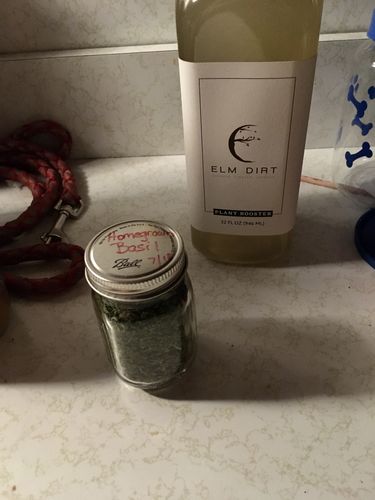
This stuff is great! It’s the end of the season for me this year but my basil was fizzling out. I used this for a boost and it loved it! I was able to fill my basil jar up after that! I can’t wait to use it next year! It’s completely organic and goes a long way! I’m an organic gardener and live this product!
Laurali M.
Only gave it a 'like' instead of a 'love' because I've not used it long enough to tell. But I will say that I just brought many of the potted plants into the sunroom after being outside all summer, and they are not losing as many leaves as they normally do. I'm really glad I bought 4 bottles because it looks really promising.
Rated 4.65 out of 5 across 1,793 Plant Juice reviews.
Frequently Asked Questions
What plants make a good Halloween garden?
The best Halloween garden plants look spooky and also do a job. French marigolds suppress root-knot nematodes and feed pollinators. Dark edible cultivars like 'Black Beauty' tomatoes, purple basil, 'Bull's Blood' beets, and 'Redbor' kale bring gothic color to the plate. Garlic and ornamental alliums add folklore and flavor. Pumpkins and gourds feed you and then feed the compost pile after October.
Do marigolds really keep pests away?
Partly. French marigold (Tagetes patula) roots release alpha-terthienyl, a compound that suppresses root-knot nematodes in the soil. The effect comes from living, actively growing roots, so marigolds work best planted densely for at least two months before a susceptible crop like tomatoes. They do not eradicate nematodes, and their above-ground effect on insect pests is modest. Their blooms also feed bees and hoverflies until frost.
Which spooky plants are safe around kids and pets?
Pumpkins, gourds, purple basil, black petunias, calendula, purple kale, and 'Bull's Blood' beets are good low-risk choices. Use caution with garlic and ornamental alliums, which are toxic to dogs and cats, and with coleus and elephant ear, which are toxic to pets, and elephant ear sap also irritates skin and mouths in people. Skip foxglove, monkshood, and datura anywhere children or pets play, because every part of those plants is poisonous.
Can I grow black or dark-colored plants that are also edible?
Yes. 'Black Beauty' and 'Indigo Rose' tomatoes, 'Purple Ruffles' basil, 'Bull's Blood' beets, purple 'Redbor' kale, and dark-fruited peppers all bring Halloween color and end up on your plate. The dark color comes largely from anthocyanins, the same antioxidant pigments found in blueberries.
When should I plant a Halloween garden?
For an October display, set out potted marigolds, mums, purple kale, and dark-leaved annuals in late September. Plant garlic about two to four weeks before the ground freezes. For pumpkins, dark tomatoes, and elephant ears, start in spring the following year, since they need a full warm season to mature by Halloween.
How do I keep a fall Halloween garden healthy into winter?
Feed the soil, not just the plants. Top containers and beds with worm castings, water in a gentle microbe-rich fertilizer like Plant Juice so late-season roots stay active, mulch to buffer cold snaps, and compost pumpkins and spent annuals when the season ends so the organic matter goes back into the ground.
Grow a Garden That's Spooky and Smart
You don't need a garage full of plastic skeletons. A few marigolds guarding the soil, some dark leaves you can actually eat, a row of garlic, and a pumpkin that'll be dirt by April. That's a Halloween garden.
Keep the soil alive underneath it and it'll look its creepiest right on time. Then, long after the last trick-or-treater heads home, it just keeps quietly feeding your garden.
Sources:
- Hamaguchi T. et al. (2019). Nematicidal actions of the marigold exudate α-terthienyl. Biology Open, 8(4).
- Marahatta S.P. et al. (2012). Effects of Tagetes patula on active and inactive stages of root-knot nematodes. Journal of Nematology, 44(1).
- University of Florida IFAS Extension, Marigolds (Tagetes spp.) for Nematode Management.
- University of Wisconsin–Madison Horticulture, Marigolds.
- ASPCA Animal Poison Control, Toxic and Non-Toxic Plant List.
- BiomeMakers microbial analysis of Elm Dirt Plant Juice (species counts and functional traits).

Lauren Cain
Founder & Chemical Engineer · Elm Dirt, Kansas City
Lauren started Elm Dirt after her 6-month-old daughter grabbed fistfuls of backyard dirt and ate them. As a chemical engineer and a mom, she couldn't just shrug it off, so she dug into the science of what was really in garden soil. That rabbit hole led her to build a fertilizer line around beneficial microbes instead of synthetic chemicals. Today Elm Dirt's products are used by home gardeners, rose show champions, and organic growers across the country.