



The Honest Mom's Guide to a Chemical-Free Yard Kids Can Actually Play In

Nobody warned me about this when we bought our house. That bag of fertilizer in your garage — the one with the fine print that says "keep off treated areas for 24 hours" — might be the exact reason you're telling your kids not to roll in the grass. I've said those words. I've been that parent standing in the backyard going, wait, when did I last spray?
I started Elm Dirt because my baby daughter ate a fistful of backyard dirt and I full-on panicked. Not because dirt is bad. But because I had zero idea what was actually in ours. I'm a chemical engineer. That question kept me up for weeks. What I found when I dug in changed how I think about everything we put on our lawn.
This isn't a lecture. You're not a bad parent for using the stuff from the hardware store — I did too. But if you want a yard where the kids can run barefoot and eat strawberries straight off the plant without you having a small anxiety episode, I'm going to show you how to get there. It's simpler than you think.
Why Conventional Lawn Chemicals Are Worth a Second Look
I have to say this upfront: "chemicals" is a loaded word and I use it carefully. Everything is technically a chemical. Water is a chemical. So I'm not here to tell you your lawn is toxic. What I am saying is that there's a meaningful difference between compounds that naturally belong in healthy soil and the synthetic stuff in a lot of conventional products. That difference matters when small kids are out there every day.
The concern isn't that these products are going to immediately hurt anyone at normal use levels. It's low-level residue exposure that adds up over time. Synthetic fertilizers deposit salt residues in the soil. Many common herbicides have been studied for potential hormone-disrupting effects. Organophosphate pesticides — still in some popular lawn care products — show up in peer-reviewed research connected to neurodevelopmental issues in kids at low chronic exposures. A 2021 study on PubMed found that kids in pesticide-treated-lawn households had measurably higher pesticide metabolites in their urine than kids in organic-lawn homes.
Here's the thing about kids: they're low to the ground. They touch everything. They chew on grass. They dig with their bare hands and then eat a snack without washing up first (you know exactly what I'm talking about). They're not little adults — their developing nervous systems process chemical exposures differently than ours. That's not fearmongering. That's just physiology.
If you want to go deeper on what's actually in those products, I wrote a whole post on the chemicals in conventional lawn fertilizers that's worth a read. And if you've ever grabbed something from the hardware store assuming it's "basically organic" — that assumption deserves a closer look.
| Conventional Lawn Inputs | Living Soil / Organic Approach |
|---|---|
| Synthetic nitrogen salts — fast green but can burn and leave residue | Microbial nitrogen release — gradual, no salt burn, no residue |
| Herbicides with re-entry intervals (keep kids off treated lawn) | No re-entry restrictions for organic microbial products |
| Kills soil biology over time with repeated use | Builds soil biology — gets better with each application |
| Synthetic fungicides can disrupt beneficial fungi | Beneficial fungi like Trichoderma suppress pathogens naturally |
| Requires protective equipment during application | Mix and apply — kids and pets can be in the yard same day |
None of this means you need a pristine, perfectly manicured lawn. Honestly? A yard with a few dandelions and genuinely healthy soil beats a chemically immaculate lawn that nobody's allowed to sit on.
What's Actually in Healthy Soil (and Why It's Better Than Anything in a Bag)

Most people think of soil as just... dirt. The stuff you walk on. But a single tablespoon of healthy soil has more living microorganisms in it than there are people on earth. Bacteria, fungi, protozoa — billions of them, all in a web of relationships that feed plants, suppress disease, and build the kind of rich organic matter you can't buy in a bag. When that biology is intact and thriving, your yard doesn't need synthetic props. The microbes are doing the work.
This is the whole science behind Plant Juice. Our Plant Juice is CDFA-certified organic and we had it independently analyzed by BiomeMakers — a soil science lab out of UC Davis. Their findings were honestly kind of staggering.
Let me translate those, because the percentages don't mean much on their own. When BiomeMakers says 80% show "inorganic nitrogen release" — they mean 80% of those 291 species can pull nitrogen out of organic matter in the soil and make it available to your plants. No synthetic salts. No chemical shortcut. Just biology doing what biology does. The 56% with fungicide activity? More than half those microbes can actively compete with or suppress fungal pathogens in your soil. This is how a healthy lawn protects itself.
A few of the specific species worth knowing:
- Pseudomonas putida — produces growth compounds and is one of the most studied biocontrol agents for root pathogens. It's in Plant Juice in meaningful concentrations.
- Flavobacterium — a soil health indicator species. When you find it in soil, things are generally going well. It's tied to better nutrient cycling and plant immune response.
- Comamonas terrigena — works in the root zone breaking organic nitrogen into plant-available forms. Part of the nitrogen cycle that synthetic fertilizers try to bypass entirely.
- Trichoderma — a beneficial fungal genus in Bloom Juice that actively goes after pathogenic fungi like Fusarium and Botrytis. It's basically your lawn's immune system in fungal form.
None of these are dangerous to humans. They're the same organisms your kids already encounter every time they dig in a healthy garden. Adding them back to a depleted lawn isn't introducing something foreign — it's restoring what was supposed to be there all along. Want to go deeper on how this all works? How Beneficial Microbes Help Plants Grow is a good read.

How to Actually Make the Switch (Without Killing Your Lawn in the Process)
"Going organic" sounds like a whole lifestyle commitment, I know. It doesn't have to be. Here's how I'd do it if I were starting over from scratch today — no drama, no ripping everything out, just a few practical shifts.
Step 1: Stop the synthetic cycle, start feeding the soil
You don't need to rip out your lawn. You just need to stop the cycle. Put the synthetic fertilizer down and pick up something living instead. The microbial population in your soil needs a few applications to really get established, so consistency matters early on — but you don't need to do anything drastic.
For lawn specifically, Plant Juice diluted in water and applied through a hose-end sprayer is my go-to. Every 2–4 weeks through the growing season. You'll notice the difference in the color — not the flash-green you get from synthetic nitrogen that fades in two weeks, but a deeper, more even green that holds. The spring lawn fertilizer guide has the full schedule if you want specific timing.
Step 2: Think about feeding your soil, not just your plants
This is the mindset shift that changes everything. Synthetic fertilizers skip the soil entirely and dump salt-based nutrients straight at plant roots. Organic microbial products feed the soil ecosystem, which then feeds your plants. It takes longer to see results up front, but here's the payoff: the results actually compound. Each season the soil gets healthier. After a few years, you'll need less product — not more.
Ancient Soil worm castings are my favorite thing to add alongside Plant Juice. They're Class A certified compost — the most bioavailable, slowest-release nutrition you can put in the ground, totally safe for kids and pets. If worm castings are new to you, What Are Worm Castings is a quick read that covers the basics.
Step 3: Let go of the perfectly weed-free lawn myth
Dense, biologically healthy turf crowds out weeds on its own — weeds mostly colonize bare patches and thin spots that unhealthy grass leaves behind. For anything stubborn, hand-pull it or try corn gluten meal as a natural pre-emergent. It's not foolproof, but it works pretty well when your turf is filling in nicely.
And honestly — clover is not your enemy. Clover fixes nitrogen, feeds pollinators, and stays green in drought. A little biodiversity in the lawn is actually a sign of health, not failure. If you want real tactics for chemical-free weed management, 10 Natural Weed Control Methods has you covered.
Step 4: Give it one full season before you judge it
The first season of switching can feel slow. It will not look as instantly green as synthetic nitrogen. That's normal and expected — the soil biology is rebuilding from scratch in some cases. By the second season, almost everyone notices a real shift: better color, fewer bare spots, less disease, deeper roots. By year three, a lot of our customers tell us they're using noticeably less product because their soil is finally doing its job.
If bare spots show up during the transition, the organic fix for lawn bare spots is worth bookmarking.
Start With Plant Juice
CDFA-certified organic. 291 verified microbial species. No synthetic chemicals, no re-entry wait. Kids and pets back on the lawn same day.
Shop Plant Juice →Real People Who Made the Switch
Not marketing copy. Just actual customers who were tired of worrying about what they were putting on their yards.
"Even my pets can't wait to watch me spray the garden and it's not toxic 🦋"
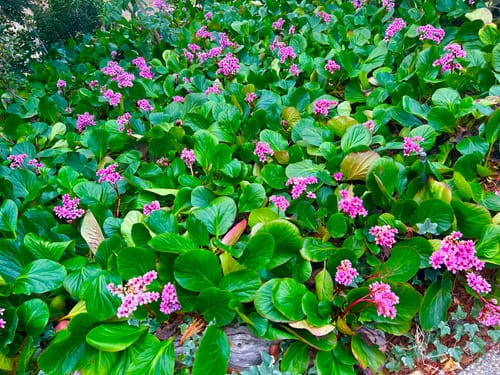
"We are committed to no fertilizer, no chemicals on our property. The Bloom Juice was just what I was looking for and oh my goodness it was unbelievable! The results were astounding and the beds are super happy!!"
"I love the fact that it is all natural with no chemical additives. It's a game changer."

"I used it on some spots on our lawn that suffered from not enough sprinkler coverage and a very hot summer. Those areas are filling in nicely!! Love this stuff!!"
"I reordered a month ago and my large plants got 2 new leaves recently and my Hoya grew almost 3 ft in length. I'm happy as a kid in a candy store and I am 70 yrs young."

One More Reason to Go Chemical-Free: Whatever's in Your Soil Ends Up on Your Plate
If you grow vegetables or herbs at all — even just a few tomatoes in a raised bed — this is where going chemical-free starts paying off in a really tangible way. We're not just talking about kids running on the grass. We're talking about what ends up in the food you eat.
Soil microbes like Azospirillum and Pseudomonas putida actively help plant roots pull in more nutrients from the soil. That means more flavorful tomatoes, more nutrient-dense herbs, and — no synthetic residue on the skin. Your kids can eat strawberries straight off the plant and you don't have to think about it. That's the whole point. For the specifics of feeding a vegetable garden organically, how to fertilize tomatoes organically is a good starting place.
Our Bloom Juice — 192 verified microbial species per BiomeMakers — was formulated specifically for flowering and fruiting plants. Perfect for veggie beds and flower gardens both. Not sure whether Plant Juice or Bloom Juice is right for your situation? This side-by-side breaks it down pretty clearly.
And if you've ever wondered whether what's happening in your soil actually affects your health — spoiler, it does — this post on organic growing and polyphenols is one of my personal favorites.
Quick Answers to the Questions I Get Most
Yes. Living soil products like Plant Juice don't have a re-entry interval — water it in and the yard is good to go. No waiting 24 or 48 hours like you see on a lot of conventional lawn product labels. There are no synthetic chemical residues to worry about.
The ones I'd be most cautious about are glyphosate-based herbicides, organophosphate pesticides, and high-salt synthetic nitrogen fertilizers. These can leave residues on grass blades that transfer to hands and feet — and sometimes get ingested. Look for OMRI Listed or CDFA-certified organic products as a starting point.
Yes, for real. Bacteria like Pseudomonas putida and Flavobacterium release nitrogen from organic matter in the soil — no synthetic salts needed. Worm castings add slow-release nutrition and improve soil structure over time. A biologically active lawn needs less input each year, not more.
Most people see visible improvement within 1–3 weeks of the first application. Results keep improving as the microbial population builds. The second and third season are usually noticeably better than the first — that's when you really start to see the compounding effect.
It's fertilizer that contains actual living microbes — bacteria and fungi — that improve your soil ecosystem rather than bypassing it. Instead of dumping salt-based nutrients at plant roots, living soil fertilizers work with the underground ecosystem to release nutrients, produce plant growth hormones, and suppress pathogens naturally. Plant Juice has 291 of these species, verified by BiomeMakers.
Your Yard Should Be a Place You Actually Enjoy
That's really it. Kids should be able to dig in the dirt, roll in the grass, and eat food from the garden without you mentally running through a checklist of what you sprayed last week. That peace of mind is worth a lot. And it's genuinely not as hard to get to as the lawn care industry makes it seem.
You don't need a perfect organic lawn on day one. You just need to stop the synthetic cycle and start building something better. Feed the soil. Feed the microbes. Give it a season. The results show up.
If you want to start simple, Plant Juice is where I'd begin — liquid, hose-sprayer easy, CDFA-certified organic, and backed by actual lab data. That's a solid first step.
Ready to Make the Switch?
Shop Elm Dirt's organic line — no synthetic chemicals, no re-entry restrictions, and a yard your whole family can actually use.
Shop Plant Juice → Shop Ancient Soil Worm Castings →