



Chemicals in Conventional Lawn Fertilizers That Worry Me as a Parent

Here's how it started for me. I bought a big bag of lawn fertilizer from the hardware store—the kind with the lush green lawn on the front and the happy family on the back—spread it on the grass, and went inside to wash my hands. Twenty minutes later my daughter was out there barefoot. Just running around being a kid.
And I stood at the back door thinking: wait. What did I just put on that lawn?
So I grabbed the bag. Started reading the ingredient panel. Then started Googling. And honestly, I really should not have done that at 11 o'clock at night, because what I found kept me up way longer than I wanted. The list of synthetic chemicals in a typical bag of conventional lawn fertilizer is longer—and weirder—than most people ever stop to think about. We obsess over what's in our food. We read every label at the grocery store. But the stuff our kids literally roll around on all summer? That's just kind of... there. Unquestioned.
Let's fix that. Here's what I found, why some of it bothers me, and what I actually switched to.
What's Actually in That Bag
You've seen those NPK numbers on fertilizer packaging—something like 32-0-10 or 28-3-10. That's telling you the percentage of nitrogen, phosphorus, and potassium in the blend. Simple enough on the surface. But those nutrients have to come from somewhere, and in conventional fertilizers, they almost always come from synthetic, petroleum-derived, or heavily chemically processed sources.
The three things I found myself most focused on:
- Synthetic Nitrogen Sources — Usually urea, ammonium nitrate, or ammonium sulfate. These are fast-acting, salt-based forms of nitrogen. They work quickly—you'll see green in days. But they're also salts, which means they pull moisture out of soil microbes and plant roots when over-applied. And urea specifically breaks down into ammonia in the soil. That sharp smell after you apply? That's it. Off-gassing into the air your family is breathing outside.
- Potassium Chloride (Muriate of Potash) — This is the cheap, standard potassium source in most conventional blends. "Muriate" is just another word for chloride—as in, it's literally a salt. High chloride levels in soil damage the beneficial microbial communities that keep lawn soil healthy. If your lawn feels like it needs more and more fertilizer every year just to stay green, this is often part of why.
- "Weed and Feed" Herbicide Combos — This is where I started to feel genuinely unsettled. A huge category of lawn products blends fertilizer together with broadleaf herbicides—2,4-D being the most common one. So you're not just feeding your grass. You're applying a herbicide across the entire surface your family spends time on. Every square foot of it.
And that last one is important to understand. Weed and feed products are designed to persist in the soil. That's the whole point—they have to stay active long enough to kill the weeds. So that 24-hour "keep off the lawn" window on the label? That's about surface contact, not about the chemistry being gone.

The Specific Things That Made Me Switch
I want to be fair here. I'm not trying to tell you that spreading Scotts on your lawn is the same as poisoning your family. Context matters, and acute toxicity at normal application rates is low for most of this stuff. The concern isn't really one exposure. It's the accumulation—low-level, repeated contact over months and years, especially for kids, whose bodies process chemicals very differently than adults do.
Here's what I zeroed in on:
2,4-D (Dichlorophenoxyacetic Acid)
This herbicide shows up in most weed and feed products. It kills broadleaf weeds—dandelions, clover, chickweed—and it's one of the most widely applied chemicals on American lawns. The EPA says it's "not likely to be carcinogenic to humans" at typical exposure levels. The International Agency for Research on Cancer, though, classifies it as a "possible carcinogen" (Group 2B). The science is genuinely not settled.
Here's my mom math: kids are low to the ground. They sit in the grass. They pick things up and put their hands near their mouths approximately 900 times a day. Their body weight is a fraction of an adult's, so even the same amount of exposure represents a much bigger dose relative to their size. I'm not trying to catastrophize. I'm just saying: that's the calculation I was doing at 11pm, and it was enough for me.
Urea and Ammonia Release
When urea breaks down in the soil, it releases ammonia. At normal application rates on a residential lawn, most of that dissipates. But when it runs off into waterways after rain, it contributes to the algal blooms that deplete oxygen in streams and ponds—which is why more and more municipalities are restricting nitrogen fertilizer applications near water. We go deeper on this in our post about fertilizer runoff solutions if you want the full picture.
And more practically: kids and pets out on the lawn shortly after application can track ammonia residue inside on their feet. Or paws. Low risk at normal rates—I know—but it's one of those things where I just started asking myself why I was accepting that risk at all when there were other options.
Iron Sulfate
Added to a lot of lawn products for deep green color. In large amounts, it's actually toxic to dogs. Iron toxicity from lawn products is a real, documented veterinary issue—not rare enough that vets don't see it. If your dog noses around in freshly fertilized grass and then licks his paws inside (and all dogs lick their paws), that's a real exposure pathway. We cover this more in our guide to lawn care and pet health.
Slow-Release Polymer Coatings
The granules in most slow-release fertilizers have polymer or sulfur coatings that control how fast nutrients get released. Problem is, those coatings don't fully biodegrade. They break down into microplastic-like fragments that accumulate in your soil over years of use. Those tiny translucent beads you sometimes notice in the grass after spreading a granular product? That's what those are. Just quietly piling up in the soil year after year.

What This Does to Your Soil Over Time
The human health piece kept me up at night. But honestly, the soil side of this bothers me just as much in a different way—because the damage is quieter and slower, and most people never even realize it's happening.
Healthy lawn soil is alive. Genuinely alive. It's full of bacteria, fungi, nematodes, and earthworms that do the real work—breaking down organic matter, fixing nitrogen from the air, solubilizing minerals, building root networks. That underground ecosystem is what makes a lawn actually healthy, not just green.
When you apply salt-based synthetic fertilizers repeatedly, you're stressing that system every single time. The salts don't just feed the grass—they pull moisture away from soil microbes and roots. Over years of this, the microbial communities get depleted. The soil loses its ability to feed itself. And now you're in a cycle where you have to keep applying fertilizer just to maintain what you have, because the natural system underneath isn't functioning the way it should anymore.
That's the dependency loop. And it's exactly why we built Elm Dirt the way we did—starting from the premise that the soil is supposed to be doing most of this work, and our job is to support it, not replace it.
For a deeper look at what living soil actually is and why it matters, we have a whole explainer: Living Soil Explained. And for the full synthetic vs. organic breakdown: Synthetic Fertilizers vs. Organic Fertilizers.
How Long Do These Chemicals Actually Stay on Your Lawn?
Most conventional fertilizer bags say to keep kids and pets off for 24–72 hours after application. And I think a lot of people read that and assume it means the product is basically gone after that window. It doesn't.
That timeframe is about surface concentration dropping to a level the manufacturer considers acceptable. It's about the product being "dry" or "watered in." It is not about the active chemistry being inert. Herbicide components like 2,4-D can persist in the soil for weeks—sometimes longer, depending on soil type, moisture, and temperature.
For parents with toddlers who eat dirt (you know exactly who you are), or for anyone with a dog who licks the grass, or for anyone who just likes to sit outside on the lawn—that distinction matters more than the bag lets on.
What I Actually Use Now
I didn't write all of this to leave you anxious with no direction. When I went down this rabbit hole, I was also actively looking for something I actually felt good about using—something that worked and didn't come with a list of chemicals I had to research at midnight.
That's the whole reason Elm Dirt's Regenerative and Sustainable Lawn Care exists. No synthetic chemicals. No salt-based ingredients. No herbicide blend. Instead, it works by putting beneficial microbes back into your soil—the kinds that fix nitrogen naturally, build fungal networks, improve nutrient uptake, and strengthen roots from the inside out.
The philosophy is basically the opposite of conventional fertilizer. Instead of forcing nutrients into your lawn while quietly degrading the soil underneath, you're rebuilding the ecosystem that makes your lawn healthy on its own. The results aren't as fast as a nitrogen blast—I won't pretend otherwise. But year two looks better than year one, and year three is better than year two. And you can let the kids run out there whenever they want.
For the deeper science on why microbes outperform synthetics in the long run, this is a good read: 5 Reasons to Stop Using Synthetic Fertilizers. If you have pets, our pet-safe fertilizer guide is worth bookmarking too.

Stephanie N. — Verified Purchase
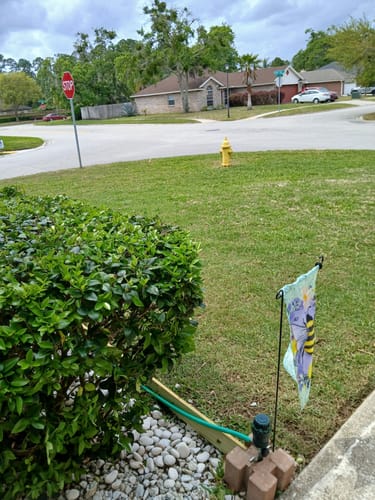
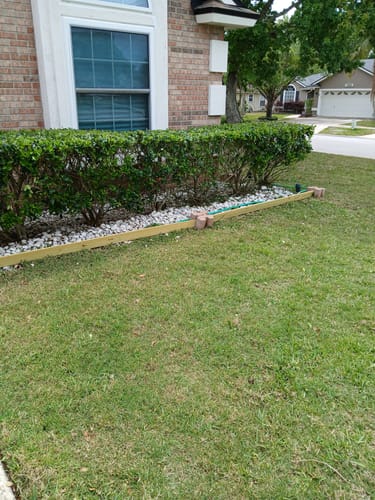
"Love the way my lawn is the lovely green it is supposed to be coming out of winter."
Sharon K McPhee — Verified Purchase
"Second year I am using this, lawn care and it is by far the best I have ever used! So easy to use, just spray it on, perfect even coverage! Thank you Elm!"
If You're Not Ready to Switch Yet — Do These Things
Making a product change doesn't always happen overnight. If you're still using conventional fertilizer but want to reduce your family's exposure in the meantime, these things genuinely help:
- Wait the full 72 hours, not just 24. I know the bag sometimes implies 24 is fine. I'd give it longer, especially if you have young kids or pets.
- Water thoroughly after applying. This moves the product off the grass blades and down into the soil, where contact exposure drops significantly.
- Drop the weed-and-feed products entirely. If you need to deal with weeds, apply fertilizer and herbicide as separate applications—and target just the problem areas instead of blanket-applying herbicide to your whole lawn. Our list of 10 natural weed control methods has some solid alternatives.
- Wipe your dog's paws when they come in from a recently treated lawn. It takes five seconds and it matters.
- Look for organic slow-release nitrogen sources like feather meal or corn gluten if you want to stick with granulars—these break down biologically, not chemically, so there's no salt-based residue issue.
Ready to make your lawn safe for the whole family?
Try Elm Dirt Organic Lawn Care — $29.95No synthetic chemicals. Safe for kids, pets & pollinators. 180-day warranty.
Frequently Asked Questions
How long do conventional lawn fertilizer chemicals stay on grass?
Most manufacturers recommend 24–72 hours before allowing kids and pets back on the lawn. But that window reflects surface concentration dropping to an acceptable level—not the chemistry being gone. Herbicide components like 2,4-D can persist in the soil for several weeks depending on soil type and moisture conditions.
Are synthetic lawn fertilizers dangerous to children?
Acute risk at typical application rates is low. The bigger concern is chronic low-level exposure over time, particularly for young children who are closer to the ground, touch surfaces frequently, and put their hands near their mouths. Some chemicals—like 2,4-D—are classified as possible carcinogens by international health agencies, though the research is ongoing and the science isn't fully settled.
What is a safe alternative to conventional lawn fertilizer?
Organic, microbe-based fertilizers like Elm Dirt's Regenerative Lawn Care use no synthetic chemicals or salt-based ingredients. They're safe for kids and pets once applied, build long-term soil health, and don't cause chemical runoff. The trade-off is that results are slower to appear—but they compound year over year in a way synthetic fertilizers don't.
What chemicals should I avoid in lawn fertilizers?
The main ones to watch for: 2,4-D (found in most weed and feed products), urea and ammonium nitrate (fast-release synthetic nitrogen), potassium chloride or muriate of potash (high-salt potassium source), and iron sulfate (toxic to dogs in larger quantities). Check the ingredient panel—not just the NPK numbers on the front.
Does organic lawn fertilizer actually work as well as synthetic?
It works differently. Synthetic fertilizers deliver a fast green-up, sometimes within days. Organic, microbe-based fertilizers are slower out of the gate but build sustainable soil health underneath—which means the lawn actually improves each season instead of becoming dependent on the next application. Year two genuinely looks better than year one.
