



Spring Lawn Fertilizer: When to Apply and What to Use (Organic Guide)

Can I tell you about something I see every single spring? Someone in the neighborhood gets a little excited the first warm Saturday in March, makes a run to the hardware store, grabs whatever fertilizer is on sale, and throws it on their lawn that same afternoon.
And by May, half their grass looks like it lost a fight.
I don't say that to be mean — I say it because I've watched it happen over and over, and it doesn't have to. Timing matters. Product choice matters even more. Spring lawn fertilizer put down at the wrong moment does actual damage. And if you've been using synthetic products for years, you might be slowly making next year harder than this one.
So let's talk through all of it — when to fertilize, what to use, how to stop worrying about burning your grass or chasing your kids off the lawn with a warning flag.
Short on time? Wait until your soil hits 55°F (usually late March to April for most of the US), then use a microbe-based organic formula. No burn risk. Safe for kids and pets right after it dries. That's the whole answer — keep reading if you want to know why.
When to Put It Down (And Why Soil Temperature Is the Only Number That Matters)
Here's the thing about grass roots — they're not on the same calendar you are. You might feel spring on a warm February afternoon, but your lawn is still basically asleep underground. Fertilizing dormant roots is like leaving dinner out for someone who's not home yet. Nothing gets used. It just sits there, washes away, and costs you money.
The number to watch: 55°F at 2–4 inches deep. That's when roots actually wake up and start pulling nutrients in. Below that temperature, it doesn't matter how good your fertilizer is.
| Region | Typical Timing | Notes |
|---|---|---|
| South / Gulf Coast | Late February – March | Warm-season grasses come out of dormancy early |
| Midwest / Mid-Atlantic | Late March – April | Watch soil temps, not the air temp outside |
| Pacific Northwest | March – April | Cool and wet — actually great conditions for microbes |
| Northern US / Canada | April – May | Frost can linger; wait for truly consistent warmth |
You can check your local soil temperature at greencast.com, or just grab a $10 soil thermometer from the garden center. Honestly one of the most useful things you can own if you care about your lawn.
Too Early Is a Real Problem (Especially With Synthetics)
With synthetic fertilizers, fertilizing too early is genuinely wasteful — and kind of environmentally rough. Nitrogen is water-soluble, so if the roots aren't active, it just washes right out of the soil and heads toward your nearest waterway. You paid for it. A creek somewhere got it instead.
With organic fertilizer, you have a little more breathing room because the nutrients release slowly through microbial activity. But the microbes themselves aren't fully active in cold soil either, so you're still not getting full value. Late March is generally the sweet spot for most of us in the middle of the country.
Too Late? Honestly, Don't Panic.
If life got busy and it's suddenly May, you're still okay with organic fertilizer. No burn risk means there's no deadline pressure the way there is with synthetics. The main thing to watch with late-spring fertilizing is pushing too much leafy top growth right before summer heat rolls in — with a slow-release organic formula, that's much less of a concern because you're building the plant up rather than forcing it.

Why I Don't Use Synthetic Lawn Fertilizer (And Why You Might Want to Stop Too)
I want to be straight with you here — synthetic fertilizers do work. They green things up fast and they're usually cheap. I'm not going to pretend otherwise, because that would be insulting to your intelligence.
But I started this company because my daughter ate dirt out of my garden as a baby. That will clarify your priorities real quick. And when I started looking into what was actually in the soil most people put around their kids and pets, I wasn't thrilled with what I found.
Here's what synthetic lawn fertilizers do that most people don't know:
- They're full of soluble salts — which is literally the thing that causes fertilizer burn
- They feed the grass directly but ignore the soil underneath entirely
- Long-term use actually destroys the beneficial microbes your soil depends on
- They only carry three nutrients (N-P-K) — healthy soil biology needs dozens more
- The runoff feeds algal blooms in lakes and ponds, which is a real problem in a lot of communities
And the part that gets me every spring — the warnings on the bag. Keep kids and pets off the lawn for 24 to 48 hours. Every May when the neighborhood kids want to finally run around in the grass again, some families are out there telling them to wait until tomorrow. That's not how it should be.
Organic fertilizer works completely differently. Instead of pushing nutrients straight into the grass, it feeds the living ecosystem in your soil — and that ecosystem feeds your lawn naturally. Slower payoff at first. But every year your lawn gets healthier, not more dependent on a product to survive. For a deeper look at the differences, check out our full breakdown of synthetic vs. organic fertilizers.

🔬 What the Lab Actually Showed Us
Our Spring Revive formula was verified by BiomeMakers — the same third-party lab that works with major commercial agriculture operations. Here's what those beneficial microbes are actually doing in your lawn:
- 80% of microbial species fix nitrogen: They pull nitrogen straight out of the air and convert it into a form your grass can use. Free fertilizer. From the atmosphere.
- 84% produce auxins (IAA): These are plant growth hormones. Microbes like Pseudomonas putida and Flavobacterium produce them to drive root elongation right when your grass needs it most — early spring establishment.
- 56% have fungicidal activity: They suppress fungal lawn diseases before the problems even start.
- 84% produce exopolysaccharides: These compounds improve your soil's structure, water retention, and drought tolerance. Your lawn learns to use water more efficiently over the summer.
- 27% solubilize phosphorus: There's probably plenty of phosphorus already locked in your soil — these microbes unlock it so your grass can actually get to it.
When we talk about "building soil health," this is specifically what we mean. Not a tagline. Actual biology doing actual work.
What to Actually Buy: Organic Spring Lawn Fertilizer Options
Not all organic fertilizers do the same thing. Here's how to think about it so you're not just guessing at the garden center.
Liquid Microbe Fertilizers — Our First Recommendation for Most Lawns
The technology here has come a long way in the last few years. A good liquid microbe fertilizer — like our Spring Revive formula — has living beneficial bacteria and fungi in a concentrated liquid that you dilute and spray. That's it. Hose-end sprayer, done in under an hour.
Why we love it:
- Even coverage you just can't get with granulars
- Microbes start working in the root zone within days
- You literally cannot burn your lawn with it, even if you overlap your spray
- Kids and pets are safe once it dries — about an hour
- It's working with your soil biology, not against it
Worm Castings — Best Friend for Bare Patches and Problem Spots
Got thin areas? Spots where the grass just never fills in? Premium worm castings are what I reach for. Top-dress those spots with about a quarter-inch layer and scratch it in lightly. The biology in good castings creates almost ideal conditions for germination and establishment.
Our Ancient Soil worm castings carry Class A compost certification and are verified pathogen-free — which matters if you've got little ones rolling around in that same grass. And if you want to understand how that kind of soil amendment sets your lawn and garden up for the long haul, this piece on how healthy soil creates garden success is a good read.
Granular Organic Fertilizers — Fine, Just Not Our Favorite
Composted granulars, feather meal, bone meal — they all do something useful, and they're a big step up from synthetic granulars. The downsides: coverage tends to be uneven, they need consistent moisture to break down, and they don't add the living microbial layer that really moves the needle on soil health over time. If it's what you have access to locally, use it. But if you can get a liquid microbe fertilizer, start there.
Elm Dirt Spring Revive — Made for Right Now
Formulated specifically for February through April. Quick-awakening microbe blend that gets roots moving early, builds your soil biome, and greens up your lawn without synthetic chemicals — or the 48-hour "keep off the grass" drama.
People, pet, pollinator, and planet-friendly. Spray it on. Go live your life.
Shop Spring Revive — Starting at $29.95
What Real Customers Are Saying
"Love the way my lawn is the lovely green it is supposed to be coming out of winter."
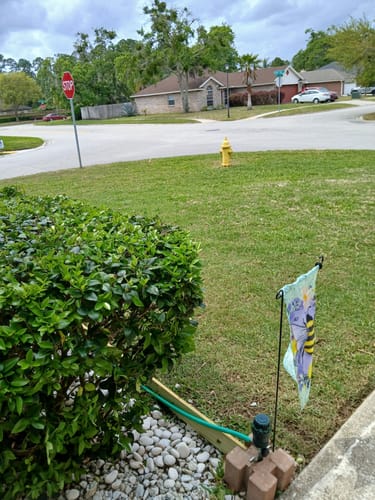
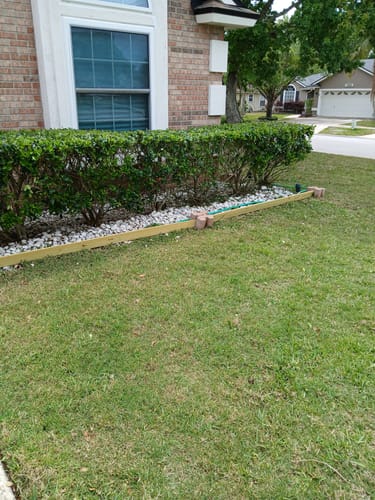
"Second year I am using this lawn care and it is by far the best I have ever used! So easy to use, just spray it on, perfect even coverage!"
"I love all the Elm Dirt products that I have tried, but especially the Bloom Juice and the lawn care products. These products bring out the beauty in my plants and lawn!"
How to Actually Apply It (It's Simpler Than You Think)
With a liquid organic fertilizer, this is genuinely a Saturday morning job. No calibrating a spreader, no stressing about overlap patterns, no warning flags.
- Check your soil temp first. If you're in the Kansas City area or anywhere in the middle of the country, mid-to-late March is usually the right window. Grab a soil thermometer or check greencast.com.
- Give the lawn a light mow. Just enough to knock off the dead thatch from winter. Don't scalp it — just clean it up a little.
- Mix and spray. Most liquid concentrates dilute at 2–3 oz per gallon. A hose-end sprayer makes this go fast. For a typical lawn, you're done in 20 minutes.
- Water it in. A light pass with the hose, or time it before rain. You want moisture to carry those microbes down into the root zone.
- Give it a couple weeks. The green-up shows in 2–3 weeks. The root development starts faster than that — you just can't see it above ground yet. Trust the process.
One thing that surprises people every time: with liquid microbe fertilizer, your kids and pets can go back outside once it's dry. About an hour. No waiting, no flags, no explaining to a seven-year-old why they can't play in the backyard yet.
What About Weed Killer at the Same Time?
I get asked this a lot. The short answer: give it a couple weeks between your fertilizer application and any pre-emergent or herbicide. You don't want to disrupt the microbes while they're getting established. It's worth the wait.
The longer answer: a healthy, thick lawn with deep roots is your best weed defense anyway. When microbes stimulate early root growth and your grass fills in those bare spots, weeds have nowhere to set up. Our guide on 10 natural weed control methods has the full strategy if you want to go deeper on this.
Should You Aerate Before You Fertilize?
If your soil is compacted — heavy clay, or you've had a lot of foot traffic — yes, aerating first makes a real difference. It gives the microbes a direct path into the root zone and helps water soak in instead of running off. But if your lawn is in reasonable shape and aerating just isn't on the agenda this spring, don't let that stop you. Fertilizer alone still helps. Doing both together is just a nice bonus.

Mistakes People Make Every Spring (Including Me, Once Upon a Time)
Let's be honest with each other for a minute.
- Fertilizing when you can still see frost. Just wait. The lawn doesn't need it yet and you're wasting money.
- Doubling up because "more is better." It's not. Follow the label. With organic fertilizer you won't burn anything, but extra product doesn't help — it just costs you more.
- Skipping the watering step. The fertilizer needs moisture to move where it needs to go. Apply before rain, or water it in yourself.
- Using the same formula all year. Your lawn needs different things in spring vs. summer vs. fall. Spring is about waking roots up. Summer is about heat tolerance. One-size-fits-all doesn't really fit all.
- Getting impatient after a week. Organic fertilizer is not a quick spray of green dye. It's biology. Give it 2–3 weeks for the visible payoff and trust that things are happening underground the whole time.
The Synthetic Fertilizer Trap (And How to Get Out of It)
Here's something I wish more people knew going in: synthetic nitrogen fertilizers actively kill beneficial microbes in your soil. Once those microbes are gone, your soil loses the ability to cycle nutrients on its own. And then your grass actually needs the synthetic fertilizer to survive — not because that's how lawns work, but because the natural system underneath has been wiped out.
It's a cycle that benefits the fertilizer companies. Not your lawn. Not your family.
Switching to organic usually means a slower green-up in the first season. That's real and I'm not going to sugarcoat it — you're rebuilding a microbial community from scratch. But the second year? Third year? That's when customers start emailing me pictures of their lawn and asking what happened because it's the best it's ever looked.
And if you've got kids or pets and want to understand all the lawn safety stuff while you make the switch, our piece on lawn care and pet health covers everything.
Rather Not Think About It Four Times a Year?
Our Yearly Lawn Care Line delivers the right formula for each season right when you need it — Spring Revive, Summer Strength, Fall Rally, and Winter Prep — all in one order. Save over 20% and never have to remember what to buy or when.
Shop the Yearly Lawn Care BundleQuestions I Get Asked All the Time
When should I apply spring lawn fertilizer?
When your soil hits 55°F consistently — that's usually late March through April depending on where you live. Don't go by air temperature or the calendar. Soil temperature is the thing. With organic fertilizer you've got more wiggle room since there's no burn risk, but earlier than late March rarely makes sense in most of the US.
Is organic lawn fertilizer actually as effective as synthetic?
Yes — and over time, it's better. Synthetic feeds the grass but leaves the soil worse off every year. Organic feeds the soil, which feeds the grass, and the whole system gets stronger each season. Your lawn doesn't get more chemically dependent — it gets more self-sufficient. That's the long game.
Can I burn my lawn with organic fertilizer?
Very unlikely with a microbe-based formula. The burn risk with synthetics comes from high soluble salt concentrations. Organic formulas don't have that. Nutrients release slowly through microbial action, so even if you're a little heavy-handed, you're not going to scorch the grass.
What's the best organic spring lawn fertilizer?
Look for one with living beneficial microbes, not just composted plant material. There's a big difference. Our Spring Revive is formulated specifically for February through April with a quick-awakening microbe blend that gets roots moving early — it's not just nutrients, it's biology that builds the whole soil ecosystem.
How often should I fertilize in spring?
One solid application in late March or April gets things going. With a liquid microbe fertilizer, you can come back every 4–6 weeks through the season without any risk of overdoing it. More applications just means more microbial activity, which means better results. There's no upper limit to worry about.
Is it safe for my kids and dog?
Yes — this is one of the main reasons I started making these products in the first place. With Elm Dirt's lawn care line, once the spray dries (about an hour), everyone can go back outside. No warning period, no flags, no reading the fine print. Just a lawn you don't have to keep anyone off of.
Here's the Short Version
Your lawn is alive. Not just the grass — the whole system underneath it. The microbial community, the root network, the soil structure. When that's healthy, your lawn takes care of itself a lot better than any amount of fertilizer can force it to.
Get your soil to 55°F. Put down a good organic fertilizer. Give it a few weeks and then watch what happens — not just in the color of the grass, but in how it holds up through July and August when everyone else's lawn is looking a little rough.
That's the payoff. It just takes one season of patience to get there.
Grab Spring Revive here if you're ready to give it a go — and feel free to email us at support@elmdirt.com if you've got questions about your specific lawn situation. We actually read those.
More good reads:
- Synthetic vs. Organic Fertilizers: What's Really the Difference?
- Healthy Soil: The Foundation of Garden Success
- 10 Natural Weed Control Methods That Actually Work
- Lawn Care and Pet Health: What You Need to Know
