



Schefflera (Umbrella Plant) Care: Fuller, Bushier Growth

By Lauren Cain · Updated November 13, 2026
A schefflera (umbrella plant) stays full and bushy with five basics:
- Light: bright, indirect light. Low light is the main cause of leggy growth.
- Water: water when the top 1–2 inches are dry, then drain fully. Never let it sit soggy.
- Temperature: 60–75°F, away from cold drafts and vents.
- Feeding: a gentle liquid feed every 2–4 weeks, spring to early fall.
- Pruning: cut leggy stems back in spring so it branches.
The leaves are toxic to pets if chewed, so place it out of reach.
My first umbrella plant came from an office that was shutting down. Somebody was carrying it to the dumpster, and I said "wait," which is how I end up with most of my plants. It was about five feet of bare stick with a little tuft of leaves at the top, like a palm tree drawn by a kid.
I cut it way back that spring and moved it to a brighter window. By August I couldn't see the pot.
That's the thing about scheffleras. They want to be full. Most of the time they're just waiting for you to give them a reason.
You'll see it sold as schefflera, umbrella plant, or umbrella tree, depending on who printed the tag. The name comes from the leaflets, which fan out from one point like umbrella spokes. Garden centers usually carry two kinds. The big one, Schefflera actinophylla, can turn into a small indoor tree if you let it. The dwarf one, Schefflera arboricola, is the compact plant with the smaller leaves, often splashed with gold, that ends up on a lot of plant stands. (Botanists renamed it Heptapleurum arboricola a few years back. I have never once seen that on a nursery tag.)
Both grow fast and forgive a lot. They also have a flair for drama when something's wrong, which makes them easier to read than the quiet plants that just die on you.
Reading this in late fall or winter? That's when umbrella plants stretch toward the window and drop a few leaves, and it's normal. Move yours to brighter light, keep it out of drafts, water less, and stop feeding until spring. Save the hard pruning for March or April. A small tip pinch now is fine.
What's in this guide
How Much Light Does a Schefflera Need?
If I could only tell you one thing about umbrella plants, it would be this: light decides almost everything. A schefflera in a dim corner will survive. It just won't look like the one on the nursery bench ever again.
Give it the brightest indirect light you've got. East or west windows are great. A south window works too if you pull the plant back a few feet or hang a sheer curtain between them.
In good light the leaves stack up close together and the plant stays compact and round. In poor light the stems stretch out looking for the sun, the spaces between leaves get longer and longer, and the whole plant starts leaning toward the window like it's trying to leave. The gold variegated ones fade toward plain green, too. They're cutting back on the decorative stuff to survive.
Fall is when this sneaks up on people. The light drops a little every week and you don't notice until the plant has a lean. Slide it closer to the glass, add a small grow light if you need to, and give the pot a quarter turn every time you water. Our guide to low-light houseplants has more ideas for darker houses. Just keep it out of hot, direct afternoon sun. Those glossy leaves scorch.

The brighter the indirect spot, the less leggy an umbrella plant grows.
How Often Should You Water a Schefflera?
Most umbrella plants that die in people's houses die from love. Too much water, given too often, by someone who was trying hard.
I've done it. Everybody's done it.
Scheffleras like their soil on the dry side (UF's extension says so in almost exactly those words), and roots sitting in wet mix will rot. The plant warns you before it gets bad: yellow leaves first, then dark spots, then leaves dropping on the floor while the soil is still damp.
So wait until the top inch or two feels dry before you water. In summer that's usually about once a week. In winter it can stretch to every two or three weeks, which feels wrong, but trust the finger test over the calendar. When you do water, soak it until it runs out the bottom, dump the saucer, and walk away.
Underwatering looks different. The leaves go limp and a little wrinkled, like they need a nap. A good soak fixes that within a day. If you're pretty sure you went the other direction and drowned it, our overwatered plant recovery guide can help you pull it back.

Water when the top inch or two is dry, then drain fully. For more, see our guide to watering plants correctly.
What Temperature and Humidity Does a Schefflera Like?
The dwarf schefflera is from Taiwan and southern China. The big one comes from northern Australia and New Guinea. You can probably guess how they feel about a Missouri January.
Keep them somewhere between 60 and 75°F and they're happy. Normal house humidity is fine most of the year. It's when the furnace kicks on and the air gets so dry your knuckles crack that the leaf edges start going crispy. A pebble tray helps. So does a little humidifier, or just bunching your plants together so they share the moisture.
Cold is the real problem. Under about 55°F they get stressed, and a cold draft will make one drop leaves faster than almost anything. I learned this with a plant that sat near our front door. Every time someone came in during a cold snap, I'd find a few more leaves on the floor. NC State Extension warns about drafts and heating vents both, and they're right. A warm spot away from doors and vents fixes a surprising number of "mystery" leaf drops. For dry winter air, our guide to humidity for houseplants has more easy fixes.
What Soil and Fertilizer Work Best for a Schefflera?
You want soil that holds a bit of moisture but lets the extra run right through. A decent all-purpose potting mix does the job. If it still feels heavy, or stays wet for days after watering, work in a handful of perlite or orchid bark. And please use a pot with a hole in the bottom. I know the pretty ones often don't have one.
Repot every couple of years, or when you see roots circling the bottom, and only go up one size. It's tempting to give it a big roomy pot so you don't have to do this again. Don't. All that extra soil stays wet, and we've already covered how that ends. Our repotting guide walks through it.
Feeding is simple. Give it something from spring through early fall while it's pushing new leaves, then stop for winter. Keep it gentle. Strong synthetic fertilizers leave salts in the pot, and scheffleras react to salt buildup with brown leaf tips and unhappy roots. (If you've ever wondered where the line is, we wrote about how much fertilizer is too much.)
I'll be upfront that this is where I'm biased, since I make one. I use Plant Juice on mine because it won't burn the roots and it doesn't pile up salt. What it does is feed the microbes in the soil, and they handle a lot of the work of getting nutrients to the roots. There are 291 verified species of them in the bottle. You're not doing this alone.
Two of those species are worth a mention for a plant that drops leaves when it's stressed. The first is Variovorax paradoxus. It belongs to a group of bacteria known for an enzyme called ACC deaminase, which breaks down the building block plants use to make ethylene. Ethylene is the stress hormone that tells a plant to let go of its leaves. In a 2009 New Phytologist study, adding Variovorax to drying soil lowered that stress signal and helped pea plants keep growing. By the lab's functional analysis, about 82% of the species in Plant Juice are predicted to carry that same ability. We wrote a whole post on Variovorax, the ethylene manager, if you want to nerd out with me.
The second is Pseudomonas putida, one of the most abundant bacteria in the bottle at about 1.22 million cells per mL. It's a well-studied root colonizer, and it gets its own write-up in our Pseudomonas spotlight.
Now, the chemical engineer in me has to say it. Microbes don't make up for a dark corner or a soggy pot. Get the light and water right first. The biology just makes a well-cared-for plant's life easier.
Simple umbrella plant feeding routine: a diluted dose of Plant Juice about every 2–4 weeks, spring through early fall. Skip feeding in winter. For more on timing across all your indoor plants, see our houseplant fertilizer guide.
How Do You Make a Schefflera Fuller and Bushier?
You cut it. That's the secret, and it's the step almost nobody takes.
I get why. Cutting a plant you're worried about feels backwards. But a schefflera that's never been pruned keeps growing straight up on a few bare stems, with all the leaves bunched at the top. Nothing is wrong with it. It just has no reason to branch out. A cut gives it one. UF's extension notes that pinching the stems makes a denser plant, and in my experience that's putting it mildly.
In spring, when growth picks up:
- Put on gloves. The sap can irritate skin.
- Cut the longest, barest stems back by about a third, just above a leaf node (the little bump where a leaf meets the stem).
- Pinch the soft growing tip off the other stems.
- Move the plant into bright, indirect light and give it a quarter turn each week.
- Root the healthy cuttings for new plants.
Every cut wakes up sleeping buds just below it. Where you had one bare stem, you'll often get two or three new shoots within a few weeks. The first time I did a hard cut on that office plant, I stood there holding a pile of stems thinking I'd ruined it. I hadn't. Scheffleras take this in stride, and a thin, lanky plant can turn round and full in one growing season. For more on shaping, see our post on advanced pruning techniques.
Don't toss the cuttings, either. Stick them in a glass of water or a pot of damp mix, keep them warm, and most will root in a few weeks. My kitchen windowsill is basically a schefflera nursery at this point. Our guide on how to propagate houseplants has the full walkthrough.

Cutting back is what makes a schefflera branch and fill out like this.
Is a Schefflera Toxic to Pets and Kids?
Yes, mildly. I'd rather you know the details than worry about it in the abstract.
The leaves and stems contain insoluble calcium oxalate crystals, the same kind of compound in pothos, philodendron, and dieffenbachia. The ASPCA lists schefflera as toxic to dogs and cats. If a pet or a toddler chews a leaf, those tiny crystals irritate the mouth, which can mean drooling, vomiting, and trouble swallowing. The sap can also make sensitive skin itchy.
As a mom who started a whole company because her baby ate a handful of dirt, I take this stuff seriously. But it isn't a reason to skip the plant. Put it up on a stand or a shelf where curious mouths can't reach, and wear gloves when you prune. If your pet does get into it, call your vet or the ASPCA Animal Poison Control line at (888) 426-4435.
If a low-chemical, kid-and-pet-friendly home is something you care about, our guides to pet-safe fertilizers and a chemical-free yard for kids are good next reads.
Common Schefflera Problems (and Quick Fixes)
| What you see | Likely cause | Fix |
|---|---|---|
| Leaves dropping off | Overwatering, cold draft, or a sudden move | Check the soil; keep it warm and out of drafts; let it settle |
| Yellow leaves, dark spots | Overwatering or poor drainage | Let the top 1–2 inches dry; make sure the pot drains freely |
| Long, bare, leggy stems | Not enough light | Move to brighter indirect light; prune in spring to force branching |
| Wrinkled, limp leaves | Too dry | Give it a thorough soak and drain |
| Gold variegation fading to green | Not enough light | Move to a brighter indirect spot |
| Sticky leaves or fine webbing | Scale or spider mites (the two most common indoor pests) | Isolate it; wipe and rinse the leaves; treat gently |
| Pale, slow new growth | Hungry during the growing season | Light feeding every 2–4 weeks, spring to early fall |
If you see sticky leaves or fine webbing, look closely before you panic. UF's extension says scale and spider mites are the pests most likely to bother scheffleras indoors. Both are annoying, and both are beatable. Our guide to organic pest control indoors covers the gentle ways to deal with them. And if your plant is looking truly rough, read our houseplant CPR guide before you give up. I've brought back worse.

Get light, water, and warmth right, prune when it gets leggy, and an umbrella plant stays full and glossy all year.
Real Gardeners, Real Results
I'd rather you hear it from them than from me.
Sharon P.
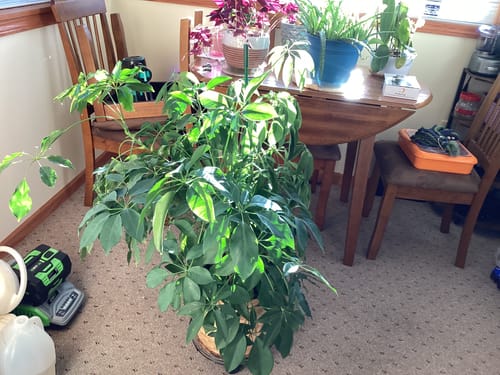
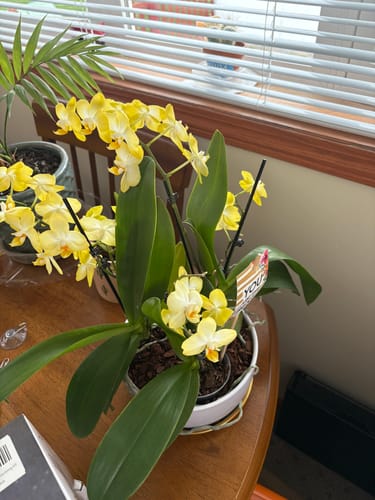
I love the Plant Juice and the Bloom Juice! All of my plants are flourishing as never before. As you can see, my orchid has just exploded and my schefflera has grown as well! I would definitely recommend to others and have recommended to family.
Constance F.
This stuff really works, but it really stinks. The name "dirt" isn't talking about garden soil. However, I've only given my houseplants a single dose and an umbrella plant has already grown a new set of leave. Pretty impressive.
Melinda C.
Several of my large houseplants were looking pretty sad, dropping leaves and/or turning yellow but after just a couple of weeks using the plant booster, they have perked up- new leaves have appeared- they honestly look much better!!
Bill B.
I've had several plants with which it just didn't seem I had the right combinations. Now I am getting not only lots of new leaves at the leggy old parts, but many new shoots coming from the crown.
Plant Juice is rated 4.65 out of 5 across 1,793 customer reviews. (Constance is right, by the way. It smells. That's what living things smell like.)
Frequently Asked Questions
How much light does a schefflera (umbrella plant) need?
Bright, indirect light is ideal. An east- or west-facing window works well, or a spot a few feet back from a south window behind a sheer curtain. In medium light it grows slower and leggier, and gold variegated types fade toward plain green. Avoid harsh direct afternoon sun, which can scorch the leaves.
How often should you water a schefflera?
Water when the top 1 to 2 inches of soil feel dry. That is usually about once a week in spring and summer and less often in winter. Soak the pot, let all the extra water drain, and never let it sit in a saucer of water. Soggy soil causes yellow leaves, black spots, and leaf drop.
What temperature does a schefflera need?
Keep a schefflera between 60 and 75°F. It is stressed below about 55°F and often drops leaves after a cold draft. Keep it away from exterior doors, cold single-pane windows, and heating or AC vents.
How do you make a schefflera bushier instead of leggy?
Prune it. In spring, cut leggy stems back by a third or more, just above a leaf node, and pinch the growing tips through the season. Each cut makes the plant branch from below. Pair pruning with bright indirect light and a quarter turn of the pot each week.
How often should you fertilize an umbrella plant?
Feed a diluted liquid fertilizer every 2 to 4 weeks from spring through early fall, then stop in winter. Scheffleras are sensitive to salt buildup, so a gentle feed is best. A microbe-based liquid like Plant Juice won't burn roots and feeds the soil biology around them.
Why is my schefflera dropping leaves?
Leaf drop is a general stress signal. The most common causes are overwatering or poor drainage, a cold draft or temperatures below about 55°F, a sudden move or change in light, and too little light overall. Check the soil moisture first, then the temperature and light. New growth usually follows once the cause is fixed.
Is a schefflera toxic to pets and kids?
Yes. Schefflera contains insoluble calcium oxalate crystals, and the ASPCA lists it as toxic to dogs and cats. Chewing a leaf can cause mouth irritation, drooling, vomiting, and trouble swallowing. The sap can irritate skin, so keep the plant out of reach and wear gloves when pruning.
Full and Lush, Without the Worry
An umbrella plant doesn't ask for much. Put it in good light, let it dry out between drinks, and keep it away from the front door in winter. Feed it a little in the warm months. Then, once a year, be brave with the pruners. That last part is what turns a bare, leggy plant into the full one you pictured when you bought it.
It'll still drop a leaf now and then when the seasons change. Let it. Mine does too, and it's doing just fine.
Want to keep going? Get to know its easygoing cousin in our pothos care guide, keep gold-and-cream patterns bright with our guide to caring for variegated plants, or get every plant on the sill ready for winter with our fall houseplant care guide. And if you'd like one small gardening win in your inbox each week, come join the Elm Dirt email list. We're all growing this together.
Sources & further reading:
UF/IFAS Extension EDIS — Schefflera arboricola: Dwarf Schefflera (ENH-744/ST586).
NC State Extension Gardener Plant Toolbox — Heptapleurum arboricola (Dwarf Umbrella Tree).
ASPCA Animal Poison Control — Schefflera (toxic to dogs and cats).
Belimov AA, Dodd IC, Hontzeas N, et al. (2009). Rhizosphere bacteria containing ACC deaminase increase yield of plants grown in drying soil via both local and systemic hormone signalling. New Phytologist 181:413–423. doi:10.1111/j.1469-8137.2008.02657.x.
BiomeMakers lab analysis of Elm Dirt Plant Juice (species counts and abundances).

Lauren Cain
Founder & Chemical Engineer · Elm Dirt, Kansas City
Lauren started Elm Dirt after her 6-month-old daughter grabbed fistfuls of backyard dirt and ate them. As a chemical engineer and a mom, she couldn't just shrug it off. She dug into the science of what was really in garden soil and built a fertilizer line around beneficial microbes instead of synthetic chemicals. Today Elm Dirt is used by home gardeners, rose show champions, and organic growers across the country.