



How to Keep Houseplants Thriving When the Heat Goes Off in Fall

Fall hits houseplants with three changes at once: weaker light, dry furnace air, and temperature swings from vents and windows. Adjust in four ways. Move plants to your brightest window. Water less, letting the top 1 to 2 inches of soil dry out first. Raise humidity toward 40 to 50 percent with grouping, a pebble tray, or a small humidifier. Switch to a light monthly dose of a gentle organic houseplant fertilizer instead of feeding every two weeks. Skip repotting until spring. Fall care means doing less, not more.
Every year, right around the week I finally flip the thermostat from cool over to heat, my houseplants start acting funny. A droop. Some yellowing down at the bottom. Two leaves on the floor by the window that definitely weren't there yesterday.
It isn't a coincidence and it isn't a sign you've done something wrong. The season turns indoors the same as it does outside. Your plants just can't see it coming, and they can't move themselves somewhere better.
I learned what to do about it the expensive way. My first winter with enough plants to call it a collection, everything started sulking in October and I did what felt like the caring thing. Watered more. Fed more. Shuffled pots around the house hunting for a magic spot. Three of them didn't make it to Christmas, killed with pure kindness.
What's in this guide
- What fall does to your houseplants
- 1. Chase the light
- 2. Water less than you think
- 3. Fight the furnace-dry air
- 4. Rethink the houseplant fertilizer
- Fall care by plant type
- 5. Watch for fall's uninvited guests
- What not to do this fall
- Your one-page fall checklist
- Real gardeners, real results
- Frequently asked questions
What Fall Actually Does to Your Houseplants
Three things change indoors when the season turns, and they don't take turns about it. They all land inside the same couple of weeks.
- Less light. Shorter days, lower sun angle. A plant sitting in the exact window it sat in back in July is now getting a fraction of what it got then, and nothing about the window looks any different to you.
- Dry air, courtesy of the furnace. Most houseplants want somewhere around 40 to 50 percent relative humidity. A heated house in January can run at 10 or 20 percent. That's closer to Phoenix in August than to anywhere a tropical plant came from.
- Temperature that won't hold still. Cold rolling off the window glass overnight, then a hot blast out of the register at six in the morning.
Stack those up and most houseplants downshift for the season. They aren't dying on you. They're conserving, which is what anything sensible does when the supply gets thin, and the whole job from here is slowing down alongside them instead of arguing.
If yours spent the summer out on a porch or patio, the drop is even sharper. Our guide to the summer-to-fall transition covers bringing them back in without shocking them.

Same window, same spot, a fraction of the light. Nothing about it looks different to us.
1. Chase the Light
Light comes first, mostly because it's what they lost the most of. Everything else in this guide sort of hangs off getting it right.
- Move plants toward the brightest windows in the house. South and west win this time of year.
- A damp cloth over the leaves helps more than people expect, because dust blocks light and there isn't much light to spare right now. Skip the commercial shine sprays while you're at it, for reasons we get into here.
- Quarter turn on each pot, once a week. Otherwise they lean toward the glass and you end up with a lopsided plant by February.
- Genuinely dark room? An inexpensive grow light closes the gap fine. Plants have no idea it isn't the sun. Our indoor plant lighting guide covers placement and run times.
- Some rooms are never going to be bright. Stop fighting those and put a low-light houseplant there instead.
A little leaf drop while they adjust is normal, and it always looks worse than it is. They're shedding what they can't afford to run on less light. Whatever you do, don't try to fix it with the watering can.
2. Water Less Than You Think
This is where nearly everyone goes wrong, myself very much included. The plant looks sad, so you water it. And that's frequently the thing that finishes it off.
In a cooler, dimmer room a plant is barely growing and drinking a fraction of what it drank in July. Soil that used to dry out in four days now takes twelve. Cool room, no light, wet pot: root rot could not ask for better conditions.
The fall watering rule: stick a finger in the pot. Let the top 1 to 2 inches dry out completely before you water again. When you're unsure, wait two more days.
Some smaller habits help too. Room-temperature water rather than straight from the cold tap, which tropicals genuinely resent. Dump the saucer twenty minutes after you water so nothing sits in a puddle all night. I've also switched to watering in the morning, so no pot goes into a cold night soaked through against the glass.
Not sure whether you're overdoing it? Our guide on how to water plants correctly walks through the signs, and if you've already gone too far, start with overwatered plant recovery.

Cooler, dimmer rooms mean your plants drink far less than they did in June.
3. Fight the Furnace-Dry Air
The heat coming on is the single biggest shock of the season. Those crispy brown tips everybody starts posting photos of in October? Dry air. Almost every single time, dry air.
- Group plants together so they raise the humidity around each other.
- A tray of pebbles with water in it works well, as long as the bottom of the pot stays above the waterline.
- Small humidifier near the thirsty ones. Ferns, calatheas and prayer plants are the divas here.
- Anything sitting within a few feet of a register, radiator, or drafty exterior door should move. Even a couple feet of distance changes how fast a leaf gives up moisture.
- Bathrooms and kitchens run more humid than the rest of the house. Put your fussiest tropicals there and let the room do the work.
I'll say the unpopular part out loud: misting doesn't really do it. The humidity bump lasts about as long as it takes the water to evaporate off the leaf, and wet foliage in a dim room invites fungal trouble. Tray or humidifier. Not the spray bottle.
More detail lives in our full guide to humidity for houseplants.
4. Rethink the Houseplant Fertilizer (Don't Just Stop)
People get this one wrong in both directions, so let me be plain about it.
Your plants aren't putting out much new growth right now, which means they don't need pushing. Hit a resting plant with a strong synthetic feed and most of it just sits in the pot as salt, pulling water back out of the roots you were trying to help. Those scorched leaf margins everyone finds in January usually trace straight back to a generous November feeding. It's the whole reason we tell people to stop overfeeding houseplants in winter.
Easing off is not the same as walking away, though. Roots keep working through the winter, slowly, and the soil biology packed around them is what keeps those roots supplied and defended until the light comes back.
What a gentle fall feeding actually does
My chemical engineering brain wants to run long here. I'll keep it to the useful part.
A stressed plant produces more ethylene, and too much ethylene stalls root growth at exactly the wrong moment in the year. Certain soil bacteria carry an enzyme called ACC deaminase that intercepts ethylene's precursor before it becomes a problem, a mechanism that's been documented in the plant science literature for decades. When BiomeMakers ran their lab analysis on Plant Juice, 82% of the 291 verified species came back positive for that enzyme, and 84% for auxin, the hormone behind root branching.
So species like Pseudomonas putida, Mortierella alpina and Devosia insulae keep doing quiet work down in the pot while the plant itself coasts. If you want the deeper dives, we've written up Mortierella and root health, Devosia the root colonizer, and Bradyrhizobium for root development.
The simple version
- Go from every couple of weeks down to one light dose a month.
- Something gentle and microbe-rich is what you want. We make Plant Juice for exactly this, 2 ounces to a gallon of water, and it feeds the soil biology rather than forcing weak leggy growth. It can't burn, so there's no salt to flush out later.
- Anything fully dormant gets nothing at all until the days start stretching in late winter.
- Been using a synthetic feed up to now? Flush the pot once with plain water before you switch. Run it through until it drains freely, then let the whole thing dry down.
For the full how-and-when, by plant and by season, try our houseplant fertilizer guide, the indoor plant food guide, and organic fertilizer for indoor plants.

A resting plant wants steady soil underneath it, not a growth spurt.
Fall Care by Plant Type
Not everything downshifts the same way, and the advice that rescues a fern will drown a snake plant. What actually changes, plant by plant:
| Plant | What changes in fall | What to do |
|---|---|---|
| Ferns | First to show dry air. Fronds brown at the tips and shed. | Humidifier or pebble tray. Keep soil evenly moist, never soggy. Feed monthly at half strength. |
| Peace lily | Droops dramatically, then usually stops blooming. | Bright indirect light, water on droop, feed lightly once a month. Blooms return in spring. |
| Philodendron & pothos | Growth slows and new leaves come in smaller. | Cut watering roughly in half. Monthly gentle feed. Move a foot closer to the window. |
| Monstera & fiddle leaf fig | Very sensitive to drafts and moving. Drops lower leaves. | Pick one bright spot and leave it there. Keep away from doors and vents. |
| Calathea & prayer plants | Crispy edges within days of the furnace starting. | Highest humidity in your house. Room-temperature or filtered water. |
| Succulents & aloe | Go nearly dormant. Stretch badly in low light. | Water every 3 to 4 weeks at most. Brightest window you own. No feeding until spring. |
| Snake plant & ZZ | Barely notice the season. Rot easily if you keep the summer routine. | Water once a month or less. Skip the feed entirely. |
| Orchids | Cooler nights often trigger spike formation. | Keep the routine steady. A light monthly feed supports the spike. |
| Cyclamen & Christmas cactus | These are just waking up. Fall is their growing season. | Feed monthly, cool room, bright indirect light. Don't let them dry out completely. |
5. Watch for Fall's Uninvited Guests
Warm dry air suits spider mites beautifully. Overwatered fall soil suits fungus gnats. Both tend to turn up right about now, and both are trivial to deal with early and miserable to deal with in December.
- Flip a few leaves over every time you water and give the undersides a look.
- Letting that top layer dry between waterings is the best gnat deterrent there is, and it costs nothing. Full walkthrough on gnats on indoor plants.
- A yellow sticky trap laid flat on the soil catches trouble before you'd ever spot it yourself.
- Any new plant sits by itself for a week before joining the group. Same rule for anything that summered outdoors.
- Soap and oil sprays over systemics, always. Our guide to organic pest control indoors has the recipes.
Seeing spots or yellowing or something you can't put a name to? Start with 12 leaf signs and what they mean, then check common houseplant problems or why leaves turn yellow. If a plant is already in real trouble, go straight to the houseplant CPR guide.

Thirty seconds of leaf-flipping at watering time saves you a December infestation.
What Not to Do This Fall
Honestly, half of good fall care is sitting on your hands. Four things I'd leave alone until spring:
- Don't repot. Repotting disturbs roots at the precise moment the plant has the least light available to rebuild them. If the soil is truly spent, top-dress with worm castings to get by and repot properly in March.
- Don't propagate. Cuttings root slowly and rot fast in a cool dim room. Propagating houseplants goes so much better once the days lengthen that it's worth the wait.
- Don't prune hard. Take off what's dead or damaged. Leave the rest.
- Don't keep moving them. Pick the winter spot and commit to it. Fiddle leaf figs in particular will make you pay for indecision.
Already thinking about spring soil? The best potting mix for indoor plants is worth reading before you buy a single bag.
Your One-Page Fall Checklist
Print it, tape it inside a cabinet door, whatever gets it in front of you.
- Move every plant to the brightest window it can get.
- Wipe dust off the leaves with a damp cloth.
- Cut watering frequency roughly in half and check the soil with your finger first.
- Group plants, add a pebble tray, or run a humidifier.
- Move anything within a few feet of a vent, radiator, or drafty door.
- Flush pots once if you've been using synthetic fertilizer.
- Drop to a light monthly feed. Stop entirely for dormant plants.
- Set a sticky trap and check leaf undersides weekly.
- Put repotting, propagating, and hard pruning on the spring list.
Shop Plant Juice — from $19.95
Caring for a whole collection? The Plant Care Kit covers your houseplants from fall through spring. And if something has already gone downhill on you, read how Plant Juice turns struggling houseplants around.
Real Gardeners, Real Results
You don't have to take my word for any of it.
Lisa C.
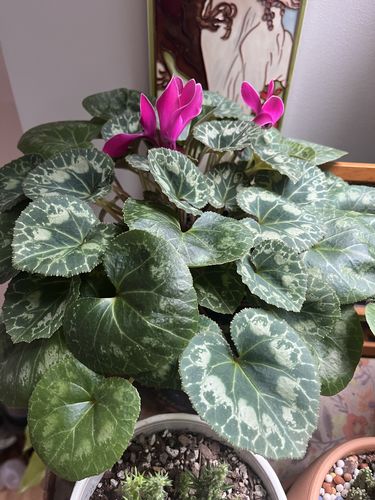
I give all my indoor plants (over 175 plants) & outdoor gardens Elm Dirt Plant Juice. My exotic, succulents & cactuses receive a weekly watering with the juice. Every plant is pushing new growth & is healthy thriving. This Cyclamen has been receiving weekly (as directed) waterings. She has flowered recently & I am delighted how healthy she has progressed. I advise all my friends & plant community by this weekly routine.
Gina W.
I keep purchasing Elm Dirt over & over because it really really works. My level of plant growth & care has changed dramatically!! I have at least 100 plants in the house for winter and they are thriving with new growth bc i use fantastic Elm Dirt products!

Kathi F.
My houseplants went from drab to fab after only two feedings, over a three week period! Wonderful stuff!

Rated 4.65 out of 5 across 1,793 verified Plant Juice reviews.
Frequently Asked Questions
Why are my houseplants struggling in the fall?
Fall brings three changes at once: less daylight, dry furnace-heated air, and temperature swings from vents and drafty windows. Most houseplants slow down and show stress such as leaf drop, yellowing, or crispy leaf tips. Move them to brighter light, water less often, and raise the humidity around them.
Should I fertilize houseplants in fall and winter?
Ease off, but you do not have to stop completely. Plants are not putting out much new growth, so avoid strong synthetic feeds that leave salts behind in the pot. A light monthly dose of a gentle, microbe-rich organic fertilizer keeps the soil and roots healthy without forcing weak growth. Skip feeding entirely for fully dormant plants.
How often should I water houseplants in fall?
Less often than in summer. Let the top 1 to 2 inches of soil dry out completely between waterings. In lower light and cooler temperatures plants use far less water, and soggy soil is the leading cause of root rot indoors.
How do I raise humidity for houseplants when the heat is on?
Group plants together, set pots on a pebble tray with water below the pot base, run a small humidifier nearby, and keep plants away from heat vents and drafts. Most houseplants prefer 40 to 50 percent relative humidity, while heated homes often fall to 10 to 20 percent in winter.
Is it normal for houseplants to drop leaves in fall?
Yes. Losing a few older leaves in September and October is a normal response to lower light, especially for plants that summered outdoors. Watch for firm stems and no spreading yellowing. Sudden heavy leaf drop with mushy stems points to overwatering instead.
Should I repot houseplants in the fall?
Wait until spring unless the plant is root-bound or sitting in failing soil. Repotting cuts roots at the exact time the plant has the least light and energy to rebuild them. Top-dressing with fresh compost or worm castings is a safer fall option.
Why do my houseplants get brown crispy leaf tips in fall?
Brown, crispy tips and edges are almost always low humidity from furnace heat, sometimes combined with fertilizer salt buildup in the pot. Raise humidity, move the plant away from vents, and flush the pot with plain water if you have been feeding a synthetic fertilizer.
Can I use Plant Juice on houseplants in fall and winter?
Yes. Plant Juice is a CDFA Certified Organic biofertilizer that cannot burn roots, so it does not build up salts the way concentrated synthetic feeds do. Use 2 ounces per gallon of water and feed once a month through fall and winter instead of every two weeks.
Keep Your Indoor Jungle Happy All Season
Brighter light. Less water. More moisture in the air around them. A small monthly feed in place of the heavy one you were giving back in June.
That's it. Four adjustments, made once when the heat comes on, and your plants coast through to spring instead of sulking their way there. Then sometime in March the light swings back around, everything starts pushing new growth at once, and you'll be awfully glad you kept the soil underneath it alive.
Shop Plant Juice — from $19.95
Sources and further reading: University of Missouri Extension, Caring for Houseplants (G6510) · University of Vermont Extension, Houseplant Care During the Winter Months · University of Minnesota Extension, Winter Houseplant Tips · Glick, Bacterial Modulation of Plant Ethylene Levels, Plant Physiology (PubMed) · Microbial species and functional percentages from BiomeMakers laboratory analysis of Elm Dirt Plant Juice (report CUX005).

Lauren Cain
Founder & Chemical Engineer · Elm Dirt, Grandview, Missouri
Lauren started Elm Dirt after her 6-month-old daughter grabbed fistfuls of backyard dirt and ate them. As a chemical engineer and a mom, she couldn't just shrug it off, so she dug into the science of what was really in garden soil. That rabbit hole led her to build a fertilizer line around beneficial microbes instead of synthetic chemicals. Today Elm Dirt's products are used by home gardeners, rose show champions, and organic growers across the country.