



The Complete Organic Guide to Rose Feeding Through the Seasons

The short answer
Feed roses every 2 to 3 weeks with a living organic fertilizer, starting when soil hits about 50°F in early spring and stopping roughly 6 weeks before your first frost. Lead with nitrogen in spring to build canes and leaves, switch to a phosphorus-forward bloom feed once buds appear, then top-dress with worm castings in fall to feed roots without pushing tender growth. In winter, most roses need nothing at all.
Roses have this reputation for being fussy, and I don't think they've earned it. Most of what people call fussiness is really just feeding them the wrong thing at the wrong point in the year. Fix the timing and a rose bush turns into one of the easiest plants you own.
I'm Lauren. I've spent an embarrassing number of years now poking around in the soil under rose bushes, mostly trying to figure out what's going on down there that nobody puts on a fertilizer label.
The short of it is that a rose doesn't want four big jolts of chemicals a year. It wants living soil handing it a little food at a time, more or less constantly, from March to October. Which sounds like more work. It's actually less, once you stop trying to time some perfect quarterly feeding.
So this guide runs the whole calendar with you, spring through dormancy, and tells you what to put down and when. No chemistry degree required, and you won't need a shelf of specialty powders either.
Why Roses Do Better on Organic Feeding
Most rose guides skip right past this part, which drives me a little crazy, because it's the whole ballgame. Your roses aren't eating the fertilizer. The soil is eating the fertilizer, and then the soil feeds your roses.
So when you pour a living organic fertilizer around a rose, the nitrogen isn't really the point. What you're delivering is billions of beneficial microbes into the root zone, and those little workers go to work unlocking nutrients that were already sitting in your dirt, locked up where the plant couldn't get at them. They also fight off root disease and hand food to the root in a form it can actually take up.
We had Plant Juice tested by an independent lab called BiomeMakers. It came back with 291 verified microbial species, which is a lab result and not a number our marketing team made up on a Friday afternoon. Here's some of what that crowd does:
- Nitrogen fixers. Rhizobium and Bradyrhizobium canariense pull nitrogen straight out of the air and hand it to the roots.
- Disease fighters. This is the group I'd point a rose grower to first. Pseudomonas putida, Lysobacter and Trichoderma spirale all compete for the same territory as the fungi behind black spot and root rot, and they get there first.
- Growth boosters. Bacillus species, plus a few Streptomyces, put out growth hormones. More stems, more buds.
- Root partners. Mortierella alpina and Mortierella elongata effectively extend the root system, so the plant reaches water and minerals it couldn't get to on its own.
Looking at the community as a whole, the lab found 84% of the species produce auxin, which is the hormone behind rooting and new growth. 80% help release nitrogen in a form roses can take up, and 82% produce siderophores, which is a fancy word for compounds that pry iron loose so the plant can grab it. The one I care about most for roses is that 56% show some antifungal or biocontrol activity. Roses being roses, leaf disease is the thing that ruins most people's season.
Synthetic rose foods do none of this. You get a fast hit of salts, the bush greens up in a week, everybody's happy, and then there's nothing left behind for the soil. Do that for five or six years running and the ground under your roses goes essentially dead, the roots quit reaching because they don't have to, disease moves into the gap, and now you're spraying every three weeks just to hold even. I've watched a lot of gardeners get stuck on that treadmill and blame themselves for it.
Feeding the soil instead gets you off it. It's slower out of the gate, I won't pretend otherwise, and synthetics really do act faster in the first two weeks. But come July your roses are coasting on healthy ground rather than on you remembering to do something. There's more on the mechanics in our post on living soil if you want to go down that hole.

What Roses Actually Need to Bloom
Roses are hungry plants, nobody argues that. But hungry doesn't mean you dump everything you've got on them in April. It means they want different things at different points in the year.
The big three nutrients each have their own job:
- Nitrogen (N) builds green canes and leaves, so you want plenty of it early while the plant is framing itself out.
- Phosphorus (P) is your bloom nutrient. It drives roots and flowers both, and it starts mattering the day buds set.
- Potassium (K) is the one nobody thinks about. It's what toughens a rose against heat and cold and disease, and they lean on it hard twice a year, once in the worst of summer and again going into winter.
Past those three, roses want a steady trickle of the minor stuff too, magnesium and calcium and iron mostly. Living soil hands those over on its own without you thinking about it, which is one more reason the microbe route holds up better over a long season. If the numbers on a fertilizer bag have never made sense to you, our guide to organic fertilizer NPK sorts that out.
Rose Feeding, Season by Season
Alright, the main event. I've broken the year into the six moments that actually change what you should be doing.
Please don't get hung up on exact dates. Watch your plant and watch your weather, because a April 10th in Missouri is nothing like an April 10th in Vermont. If you've never pinned down your frost dates, our last frost date guide will get you close.
🌱 Early Spring — The Wake-Up
When: As soil warms to about 50°F and the first red buds swell on the canes, right after your last hard frost.
This is the feeding that matters most all year and it's the one almost everybody skips. Your roses break dormancy well before the soil biology does, so there's this window where the plant is asking for food and the ground isn't ready to hand any over. You're closing that gap.
Drench the root zone with Plant Juice. Blooms aren't the goal yet, so don't go looking for them. What you're after is waking the microbes up and feeding that first push of green, which everything later in the season gets built on top of. If you do one thing in March, do this one. (For rousing the rest of the garden, see our guide on how to wake up your garden after winter.)
Feed: Plant Juice, every 2 weeks. Optional worm-casting top-dress around the base.
🌿 Late Spring — Building the Frame
When: Once leaves are fully out and the first buds are forming.
The bush is throwing canes and leaves fast right now, so keep the nitrogen coming and let it build a good frame. Those leaves are solar panels. Every bloom you get in July is paid for by leaf you grew in May.
This is also where Bloom Juice starts working its way in, right as buds show up. Most of our gardeners just alternate the two bottles on the same schedule, Plant Juice one time, Bloom Juice the next, and don't think about it harder than that. If you're unsure which does what, our Plant Juice vs Bloom Juice guide lays it out side by side.
Feed: Alternate Plant Juice and Bloom Juice, every 2 to 3 weeks.
☀️ Summer — Peak Bloom and Repeat
When: From your first flush through the hot months.
Now you want flowers and you want a lot of them, so lean into Bloom Juice. It came back from the lab with 192 verified species, among them Azotobacter chroococcum, Penicillium bilaiae and Trichoderma harzianum. What matters for blooms is that 52% of them solubilize phosphorus and another 52% free up potassium. Phosphorus for the flower, potassium for the stem that holds it up.
Then after every flush, deadhead and feed again. Deadhead plus feed is the whole trick to a rose that keeps coming back at you all summer, and our post on getting more blooms from roses naturally goes further into the why.
When it gets really hot, a light foliar feed first thing in the morning perks up a stressed bush. Do not spray in full sun, you'll scorch the leaf. And if black spot or powdery mildew turns up, don't assume it's a feeding problem. Nine times out of ten that's humidity and poor airflow.
Feed: Bloom Juice every 2 weeks, Plant Juice mixed in if leaves start looking pale.
🍂 Late Summer to Early Fall — The Last Push
When: Roughly 6 to 8 weeks before your first expected frost.
Timing gets fiddly here and it's worth slowing down for. You can absolutely feed for one last flush of fall roses, which are some of the prettiest you'll get. What you can't do is keep the nitrogen coming.
Nitrogen is a signal, and the signal it sends is "keep growing." Soft new growth that runs into a hard freeze just dies, and the bush pays for it going into the season it can least afford to be stressed. So this is where you shift gears. (Our full fall fertilizer schedule breaks the timing down further, and preparing for fall covers the rest of the garden.)
Feed: Last Bloom Juice feeding about 6 weeks before frost. Then stop the liquid feeds.
🌾 Fall — Feeding the Roots, Not the Leaves
When: After the last flush, as nights start cooling down.
Up top the leaves are shutting down, but the roots are wide awake and still feeding. So this is the moment to go slow and low and put it straight into the ground.
Top-dress around each rose with Ancient Soil worm castings. It's a Class A certified compost that releases gently over weeks, feeding roots and building up the soil life your roses will draw on next spring. No burn, no growth spurt, just quiet root support heading into the cold. (Curious how castings differ from regular compost? We compared worm castings vs compost here.)
Throw a layer of mulch over the top of it. Holds the moisture in and evens out those freeze-thaw swings that heave roses right up out of the bed.
Feed: Worm-casting top-dress. No high-nitrogen liquid feeds.
❄️ Winter — Rest (Mostly)
When: Full dormancy through the coldest stretch.
In most of the country a dormant rose wants nothing from you, so let it sleep. Pushing food at a plant that isn't growing does more harm than good.
Warm zones are the exception. Down in zones 9 and 10 roses hardly go dormant at all, and a light casting feed keeps the soil biology ticking over through a mild winter. Everybody else gets the season off. Plan next year's beds, get your pruners sharpened, rest up right along with your roses.
Feed: Nothing in cold zones. Light castings only in frost-free zones.

Your Rose Feeding Cheat Sheet
Tape this to the garage wall somewhere you'll actually see it. Whole year, one table.
| Season | Goal | What to Feed | How Often |
|---|---|---|---|
| Early Spring | Wake up soil & new growth | Plant Juice | Every 2 weeks |
| Late Spring | Build canes & first buds | Plant Juice + Bloom Juice | Every 2–3 weeks |
| Summer | Maximize repeat blooms | Bloom Juice (Plant Juice if pale) | Every 2 weeks |
| Late Summer | Final flush, ease off nitrogen | Bloom Juice, then stop | Last feed ~6 wks before frost |
| Fall | Feed roots, harden off | Ancient Soil worm castings | Once, as a top-dress |
| Winter | Rest | Nothing (light castings in warm zones) | — |
And if you'd rather have a printable one that covers everything, not just roses, our Elm Dirt feeding schedule has the vegetable beds and the houseplants on it too.
The Three Products That Cover a Rose's Whole Year
You do not need a cabinet full of specialty rose products, whatever the garden center told you. Three bottles cover the entire year, and it's the same three that rose show growers use on competition beds.
- Plant Juice, from $19.95. The spring workhorse. CDFA Certified Organic, 291 verified species, and it's what wakes the soil up and pushes green growth.
- Bloom Juice, from $19.95. Your summer bottle, 192 verified species, built around flowers and repeat flushes.
- Ancient Soil, from $29.95. Class A certified worm castings for fall. Slow, gentle, and mostly there to feed roots and rebuild soil over the winter.
If you want both liquids and would rather not pay twice, the Bloom Power Bundle runs $59.90 for the pair. For most rose gardens that's the whole spring-through-summer program right there.
Want a season your roses actually show off?
Start with the two bottles that carry them spring through summer.
Shop the Bloom Power Bundle →
Common Rose Feeding Mistakes (and Easy Fixes)
Nearly every rose problem people write to us about traces back to one of these five.
- Feeding too far into fall. Any nitrogen past your cutoff pushes soft growth that winter is going to kill. Stop the liquid feeds around six weeks before frost and you've solved it.
- Feeding a bush that's bone dry. Fertilizer going onto parched roots stresses them instead of helping. Water first. Feed after.
- All nitrogen and no phosphorus. If you've got a big leafy shrub and about four flowers on it, this is your problem. Switch over to Bloom Juice as soon as buds form.
- One big feed a year. Roses do badly on feast and famine, and a heavy spring dose that has to last until August isn't a plan. Little and often wins every time.
- Forgetting the soil exists. You can feed a plant for years and never once feed the ground it's standing in, and it works right up until it doesn't. Castings and microbes get the soil doing the work so you don't have to.
If roses are new to you altogether, start with our how to care for roses post, which gets into watering and pruning and pests along with the feeding. Caring for roses covers the same ground season by season if you'd rather have it laid out that way.
What Rose Growers Are Saying
I could talk about soil biology until everyone's eyes glaze over, so I'll stop and let the people actually growing these things say it instead. These are pulled straight off our review page, typos and all.
★★★★★
"This rose bush has been watered twice, with Plant Juice and it never had that many buds on it before! Bush is getting really big with more buds!"

— Theresa J., Verified Buyer
★★★★★
"Using elm plant food every2-3 weeks alternating with plant bloom. Has given my roses healthy blooms and few diseases of the leaves. Love the product."

— Linda F., Verified Buyer
★★★★★
"Front yard. Love how Elm has awakem my heirloom roses. I live in Victorville & weather gets hot but Elm makes the roses sturdy."

— Grace L., Verified Buyer
★★★★★
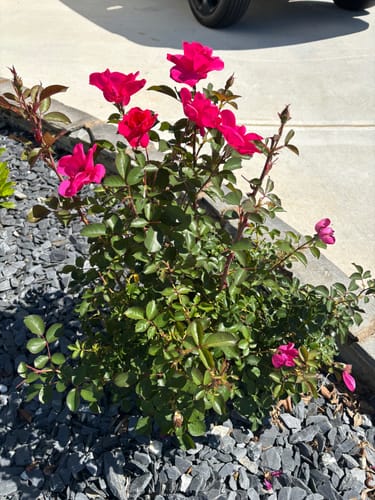
"My rose bushes are a lush green with lots of blooms and my canna Lillie's only had a few flowers previous to using Elm Bloom on them. I have a rock bed instead of mulch and using a liquid helps to get the solution into the roots."
— Evalie D., Verified Buyer
★★★★★
"I have nothing but praise for your product, Elm Dirt. I used it on my roses and I had 50 roses on one small limb. Also, my patio tomatoes are really growing and blooming. So I love it."
— Sybil T., Verified Buyer
★★★★★
"A few days after plant booster everything greened up. My roses had some issues after a previous vicious winter. I also applied Elm Dirt a few days later for extra love. It's quite wonderful to see this change! Great products, easy to apply."

— LeAnn G., Verified Buyer
Plant Juice sits at a 4.65-star average over 1,793 reviews now, with Bloom Juice a hair above it at 4.7 across 397. The roses seem to be on board with the microbes.
Frequently Asked Questions
When should I start feeding roses in spring?
Start once soil temperatures reach about 50°F and you see those first red buds swelling on the canes, usually just after your last hard frost. Because organic feeds are gentle, an early start won't burn tender new growth the way a synthetic salt fertilizer can. This first feeding matters most, since it wakes the soil biology at the same time the plant breaks dormancy.
How often should roses be fed during the growing season?
Every 2 to 3 weeks from early spring through late summer works for most rose gardens. Lots of gardeners alternate Plant Juice for green growth with Bloom Juice for flowers on that same rhythm. Light and frequent beats one heavy feed, because roses pull nutrients steadily rather than in bursts.
Can you over-feed roses with organic fertilizer?
It's much harder to over-feed with a living organic fertilizer than with synthetic salts, since nutrients release slowly as the plant calls for them. Follow the label rate and you won't see the leaf-scorching burn that comes from a heavy hand with chemical feeds. The real risk with organics is too much nitrogen too late in the season, not too much volume.
When should I stop feeding roses before winter?
Stop high-nitrogen feeding about 6 to 8 weeks before your first frost so you don't push tender growth that winter will kill. A fall top-dress of worm castings is fine right up to dormancy, since it feeds roots slowly and helps the plant harden off instead of pushing soft canes.
Is organic rose fertilizer better than synthetic?
Organic living fertilizers feed the soil biology that feeds your roses, which builds deeper roots and better disease resistance over several seasons. Synthetic feeds give a fast green-up but skip the soil life entirely, and the salts can build up and stress roots year after year. Synthetics act faster in the first two weeks; organics win on the full-season and multi-year picture.
What is the best fertilizer for roses?
The best rose fertilizer changes with the season instead of staying the same all year. Use a nitrogen-forward living fertilizer in spring for canes and leaves, shift to a phosphorus-forward bloom feed once buds set, then finish with worm castings in fall to feed roots without pushing new growth. Plant Juice, Bloom Juice, and Ancient Soil cover those three jobs.
Should I feed roses that were just planted?
Yes, but focus on roots rather than blooms for the first several weeks. Water a newly planted rose in with a diluted living fertilizer to get beneficial microbes into the root zone, then hold off on bloom feeds until you see new leaf growth. Synthetic fertilizer at planting time can burn the fine feeder roots a young rose depends on.
Why is my rose bush green and leafy but not blooming?
A big leafy rose with few flowers almost always means too much nitrogen and not enough phosphorus and potassium. Nitrogen tells the plant to build leaves and canes, so an all-nitrogen diet gives you a gorgeous green shrub and very few blooms. Switch to a bloom-focused feed once buds start forming, and deadhead spent flowers to trigger the next flush.

Lauren started Elm Dirt after watching her 6-month-old daughter grab fistfuls of dirt from the backyard and immediately eat them — and realizing she had no idea what was in her soil. As a chemical engineer and a mom, she couldn't just shrug. She started digging into soil science, learned about living soil biology, and built a whole line of fertilizers around beneficial microbes instead of synthetic chemicals. Today Elm Dirt products are used by home gardeners, rose show champions, and organic growers across the country.