



Deadheading vs. Not Deadheading: What Science Says About Getting More Blooms

Short answer: Deadheading gives you more flowers on most annuals and repeat-blooming perennials, because pulling off a faded bloom before it sets seed sends that energy back into making new buds. Skip it on self-cleaning plants like impatiens, and ease off in fall if you want seed heads. Just know that deadheading only frees the energy up — the plant still needs nutrients from living soil to actually build those extra blooms.
For about six years running I had the same hanging basket of petunias on my front porch, and every single year it went the same way. Enormous and ridiculous through June. Then by the third week of July, a fistful of leggy stems with maybe four flowers on it.
I blamed the Kansas heat every time.
It was not the Kansas heat. What was actually happening is that I let every spent bloom sit right where it was and quietly turn itself into seed, and once a petunia gets going on seed production it pretty much files the summer under "mission accomplished" and clocks out.
Nobody told me that. I found it out years later, reading a horticulture paper for a completely different reason, and I sat there feeling a little dumb about six summers of sad petunias.
So let's get into it — what the plant is actually doing when you snip, when snipping helps, when it truly doesn't matter, and the part most people leave out.
The quick version
- A flower's whole job is to make seed. Take it away before it can, and the plant has another go.
- Worth deadheading: petunias, zinnias, marigolds, cosmos, repeat roses, coneflower, salvia, coreopsis, dahlias.
- Don't bother: impatiens, begonias, torenia, periwinkle, most flowering vines, once-blooming roses.
- Cut just above the first healthy set of leaves. On roses, above a leaf with five leaflets.
- Ease off about four to six weeks before your first frost.
- Feed while you're at it. Freed-up energy with no nutrients behind it doesn't build a flower.
What deadheading even means (no fancy words, promise)
Deadheading is removing a flower once it's faded and starting to go. You pinch it or snip it off before it turns into seed. That's the whole technique, and it takes about as long to do as it did to read that sentence.
Why it works comes down to one fact about plants that I think gets glossed over: a flower is not there for you. A flower is a seed-making apparatus. Bloom, get pollinated, set seed, pass along the genes, done. That's the plant's entire agenda, and the fact that we find it beautiful is a happy accident of pollinator biology.
Is deadheading the same as pruning?
No, and this one trips up a lot of folks — including me for a long while, since I used the words interchangeably for years and got some funny looks at the garden center.
- Deadheading takes off just the spent flower and a bit of stem. Light work, done every few days, all season.
- Pruning takes off woody stems and branches to shape the plant or open it up for air. Once or twice a year, at particular times.
- Shearing sits in between — cutting a whole plant back by a third to force a fresh flush.
The science: where a plant's energy actually goes
Every plant is running a budget. Sun, water and nutrients come in, and it decides how much goes to roots, how much to leaves, how much to flowers, how much to seed. It's not a conscious decision obviously, it's hormones and resource allocation, but budget is the honest way to picture it.
Seed is the expensive line item. Once a flower gets pollinated and starts packing a seed, a serious chunk of that budget gets committed, and new bloom production drops off.
Deadhead, and the math changes.
- Energy gets rerouted. Penn State Extension explains it moves away from seed and back toward new growth and flowers.
- The plant doesn't quit on you in July. Plenty of annuals will bloom straight through the season instead of shutting down after one round.
- You often get a bushier plant. Pinching tends to make things fuller and more compact, not just more flowery.
Kansas State put it about as plainly as anyone: annuals in particular throw their energy at seed to make sure the species carries on, so pulling the old flowers frees that up to make more flowers instead.
Deadheading vs. NOT deadheading — side by side
✂️ If you deadhead
- More blooms, often right through the season
- Tidier, healthier-looking plants
- Energy goes to new flowers, roots, leaves
- Lots of perennials rebloom a second or third time
- Plants tend to fill out
🌾 If you don't
- Plant sets seed and usually stops blooming
- Can go leggy and tired by midsummer
- Seed heads feed birds through winter
- Plants can reseed themselves for next year
- Roses form hips for fall and winter interest
And look — not deadheading isn't the wrong answer. It's a trade. If you want the seed heads for the goldfinches, or you like how a bed looks with dried coneflower standing in the snow, or you're hoping for free volunteer plants next spring, then leaving them is exactly right. You're just choosing something other than more flowers, on purpose, which is a completely different thing from forgetting.
Now, if you've got tall green stems and hardly any flowers at all, that's usually not a deadheading problem. I dug into that one separately in why your flowers are green and leggy.

Which plants to deadhead, and which to leave alone
Here's my cheat sheet. Screenshot it if that's useful — I keep a version of this taped inside the door of our potting shed because I still can't reliably remember what torenia wants.
| Plant | Deadhead? | Why |
|---|---|---|
| Petunias, calibrachoa | Yes — often | Fast rebloomers; every few days keeps them going |
| Zinnias, cosmos, marigolds | Yes | Cut-and-come-again; the more you cut the more you get |
| Repeat-blooming roses | Yes | Cut above a five-leaflet leaf to push a strong new cane |
| Coneflower, salvia, coreopsis, phlox, veronica | Yes, until fall | Reliable second and sometimes third flush |
| Dahlias, snapdragons, geraniums, sweet peas | Yes | Shut down fast once seed sets |
| Peonies | Yes, but only for looks | Won't rebloom; cutting spent flowers protects next year's buds |
| Impatiens, begonias, torenia, periwinkle | No | Self-cleaning — they drop old blooms themselves |
| Most flowering vines | No | Bloom continuously without any help |
| Sedum "Autumn Joy" | No | The seed heads are the fall and winter show |
| Once-blooming roses | No | One flush a year; leave them and get rose hips |
| Coneflower in September | No | Leave it for the goldfinches and for self-seeding |
One that surprised me: coreopsis "Moonbeam" and pink evening primrose can be sheared back by a third to half the whole plant, per MU Extension. The first time I did it I was sure I'd murdered a perfectly good coreopsis. Three weeks later it came back thicker than before.
If you're not sure whether something in your bed is even the reblooming type, my guide on annuals vs. perennials sorts most of that out.
How to deadhead the right way
It takes seconds once your hands know what they're doing.
- Wait till the flower actually fades. Don't pull off buds still on their way up — only the spent ones. I've done this. Twice.
- Follow the stem down to the first set of healthy leaves.
- Pinch or snip just above those leaves. Thumb and finger works fine on soft stems like petunias. Clean snips for anything woodier.
- On roses, cut above a leaf with five leaflets rather than three. Three-leaflet leaves push weak little shoots; five-leaflet leaves push a real cane.
- Come back every few days. Two or three short passes a week and it never turns into a chore. Honestly it's the part of gardening I look forward to most — ten quiet minutes with a cup of coffee before anybody else is up.
Roses in particular have their own rules, and there's more than I can fit here. I've written up getting more blooms from roses naturally, a general rose care guide, and one on caring for roses through the seasons. Peony people, yours work differently — peony care and feeding is over here.
When to stop deadheading for the year
Ease off roughly four to six weeks ahead of your first expected frost. For me in the Kansas City area that lands somewhere around mid-September, though it's moved later most years lately. Further south, later still. Up north, sooner.
Leaving that last round of blooms does a few good things at once. Seed heads carry goldfinches and chickadees through the cold months. Rose hips and dried flower heads give you something to look at in January, when the beds are otherwise pretty bleak. And the plant reads it as a signal to slow down and harden off before the real cold shows up.

The part almost everybody skips
Here's where my engineering brain elbows its way in. Deadheading frees up energy. Energy is not the same thing as material.
Picture it this way. Deadheading tells your plant to build more flowers. But if the soil's tapped out, you've handed it a work order with an empty supply closet. It can't manufacture a bloom out of good intentions.
Flowers get built out of actual nutrients — phosphorus, potassium and calcium especially — and the plant can only reach those if the biology in the soil is alive and doing its job. That's the piece synthetic feeds skip right past.
What's actually in the bottle
We sent Bloom Juice to BiomeMakers for independent DNA sequencing (report #CUX004). They came back with 192 distinct microbial species — among them Pseudomonas putida, Azospirillum, Azotobacter chroococcum, Bacillus, Comamonas terrigena, Citrobacter amalonaticus, and the fungi Trichoderma pubescens and Mortierella sarnyensis.
Names are nice. What that community does is the part that matters:
Phosphorus is the big one for flowering, and here's the frustrating thing about it: most garden soil already has plenty. It's just locked onto soil particles in a form roots can't touch. Phosphorus-solubilizing bacteria pry it loose. Rahnella and Acinetobacter both do exactly this, and I've written up how each one works if you want the detail.
Another 32% of this community produces auxin, the hormone that tells a plant where to put new tissue. In plain English: these bugs help your plant cash the check you wrote when you deadheaded.
For the deep dive: Michigan State University Extension on deadheading, and this review of phosphate-solubilizing bacteria on PubMed.
Which is really the answer to "deadheading vs. not deadheading." It was never either/or. The people with those absurd, all-summer flower shows are doing both — snipping to redirect the energy, feeding so there's something for the plant to build with.
If the microbe side is new to you, start with how beneficial microbes help plants grow.

Bloom Juice — Organic Bloom Booster
Living, CDFA Certified Organic liquid feed built to push bigger, longer-lasting blooms on flowers, roses and flowering shrubs. Two tablespoons per gallon of water, every couple weeks. Nothing to measure out precisely, nothing to burn.
From $19.95 · 16 oz to 2.5 gal · 4.7★ from 397 reviewsShop Bloom Juice →
Not sure whether you want Bloom Juice or our all-purpose Plant Juice? I laid the difference out in this Plant Juice vs. Bloom Juice guide, and there's a rundown of ten things Bloom Juice does in the garden if you want the specifics.
What other gardeners are seeing
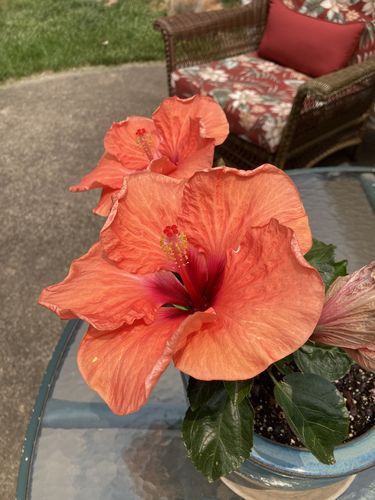
"My hibiscus dropped all its blooms and got infested with aphids — I really thought it was another victim of my black thumb. After watering with Bloom Juice a couple times, it suddenly started developing flower buds. It's thriving and I give all the credit to your great product!"

"Both plants started the same day. The one in the back got Bloom Juice, the front one did not, and the difference is about 8 inches taller. Only been adding two tablespoons each gallon for just over four weeks and I am amazed at the difference!"
"The azalea was so tired-looking last year, and this year after a full fall and spring feeding of Bloom Juice it's healthy, vibrant, and covered in big, perfect white flowers. The bulb iris and daffodils are big and so colorful and long-lasting. Great stuff!"
"We're committed to no chemicals on our property. Bloom Juice was just what I was looking for and oh my goodness — I'm not a pro and the results were astounding. The beds are super happy!"
Quick questions, quick answers
Does deadheading really give you more flowers?
Yes, on most annuals and repeat-blooming perennials. Take a faded flower off before it sets seed and the plant decides the job isn't done, so it puts up a new bloom instead. Self-cleaning plants like impatiens are the exception — they've already got it handled.
What happens if you never deadhead?
The plant finishes what it set out to do. Energy goes into seed, blooming slows or stops, and things tend to look tired by midsummer. Perfectly fine if you're after seed heads for the birds or you want it to reseed. Just usually means fewer flowers.
Which plants should you NOT deadhead?
Self-cleaning annuals — impatiens, begonias, periwinkle, torenia. Most flowering vines. Anything you're growing for seed heads or rose hips, once-blooming roses, and whatever you'd like to reseed itself.
How often should you deadhead flowers?
Two or three quick passes a week during peak bloom covers it. Fast bloomers like petunias and zinnias appreciate more attention than that; slower perennials only need you when a flush finishes.
Will fertilizer give me more blooms without deadheading?
It helps, but it really wants to be paired with deadheading. Snipping frees the energy up; living soil supplies the phosphorus, potassium and calcium to build with. They work together — one doesn't substitute for the other.
When should I stop deadheading for the year?
Four to six weeks before your first expected frost. Leaving that last round lets plants form seed heads and hips, feeds the birds, and tells the plant to start winding down.
Is deadheading the same as pruning?
No. Deadheading takes the spent flower and a short bit of stem. Pruning takes woody stems and branches to shape the plant, and it happens once or twice a season, not weekly.
The bottom line
Deadhead the things that pay you back for it. Leave the seed heads where you'd rather feed the birds or get free plants next year. Either choice is a fine one as long as you're making it on purpose.
And don't skip the part almost everybody skips. Feed the soil, so your plant has something to build all those blooms out of.
Then go sit down and look at them. That's what they're for.

Lauren started Elm Dirt after her 6-month-old daughter grabbed and ate fistfuls of backyard dirt. As a chemical engineer and a mom, she couldn't just move on — so she dug into soil science and built a product line around beneficial microbes instead of synthetic chemicals. Elm Dirt is now used by home gardeners, rose-show champions, and organic growers nationwide.