



Organic Garden Soil for Raised Beds: How to Build It, Maintain It, and Make It Last

Short answer: Good organic garden soil for raised beds is about 50% topsoil, 30% finished compost, and 20% aeration material, with living compost or worm castings mixed in at 10 to 20% of the total volume. You maintain it by topping off the 2 to 4 inches that settle each year and feeding the biology every two weeks in season. You almost never replace it.
What's in this guide
I'll tell you the thing nobody selling soil wants to say out loud. The bag matters less than what you do after you dump it in.
I've had this conversation probably four hundred times now, usually in May, usually with somebody who spent a small fortune on cedar boards and bagged mix and is standing there in front of a bed that just isn't doing much. Tomatoes an inch shorter than the neighbor's. Lettuce that bolted early. They want to know what soil to buy next year, when the real question is what happened to the soil they already have.
So here's the whole thing. How to build it, how to keep it alive, and how to stretch it out so you're not starting over every spring. If you're brand new to beds, read our raised bed guide first and come back here.
What Actually Goes in a Raised Bed
Three jobs. That's all your soil has to do. Every recipe for organic soil for raised garden beds is really just a different route to the same three.
Hold water without turning into soup. Feed the plant. Let roots and air move through it. The exact percentages are a lot looser than the internet makes them sound, and university extension programs land in slightly different places depending on your region. University of Maryland Extension puts the target organic matter content of a raised bed at 25 to 50% by volume, which is a wide window on purpose.
Here's the mix I use and recommend:
| Component | Share of mix | What it does |
|---|---|---|
| Topsoil or bagged garden soil | 50% | Bulk and structure. Cheapest part by volume. |
| Finished compost | 30% | Nutrition and organic matter. Homemade works great. |
| Aeration material | 20% | Coarse bark fines, pumice, perlite, or rice hulls. Keeps the bed from turning to brick. |
| Living compost or worm castings | 10 to 20% on top of the above | Biology. Mixed into the top 6 inches where roots actually live. |
That last row is the one that changes results. Not because worm castings are some magic nutrient bomb, since they're pretty mild on N-P-K. It's because they carry biology, and biology is what turns everything else in the bed into something a root can absorb. If you want the mechanism, what worm castings are actually doing to your soil goes deeper than I can here.

Ancient Soil is our Class A certified compost and worm casting blend, mixed at roughly 20% into the top few inches of a bed.
The deep bed shortcut
If you built a bed taller than 12 inches, do not fill the whole thing with soil mix. That's an expensive mistake and it doesn't help your plants one bit, since almost all vegetable roots stay in the top foot.
Fill the bottom half with logs, branches, leaves, or straw. Soil mix on top. It rots down slowly and feeds the bed for years, which is basically the hügelkultur idea without the fuss. Our post on no-dig gardening covers the same principle from the other direction.
Garden soil is not potting mix
Worth saying plainly because it trips up a lot of first-year bed builders. Potting mix is designed for containers, which means it's light, peat-heavy, and built to drain fast in a pot with holes in the bottom. Put it in a raised bed and it slumps, compacts, and dries out in odd patches. We broke the difference down in garden soil vs. potting mix if you're standing in the aisle trying to decide.
How Much Worm Castings to Add to Raised Bed Soil
Short answer: Mix worm castings into a new bed at 10 to 20% of total soil volume, concentrated in the top 6 inches. For an established bed, topdress 1 to 2 inches every spring. A 4x8 foot bed takes roughly 10 to 20 lbs for an annual topdress, and about 1 cup per planting hole for transplants. There is no amount that will burn roots.
This is the question I get more than any other, and most answers online are vague on purpose because nobody wants to be wrong. So here are actual numbers.
| Situation | How much | Where it goes |
|---|---|---|
| Filling a brand new bed | 10 to 20% of total volume | Worked through the top 6 inches |
| Spring topdress, established bed | 1 to 2 inches across the surface | Raked lightly into the top 2 to 3 inches |
| 4x8 ft bed, annual refresh | About 10 to 20 lbs | Spread evenly, then water in |
| Transplanting seedlings | About 1 cup per hole | Mixed into the backfill around the root ball |
| Direct-sown seed rows | A thin band along the row | Top inch, before seeding |
| Mid-season pick-me-up | A handful at the drip line | Surface, then water |
The reason I can give you a range this wide without hedging is that castings don't behave like synthetic fertilizer. There's no salt index to worry about and no burn risk at any rate, which is why seed-starting mixes can run 30% castings and still work. If you overshoot, the worst outcome is that you spent more money than you needed to.
Our Worm Castings run $14.99 for 2 lbs or $29.95 for a 10 lb bag. For a standard 4x8 bed getting its annual spring refresh, one to two 10 lb bags covers it. New to castings entirely? What are worm castings is the plain-language version, and worm castings vs. compost covers when to reach for which.
Why Bagged Organic Garden Soil Isn't Quite Enough on Its Own
This one bugs me and I'll try not to rant.
Most bagged organic garden soil is fine. It's real material, it's usually screened well, and it does the structure job. But it's been sitting on a pallet in a parking lot in July, sealed in plastic, sometimes heat-treated on purpose to kill weed seeds. Whatever biology was in there when it left the yard is mostly gone by the time it reaches your bed.
So you've got the house but nobody's living in it.
That's not a knock on the manufacturer. It's just what shelf-stable means. Living things don't do well in sealed bags, which is the same reason a jar of sauerkraut in the fridge and a shelf-stable one aren't remotely the same product. We laid out the full comparison in living soil vs. sterile soil.
Quick gut check: Dig four inches down into your bed two days after a good rain. Real, working soil smells sweet and earthy, has visible fungal threads, and you'll usually turn up a worm or two. Soil that smells like nothing at all, or like a basement, is telling you something. Our post on the 5 signs your garden soil needs help covers the other tells.
What we did about it
I ended up building this company after my daughter started eating handfuls of our backyard dirt as a baby and I realized I had no idea what was in it. So we had our Plant Juice independently sequenced by BiomeMakers, a soil genomics lab, rather than guessing. Report CUX005 came back with 291 distinct microbial species.
The species count gets quoted a lot, but the functional numbers are the useful part. From that same report:
- 80% of species are capable of nitrogen release
- 84% produce auxin (IAA), the root-branching hormone
- 27% solubilize inorganic phosphorus, unlocking phosphorus your bed already has but roots can't reach
- 27% solubilize potassium the same way
- 56% act as fungicide agents against soilborne pathogens
- 82% produce ACC deaminase, which is the drought-stress buffer
- 82% produce siderophores, which make iron available to roots
Named species confirmed in CUX005 include Pseudomonas putida, Bradyrhizobium canariense, Rhizobium sp., Variovorax paradoxus, Trichoderma spirale, Mortierella, Streptomyces, and five distinct Lysobacter species. That last genus is one of the more interesting ones for a vegetable bed, since published work on Lysobacter describes a whole arsenal of antifungal compounds and lytic enzymes it uses against soilborne fungi. If you want the rabbit hole on the others, we've written up Pseudomonas and disease prevention and Bradyrhizobium and root development in their own posts.
Plant Juice is CDFA Certified Organic. It's $19.95 for 16 oz or $29.95 for a 32 oz bottle. The three-bottle pack runs $59.85, which is where most raised bed folks land for a full season.

★★★★★
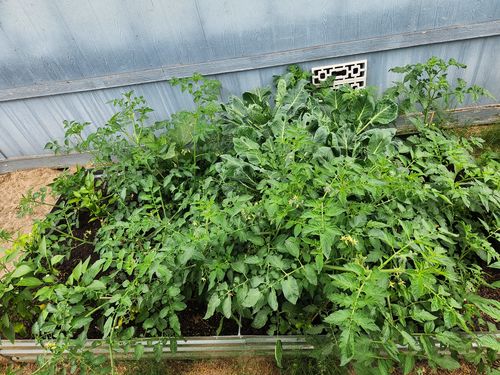
"This product saved my plants. The stores no longer carry compost. It just disappeared online too. I'm making my own but that takes time. There is not enough nutrition in the dirt you purchase for a raised bed garden. I tried this and every plant near death came back to life and had grown over night. I fertilize once every two weeks. I've transferred to Bloom now for the one's flowering. I also use"
— Charlene R., verified buyer
Maintaining Raised Bed Soil Through the Season
Here's where most people drift. The bed gets built in April with a lot of care and then gets ignored until something goes wrong in July.
The maintenance itself is light. It's just consistent.
| When | What to do | Roughly how long |
|---|---|---|
| At planting | Mix worm castings or living compost into top 6 inches | 20 min per bed |
| Every 2 weeks, spring to summer | Feed with a microbial liquid (2 oz per gallon, soil drench) | 5 min |
| When flowers set | Switch heavy feeders to a bloom feed every 3 weeks | 5 min |
| Mid-summer | Refresh mulch, check moisture 3 inches down | 15 min |
| After harvest | Chop and drop spent plants, cover the bed | 30 min |
| Early spring | Top off settled soil, re-inoculate before planting | 30 min |
Two things I'd underline on that list.
Never leave a bed bare over winter. Bare soil loses biology fast, and the freeze-thaw cycle wrecks the structure you spent all season building. Mulch, leaves, a cover crop, cardboard even. Anything. More on that in our mulching guide.
Feed the soil, not the plant. A soil drench gets the microbes down where the roots are. Foliar spraying looks satisfying but it's a supplement, not the main event. Our raised garden bed care guide walks through the full season if you want it on one page.

★★★★★
"My bell pepper plants were struggling ever since I transplanted them into my raised garden bed. I used the Plant Juice and the very next day, they looked completely healthy. I was completely shocked and super happy with the purchase! Thank you!"
— Tina B., verified buyer
★★★★★
"Although the smell is pretty gnarly, I mean it is worm poop essentially, my plants all LOVE LOVE LOVE it! If they could sing, I'd have a choir in my raised bed. I didn't think to take before pictures, but my potato plants have totally shot up several inches in two weeks, my Roma tomatoes have multiple fruit ( like 5-6) in a vine and my cucumbers are at least three times their size since I started watering with Elm Dirt. I will never be without this!"
— Mona C., verified buyer
★★★★★
"I started a vegetable garden in 2 raised bed and grow bags last summer here in Iowa. I read about Elm Dirt and ordered it and learned more about it and Bloom juice. Within 4 weeks I was surprised and after two months I was amazed! This year we expanded it, my daughter and I (I'm 75 and she's 49). Gardening relaxes us, keeps us outside and helps us eat healthier and cheaper!"
— Kimberly M., verified buyer
Feeding every two weeks is the part people forget. Put Plant Juice on a subscription and it shows up before you run out, at a lower price than one-off orders.
Set Up Plant Juice DeliveryMaking It Last: Why Your Soil Level Keeps Dropping
Every spring, same email. "My raised bed soil sank four inches over the winter, did I do something wrong?"
You didn't. That's the system working.
Organic matter breaks down. That's the entire point of putting it in there. Oregon State Extension puts it directly: organic matter content declines over time through decomposition, soil microorganism feeding, and nutrient cycling, which is why a single addition doesn't hold. When your bed drops 2 to 4 inches over a season, what you're looking at is compost that got eaten, digested, and handed off to your plants. A bed that never settles is a bed where nothing is decomposing, which is worse.
The mistake isn't the sinking. It's what most folks top it off with.
Top off with the right stuff
Grabbing another bag of the same peat-heavy mix gets you right back here in twelve months, because peat compacts and it brings no biology with it. We wrote a whole thing on peat-free gardening if you want the environmental side of that argument too.
Better top-off order, in my experience:
- Finished compost for the bulk of the missing volume. Homemade counts, and composting 101 will get you started if you don't have a pile yet.
- Worm castings at 1 to 2 inches over the surface, worked lightly into the top few inches.
- A fresh aeration handful if the bed felt heavy or waterlogged last year.
- Microbial drench two weeks before you plant, to wake everything back up.
Castings are what I reach for most in spring because you cannot overdo it. If you're weighing a broader amendment list, our soil amendment guide and what to add to garden soil before spring planting cover the rest of the options.

★★★★★
"I have used Elm Dirt products in my 1st time ever raised beds garden boxes. Each plant has there premier worm castings. I feed twice a month with Plant Juice and every 6 weeks with Bloom Juice. I started my garden in mid May from 2" starter pots. I'm very please with the progress of my garden and the natural organic products I use."
— Rickey J., verified buyer
The part about not replacing it
A raised bed that gets topped off and fed should get better every single year. Year three is usually when people notice it. The soil's darker, holds water longer, and the plants stop needing rescue.
Full replacement really only makes sense after a serious soilborne disease event. Otherwise you'd be throwing out three years of biology you paid for with time.
A Simple Year in the Life of a Raised Bed
If you want the whole thing on one page:
- Late winter: Pull back mulch, check the soil level, order what you need. Our spring raised bed prep guide has the detail.
- Early spring: Top off with compost and castings. Microbial drench two weeks out from planting.
- Planting: Work castings into the top 6 inches. Water in with Plant Juice.
- Growing season: Feed every 2 weeks. Mulch to hold moisture. Watch, don't fuss.
- Flowering and fruiting: Add Bloom Juice every 3 weeks for heavy feeders.
- Fall: Chop and drop, cover the bed. Never leave it naked.
That's about twenty minutes a month across a growing season, which is less than most people spend deciding what to plant.
And it gets easier, which is the part I actually care about. A bed with real biology in it forgives you. Miss a watering and it holds on. Skip a feeding and the microbes are still cycling nutrients in the background. That's the whole promise of living soil. Not that it does something dramatic, but that it quietly stops your garden from needing rescue.
If your beds are more about ease than yield, raised bed gardening for seniors is written around less bending and less hauling, and most of it applies to anyone with a bad back.
Common Questions About Organic Raised Bed Garden Soil
What is the best organic garden soil mix for raised beds?
Roughly 50% topsoil or bagged garden soil, 30% finished compost, and 20% aeration material like coarse bark, pumice, or rice hulls. Then living compost or worm castings at 10 to 20% of total volume. The ratios are forgiving. What isn't forgiving is skipping the aeration, or skipping the biology.
How much worm castings should I add to raised bed soil?
For a new bed, 10 to 20% of total soil volume, mixed into the top 6 inches. For an established bed, topdress 1 to 2 inches each spring, which works out to about 10 to 20 lbs for a 4x8 foot bed. At transplant, about 1 cup per planting hole. Worm castings carry no burn risk, so there's no rate that will hurt your plants.
Do I need to replace raised bed soil every year?
No, and please don't. Top off the 2 to 4 inches that settled with compost and castings, then feed through the season. Healthy bed soil improves with age. Full replacement is a last resort after disease.
Why does the soil in my raised beds keep sinking?
Because the organic matter is decomposing, which is exactly its job. Most beds drop 2 to 4 inches a year. It only becomes a real problem if you keep replacing that volume with peat-heavy bagged mix that compacts again by midsummer.
Can I use bagged organic garden soil straight from the store?
You can, and lots of people do. Most bagged organic soil for raised garden beds is decent material. Just know that it has very little live biology left after heat treatment and time in plastic. Mix in worm castings at planting and feed with a microbial liquid, and you've put back the missing piece.
How deep does raised bed soil need to be?
Twelve inches of good mix handles nearly everything a home gardener grows, since most vegetables root in the top 8 to 12 inches. Taller beds should get logs, branches, or leaves in the bottom half with soil mix reserved for the top. Carrots, parsnips, and full-size tomatoes appreciate the full 12 to 18 inches.
How often should I feed vegetables in a raised bed?
Every two weeks in the growing season is the sweet spot for most gardeners, at 2 oz per gallon as a soil drench. Heavy feeders like tomatoes, peppers, and squash do better on a bloom-focused feed every three weeks once flowers set. For tomatoes specifically, see how to fertilize tomatoes organically, and organic fertilizer for vegetables covers the rest of the bed.
Should I test my raised bed soil?
Once at the start, then every few years. It's worth knowing your pH before you start guessing at problems. Soil pH for vegetables and our soil testing walkthrough cover what's worth measuring and what isn't.
Can I grow strawberries in the same soil mix?
Yes, with one tweak. Strawberries want slightly more drainage and a bit more acidity than most vegetables, so lean toward the higher end of the aeration range. Growing strawberries in raised beds has the full setup.
Where to Start
Build the mix right, feed the biology, and top it off instead of replacing it. Do that and a raised bed becomes the easiest growing space you own, the one that keeps working while you're busy with other things.
Start with Ancient Soil for the biology at $29.95 for 2 lbs, and Plant Juice for the every-two-weeks feeding. If you want both, the Elm Power Bundle pairs them for $89.90. Or browse all of our soil mixes and see what fits your setup.
And if you get out there this weekend and your soil smells sweet and there's a worm in it, you're already winning. Go plant something.

Lauren Cain
Founder & Chemical Engineer · Elm Dirt, Grandview, Missouri
I started Elm Dirt after my infant daughter ate a handful of our backyard dirt and I realized I had no idea what was in it. I'm a chemical engineer and a mom, and I build fertilizers around beneficial microbes instead of synthetic chemicals. Our products are used by home gardeners, rose show champions, and organic growers across the country.