



By Lauren Cain · Founder & Chemical Engineer, Elm Dirt · July 4, 2026 · 8 min read

Okay, I'm just gonna say it. My baby girl crawled across our backyard, grabbed a fistful of dirt, and ate it before I could blink. I panicked. Then I got curious — and that curiosity turned into a full-blown research rabbit hole that changed how I look at soil forever. Here's the thing nobody tells you: not all dirt is the same. And worm castings? They're quietly doing something in your soil that most fertilizer companies would rather you didn't know about.
Around here we just call them "worm poop" — and yeah, that's technically what they are. But honestly, that name does them dirty. What's actually happening when you mix this stuff into your beds is kind of incredible. I'm talking microbial armies, real plant growth hormones, built-in disease protection, and a soil makeover that sticks around for months. Not a spray you redo every week. Months.
I'm a chemical engineer, so I've actually run the numbers on this. Let me walk you through what's going on right under your feet — because once it clicks, you'll never look at a bag of blue synthetic fertilizer the same way again. And here's the best part for you: this is the lazy gardener's secret. Get the soil right and your plants pretty much start taking care of themselves.
It Starts With a Microbial Army (And I Mean That Literally)
Here's the fact that stopped me in my tracks. One single gram of worm castings holds somewhere between 100 million and a billion tiny beneficial microbes. One gram. That's about the size of a raisin. Hold that little scoop in your palm and you're holding more living critters than there are people on Earth.
Here's how it happens. As stuff passes through a worm's gut, it picks up bacteria, fungi, and all sorts of helpful microbes along the way. By the time it comes out the other end (yep, that end), it's completely transformed. You're not just tossing nutrients on your plants. You're handing them a whole living, breathing ecosystem.
Inorganic nitrogen release capability in our verified microbial strains
Phosphorus solubilization — unlocking nutrients already in your soil
Auxin / IAA production for natural root growth stimulation
Antifungal activity against soil-borne pathogens
A few of the MVPs living in good, castings-rich soil:
Azospirillum Bacillus subtilis Pseudomonas putida Trichoderma Flavobacterium Sphingomonas Lysobacter Variovorax paradoxus
And every one of them has a job. Azospirillum grabs nitrogen right out of the air and turns it into plant food. Pseudomonas putida makes natural antibiotics that keep the bad guys away from your roots. Trichoderma wraps around your roots like a bodyguard and fights off fungal diseases. Lysobacter chews up dead material and frees the nutrients locked inside. It looks like chaos down there, but it's not — it's teamwork. A whole soil food web pulling in the same direction, and all it takes to kick it off is one scoop of good vermicompost. Want the big-picture version? Here's how beneficial microbes help plants grow.

Worm Castings Are Feeding Your Plants Growth Hormones (Naturally)
This is the part that surprises people. Worm castings don't just hand your plants the basic nutrients. They come loaded with actual plant hormones — auxins, cytokinins, and gibberellins — the same signals your plants use to grow roots, make new cells, and decide how fast to take off. It's almost like your soil is whispering instructions to your plants.
Take auxins (the science-y name is IAA, or indole-3-acetic acid). They're the hormone in charge of growing longer, branchier roots. And get this — when roots hit soil full of castings, they actually grow toward it. Research in Soil Biology & Biochemistry has measured exactly how these worm-castings hormones shape root growth. That's not me talking up my own product. That's peer-reviewed science.
Then there's cytokinins. These little guys tell your plants to push out new leaves and flowers, and they slow down the aging of older leaves. So if you've ever added worm castings to a tired houseplant and watched it green up, hold onto its leaves longer, and start blooming again — that wasn't luck. That was cytokinins doing their thing. (Your peace lily says thank you.)
Gibberellins round out the team. They nudge seeds to sprout and help young plants shoot up in those first few weeks. Ever notice how seeds started in a castings mix seem to pop up faster? Now you know the secret. Those seeds are basically soaking in a natural "wake up and grow" signal.
Humic Acids: The Unsung Hero
Worm castings are also packed with humic and fulvic acids. Those are complex compounds that form as organic matter breaks down inside the worm. They're not nutrients themselves. Think of them more like traffic cops — waving the nutrients through to exactly where your plant needs them.
Here's what they actually do for you. Humic acids grab onto minerals and shuttle them straight into your plant's roots. They boost what scientists call cation exchange capacity — in plain English, that's your soil's ability to hold onto food instead of letting it rinse away every time it rains. They also keep micronutrients like iron and zinc in a form your plants can actually use, instead of locked up where roots can't reach them. Penn State Extension has a solid write-up on humic acid function in organic soil management if you like getting into the weeds (pun intended).

Your Soil Structure Will Never Be the Same (In the Best Way)
Okay, nutrients and microbes aside — worm castings literally change how your soil feels in your hands. And you don't have to wait years to see it. Give it one growing season and you'll feel the difference. Most folks are honestly surprised by how much it matters.
Got heavy clay? You know the drill — it packs down like concrete, stays soggy, and roots just can't push through. Work in some worm castings and you start building what the scientists call aggregate stability. The castings and the goo the microbes make (there's one called glomalin) act like glue, clumping your soil into little crumbs with air pockets in between. All of a sudden, air gets in. Water drains. Roots spread out. Your plants can finally breathe.
Sandy soil is the opposite headache — water races right through and drags your nutrients along with it. Castings fix that too. They add organic matter that acts like a sponge, holding moisture (and food) right where your roots can sip on it between waterings. Translation: less watering for you. One of our customers, Pauline down in Texas, said it better than I could:
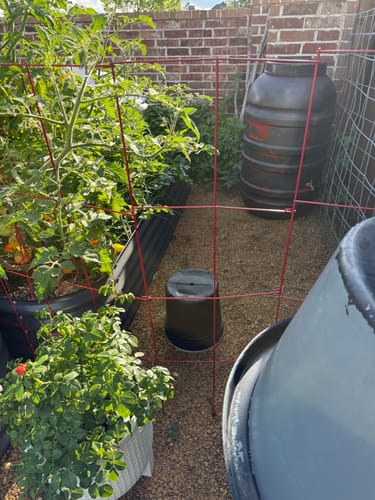
"I live in Texas and the soil is really thick clay. We call it gumbo down here and there's a lot of plants that do not like my soil worm casting has really helped my plants through the tough soil."
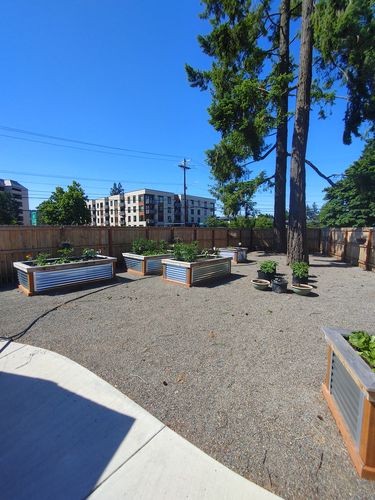
"I have used Elm Dirt products in my 1st time ever raised beds garden boxes. Each plant has there premier worm castings. I feed twice a month with Plant Juice and every 6 weeks with Bloom Juice. I started my garden in mid May from 2" starter pots. I'm very please with the progress of my garden and the natural organic products I use."
One more thing you'll appreciate. Worm castings are fine and even, almost like coffee grounds. So when you mix them into a pot or a bed, they blend right in — no hot spots, no weird chunks, no clumps to break apart. They just disappear into your soil and quietly get to work.
| Factor | Worm Castings | Synthetic Fertilizer | Regular Compost |
|---|---|---|---|
| Beneficial Microbes | ✓ Billions per gram | ✗ Kills soil life | Good — but variable |
| Plant Growth Hormones | ✓ Yes (auxins, cytokinins, gibberellins) | ✗ None | ✗ Minimal |
| Disease Suppression | ✓ Strong — documented | ✗ None | Some |
| Burn Risk | ✓ None — can't over-apply | ✗ High if misapplied | ✓ None |
| Soil Structure Improvement | ✓ Significant & lasting | ✗ None | Moderate |
| Duration of Effect | 3–6 months | 2–4 weeks | 2–4 months |

Disease Suppression: The Part That Really Got Me
This is the one that honestly floored me. Worm castings don't just feed your plants and fix your soil — they actually help fight off plant diseases. And no, I'm not making that up to sell you something. Researchers have documented it across a whole rogues' gallery of common plant villains.
You've probably met these troublemakers. Pythium — the root rot that wipes out seedlings overnight. Fusarium — the wilt that flattens your tomatoes and peppers right when they're getting good. Rhizoctonia — the fungus that rots stems off at the soil line. Studies from UC Davis, Ohio State, and Cornell all found that soil mixed with worm castings keeps these diseases in check. How? The good microbes show up in such huge numbers that the bad guys simply can't find room, food, or a spot to latch onto. They get crowded right out.
Some of them fight even dirtier. Bacillus and Lysobacter make their own antifungal compounds that stop diseases cold. Others, like Pseudomonas putida, move into the root zone and build a protective film around your roots that the bad stuff just can't get through. Think of it as a bouncer at the door.
For you, this all boils down to one simple thing: fewer dead plants. If you've ever walked out to your seed tray and found a perfect little pepper seedling just... flopped over from damping off, you know that gut-punch. Mixing worm castings into your seed-starting mix gives those babies a fighting chance from the very first day.
Want to nerd out on how this protection actually works down at the root? I broke it all down in how beneficial bacteria boost plant immunity.
The Nitrogen Cycle Connection (Your Plants Will Thank You)
Most folks know worm castings have nitrogen in them. What almost nobody talks about is how that nitrogen actually gets to your plants — and why it beats the synthetic stuff hands down.
Regular fertilizers dump nitrogen on your plants as salts — all of it, right now. Sounds great, until you remember your plants can only eat so much at a time. The leftovers wash into the groundwater or float off into the air. Worse, those salts slowly throw off your soil's natural balance and can build up until they start burning your roots. (As a mom, that's exactly the stuff I didn't want soaking into my yard where my kids play.)
Worm castings work in a totally different way. Here, the nitrogen is tucked inside organic stuff — amino acids, proteins, humates — and the soil microbes let it out slowly, a little at a time. Think slow drip instead of a firehose. On top of that, microbes like Azospirillum pull fresh nitrogen straight out of the air and hand it right to your plants. Our lab tests show 80% of the microbes can release nitrogen this way — so the whole delivery system is up and humming.
So what do you actually get? Steady, even feeding for 3 to 6 months — not a big green spurt followed by a crash. No burning. No waste. No runoff into the creek down the road. As both a mom and a chemical engineer, I know exactly where those synthetic chemicals end up, and I wanted no part of them in my home. Maybe you feel the same way.
Want the whole story? I laid out the nitrogen cycle in your garden in plain English — no chemistry degree required.
Ready to Feed Your Soil — Not Just Your Plants?
Our Ancient Soil worm castings are Class A certified, third-party tested, and packed with the living biology your garden needs. No fillers, no mystery ingredients.
Shop Ancient Soil — $29.95
How to Actually Use Worm Castings (So You Get All These Benefits)
None of this science does you a bit of good if the bag's just sitting in your garage. So here's exactly how to put it to work:
In garden beds and raised beds
Mix 10 to 20% worm castings into your soil before you plant. Already got plants in the ground? Just sprinkle it around the base and gently scratch it into the top inch. Do it again every 4 to 6 weeks all season long. One tip: lay down some mulch on top. The microbes love feeding on it, and it really gets the biology humming. Our raised garden bed care post walks you through the whole season.
In potting soil and containers
Same deal — start with a 10 to 20% blend. Honestly, this matters even more for your potted plants and houseplants. A pot is a tiny, closed-off little world. It's got no link to the living soil outside, so every time you repot, you're building that ecosystem from scratch. Castings give it a running start. Our container gardening guide and our list of the best soil amendments for containers have all the details.
For seed starting
Add 10 to 20% castings to your seed-starting mix. The gentle food, the disease protection, the natural growth hormones — it all adds up to seedlings that come up stronger. Come transplant day, you'll see fatter, healthier roots that shrug off the move to the garden instead of sulking for two weeks. (Here's my full guide to the best potting mix for seed starting.)
As worm casting tea
Want to stretch your castings even further? Make tea. Steep 1 cup of castings in a gallon of water for 24 to 48 hours, strain it, and use it as a liquid feed or a foliar spray. The microbes actually multiply while it steeps (even more if you bubble a little air through it), so a small scoop goes a long way. Curious how the methods stack up? See my take on leachate vs worm tea and DIY worm tea vs Elm Dirt.

"I am not sure which one of the products I purchased that has been so helpful for my plants, the 'Elm Dirt' or the Worm Castings since I use them together. I just purchased many succulents and some garden plants. They are all thriving since I started using the products. I will definitely continue to use both products since I have never had any luck with keeping them alive!"
Common Questions About Worm Castings Science
What are worm castings actually doing in soil?
Worm castings introduce billions of beneficial microorganisms that break down organic matter, fix nitrogen, solubilize phosphorus, produce plant growth hormones like auxin and cytokinin, and suppress soil-borne pathogens. They also physically improve soil structure — making clay drain better and sandy soil hold more water.
How do worm castings improve soil structure?
Worm castings produce compounds called glomalin and humic acids that bind soil particles into stable aggregates. This improves drainage in clay soils and water retention in sandy soils, creating a balanced environment where roots can penetrate easily and air and water move freely.
Do worm castings suppress plant diseases?
Yes — and this is one of the most well-documented benefits. Worm castings contain beneficial bacteria like Bacillus and Pseudomonas and fungi like Trichoderma that outcompete pathogens for space and resources. Multiple peer-reviewed studies show vermicompost suppresses common diseases like Pythium, Fusarium, and root rot.
Can you use too many worm castings?
It's nearly impossible to over-apply worm castings. The nutrients release slowly in organic forms that won't burn roots, even in high concentrations. Seedlings can even be started in a mix that's 100% castings — try that with any synthetic fertilizer and you'll have zero seedlings left.
How are worm castings different from regular compost?
Worm castings are more nutrient-dense, carry a higher microbial load, contain natural plant growth hormones, and deliver nutrients in plant-immediately-available forms. They're also pH neutral, pathogen-free (when Class A certified), and have a finer particle size. The vermicomposting process concentrates benefits that regular composting only partially achieves. Our post on worm castings vs compost breaks this down head to head.
The Bottom Line: Your Soil Is a Living Thing. Feed It Like One.
I started Elm Dirt for a pretty simple reason. I wanted my family and my garden away from chemicals I couldn't even pronounce. But the deeper I dug into soil biology, the more one thing became clear: taking the bad stuff out isn't enough. You've got to put something better back in.
Worm castings are that something better. Not because I'm selling them — because the biology is real, the chemistry checks out, and there are decades of research behind what gardeners see in their own beds. The microbe armies, the growth hormones, the disease protection, the whole soil makeover — all of it happening quietly under the surface, every single time you work good castings into your garden.
And listen — your plants don't die because you're a bad gardener. I promise you're not. They struggle because the soil under them is worn out, packed down, or missing the living biology it needs to do its job. Fix the soil, and honestly? The plants pretty much take care of themselves. That's the whole idea behind everything we make here at Elm Dirt.
Ready to start? Our Ancient Soil worm castings are Class A certified and verified by third-party labs. Pair them with Plant Juice for a complete soil biology system — or explore our guide to organic soil amendments to see where worm castings fit in your full feeding routine.
Give Your Soil the Biology It's Been Missing
Ancient Soil — Class A Certified Worm Castings with verified living biology. $29.95 for 2 lbs. Subscribe and save 15%.
Shop Ancient Soil
Lauren Cain — Founder & Chemical Engineer, Elm Dirt
Lauren started Elm Dirt in Grandview, MO after her infant daughter ate a handful of backyard dirt and she realized she had no idea what was in it. As a chemical engineer and mom, she rebuilt fertilizers around living soil biology instead of synthetic chemicals — because what goes in the ground ends up in your food, your family, and your home. Every Elm Dirt product starts with the science of what soil actually needs.