



Fiddle Leaf Fig Fertilizer: How to Feed Yours Through Fall and Winter

Fertilize a fiddle leaf fig every 2 to 4 weeks in spring and summer with a gentle, balanced liquid feed diluted to about 1 ounce per gallon of water. In fall, when light drops and the furnace comes on, the tree slows down, so feed once a month at most or pause until spring. Avoid strong synthetic fertilizers, which build up salts that burn roots and cause crispy brown leaf edges. Always feed onto damp soil, never dry. If the tree stops putting out new leaves in winter, it is resting, not starving.
Everybody wants a fiddle leaf fig. About half of us are also a little afraid of ours, which is fair, since the internet has spent ten years calling them divas.
Mostly, they aren't. They're just particular about one season, and we're walking into it right now.
October is when it usually goes sideways. The tree stops putting out new leaves, somebody decides that must mean it's hungry, and out comes the plant food to help it along. Three weeks later the leaf edges are going crispy, there's a white crust on top of the soil, and the owner is completely convinced they bought the fussiest plant in America.
I've overfed my share of houseplants in the fall. No judgment here.
The tree was fine the whole time. It just got fed like an August tomato in the one season it would rather be left alone. Give it a little food while it's growing and almost nothing in deep winter, keep everything else boring, and a fiddle leaf fig turns out to be one of the more forgiving big plants you can own.
What's in this guide
Does a Fiddle Leaf Fig Need Fertilizer?
Yes, while it's growing. A fiddle leaf fig pushing out new leaves in May is a hungry plant, and feeding it gets you bigger, glossier leaves. The catch is how you do it: weak, and often.
That makes more sense once you know where it comes from. In the wild, Ficus lyrata grows in the lowland rainforests of western Africa and can get past forty feet tall. Nobody is out there with a watering can. It lives on a slow drip of nutrients from rotting leaves and warm rain, broken down by a forest floor crawling with microbes into something the roots can actually use.
A tree in your living room gets none of that, so a few things are different:
- The pot runs out. After a year or two in the same mix, most of what came in the bag is gone.
- Those leaves are expensive. Building one foot-long leaf takes nitrogen, potassium, and a long list of trace minerals.
- Nothing rots on top of the soil. Unless you count the dropped leaf you meant to pick up last week.
So yes, feed it. Just feed it the way it evolved to eat, and keep one eye on the calendar.

A rainforest tree, living in a pot in your living room. It would like small meals, please.
Why Fall and the Furnace Change Everything
As far as food goes, a fiddle leaf fig in July and the same tree in January might as well be two different plants.
A lot shifts inside the house at once. Here in Kansas City the furnace usually comes on sometime in October, and the room the tree lives in changes almost overnight:
- The light through the window gets lower and weaker, and there's a little less of it every week.
- Furnace air dries everything out. Your lips notice. So does the tree.
- It's warm by the vent and cold by the glass, and a fiddle leaf fig hates being stuck in between.
So it slows down.
Hardly any new leaves means hardly any need for food, and whatever extra you pour in just sits in the pot. That's how a routine that grew a great tree all summer starts causing trouble by December. Unused fertilizer turns into salt buildup, and if you keep pushing growth in low light, the few new leaves you do get come out pale and stretched. Easing off isn't neglect. You're matching the tree's pace, the same adjustment you'd make for the rest of your houseplants when the heat goes on in fall.

Winter is nap time. Bright light, steady water, and very little food.
The fall rule in one line: if your fiddle leaf fig isn't putting out new leaves, it doesn't need much food. Feed lightly or not at all until fresh growth shows up in spring.
The Best Fertilizer for a Fiddle Leaf Fig
Don't worry too much about the brand. The kind of feed matters more, and for this tree that means something gentle and balanced that you can water down.
Strong synthetic feeds are where people get burned, sometimes literally. They're mostly mineral salts, and a tree in a pot has nowhere to put whatever it doesn't use. What to look for instead:
- Balanced. It's a leaf plant, so skip the high-phosphorus bloom formulas.
- Liquid. You decide how strong it goes in, and that matters a lot once fall shows up.
- Slow and organic, released as soil life breaks it down. Basically the rainforest floor, in a bottle.
That's the job we built Plant Juice to do. It's brewed from worm castings, alfalfa, and kelp, and at about an ounce per gallon of water you'd have to work pretty hard to overdo it. I'm a chemical engineer, so I care a lot about margin for error, and with a fiddle leaf fig that margin is the whole game. It comes from the living-soil approach: feed the soil, and the soil feeds the tree.
Same thinking works for its actual cousin, the rubber plant (another ficus), and for other big-leaf tropicals like monstera. Everything else on the windowsill is covered in the houseplant fertilizer guide.
How Often to Fertilize a Fiddle Leaf Fig (Seasonal Schedule)
A strict weekly schedule doesn't really work for this tree. Go by the season, and by what the plant is actually doing.
| Season | What the tree is doing | How often to feed |
|---|---|---|
| Spring | Waking up, first new leaves | Every 2–4 weeks, starting when new growth appears |
| Summer | Active growth, biggest leaves | Every 2–4 weeks |
| Early fall | Slowing as light drops | Every 4–6 weeks, tapering off |
| Late fall & winter | Resting | Once a month at most, or pause until spring |
| After repotting | Settling new roots | Wait 4–6 weeks before feeding |
That's really it. Miss a feeding? A healthy tree won't notice. Underfeeding fixes itself the next time you remember, while overfeeding can take weeks to undo, which is why I'd always rather err on the light side.

What you're aiming for in January. Not much new, but everything it already has stays green.
Fiddle Leaf Fig Brown Spots and the Overfeeding Trap
Too much fertilizer does more harm to a fiddle leaf fig than too little. Brown spots get blamed on hunger all the time, when it's usually the opposite problem.
Look closely at the brown. Where it shows up tells you a lot:
- Dark spots in the middle of the leaf. This one is usually about water, not food: too much of it, and roots starting to rot. The overwatered plant recovery guide walks you through it.
- Crispy brown edges point to salt buildup from fertilizer, dry furnace air, or watering that swings between soaked and bone dry.
- White crust on the soil? Leftover fertilizer salt.
- Pale, floppy leaves in winter got pushed out with food when there wasn't enough light to hold them up.
Seeing the crust or the crispy edges? Put the plant food away for a while. Flush the pot with plain water to rinse out the excess, then feed less from here on. If you're not sure where "enough" ends, we wrote up how much fertilizer is too much, plus a broader post on reading yellow and brown leaves.
And try not to fix everything at once. A stressed fiddle leaf fig that gets a big feed, a new pot, and a new spot by the window all on the same Saturday is going to drop leaves out of pure protest.

Brown like this almost always means too much of something. Rarely too little.
How to Fertilize a Fiddle Leaf Fig, Step by Step
Once you know the moves, there's nothing fussy about it.
- Look for new growth. A leaf unfurling at the tip means go ahead. Nothing new in the dark days of winter means wait.
- Water first, or mix the feed into a normal watering. Plant food poured onto bone-dry roots ends up concentrated in one spot.
- About 1 ounce of Plant Juice per gallon. Pour slowly until a little runs out the bottom.
- Keep the rest boring. Bright, steady light (our notes on lower-light rooms help if yours is dim), water when the top inch or two dries out, and a spot away from vents and drafts.
- Every couple of months, flush. Plain water through the pot rinses out salts before they build up.
Is your tree upset about something other than food? Light, humidity, and that move you made in September are the usual suspects, and the full fiddle leaf fig care guide and our post on humidity for houseplants will help you sort it out. Thinking about a bigger pot? Read repotting without the shock first, and hold off on feeding for about a month afterward.

Fresh mix already has food in it. Let the roots settle for a month or so before you add more.
Got a whole indoor jungle going? The Plant Care Kit covers the fiddle leaf fig and everybody else from fall through spring.
Real Gardeners, Real Results
I'd rather you hear it from them than from me. Two of these are fiddle leaf figs.
Michelle M.
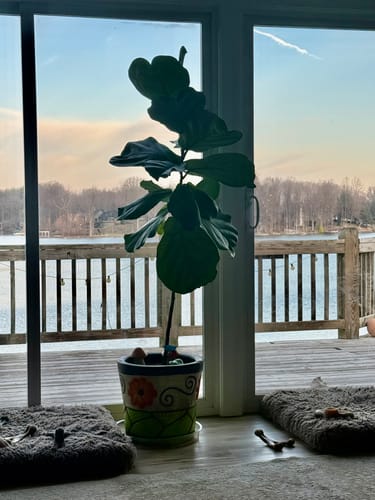
Yesterday my Fiddle plant leaves were down with only the top sticking straight up. Looked so sad. I gave her a big drink of Plant Juice and now look, her leaves are up and happy! Great ingredients!
Catherine G.
Was having an issue with this fig leaf plant. I have to complement you on this plant juice product because now she is soaring. So much so that I started getting mushrooms in the pot. Spoke to the nursery and they told me it was because the plant was so rich. Thanks!

(The nursery was right, by the way. A little mushroom in a pot is just soil life breaking down organic matter. Pluck it if it bugs you. It isn't hurting the tree.)
Linda W.
The plant that was in my granddaughters room, got some kind of a disease or something was going on with it, lost most of its leaves, and my granddaughter was ready to throw it away, and I was bound and determined to save it. So you can see from the video That after I started using El dirt the plant fertilizer that it has lots of new growth and one steam got so tall almost to the ceiling and I wouldn’t want it that tall so I cut off one of the main stands and it already has new growth
I’ve also used the bloom dirt and my plants thrive

Rated 4.7 out of 5 across 1,793 verified Plant Juice reviews.
Frequently Asked Questions
What is the best fertilizer for a fiddle leaf fig?
The best fertilizer for a fiddle leaf fig is a gentle, balanced liquid feed you can dilute well. A fiddle leaf fig is a tropical tree grown for its leaves, so it does best on steady, mild nutrition rather than strong synthetic salts, which can burn roots and cause crispy brown leaf edges. A microbe-rich organic feed like Elm Dirt Plant Juice, diluted to about 1 ounce per gallon of water, feeds slowly and is hard to overdo.
How often should I fertilize my fiddle leaf fig?
Fertilize a fiddle leaf fig every 2 to 4 weeks in spring and summer while it is putting out new leaves. In early fall, stretch the time between feedings. In late fall and winter, feed once a month at most, or pause until new growth returns in spring.
Should I fertilize my fiddle leaf fig in fall and winter?
Feed lightly or not at all. In fall and winter a fiddle leaf fig slows down because of shorter days, lower light, and dry furnace air, so it uses very little fertilizer. Extra feed builds up as salt in the pot and pushes weak, stretched growth. A light monthly dose of a gentle organic feed is enough, and if the tree has stopped growing, skip feeding until spring.
Why does my fiddle leaf fig have brown spots?
Dark brown spots in the middle of fiddle leaf fig leaves usually point to overwatering and root rot. Crispy brown edges usually point to fertilizer salt buildup, dry air, or uneven watering. Cold drafts and sudden moves can also cause brown patches. Check watering first, flush the pot if you see a white crust on the soil, and keep light and placement steady.
Can you overfertilize a fiddle leaf fig?
Yes. Too much fertilizer, especially strong synthetic feed, can burn fiddle leaf fig roots, leave a white salt crust on the soil, and cause crispy brown leaf edges or soft, leggy growth. If that happens, run plain water through the pot to flush the excess and feed less often at a weaker dilution.
What is a good homemade fertilizer for a fiddle leaf fig?
The most reliable homemade option for a fiddle leaf fig is a weak worm casting tea: steep a small handful of worm castings in a gallon of dechlorinated water, then water the tree with it. Coffee grounds, banana peel water, and eggshells break down too slowly in a pot to feed the tree much and can attract mold or gnats. A ready-made brewed feed like Plant Juice is the low-effort version of the same idea. (We compared the two in DIY worm tea vs. Elm Dirt.)
Should I fertilize a fiddle leaf fig after repotting?
Wait about 4 to 6 weeks after repotting before you fertilize a fiddle leaf fig. Fresh potting mix already holds nutrients, and freshly disturbed roots are easy to burn. Start feeding again once you see new leaves forming.
Feed Gently, Ease Off for Fall, Enjoy the Big Leaves
Most of the diva reputation comes from people loving these trees too hard at the wrong time of year. Feed yours every couple of weeks while it's growing. Once the furnace comes on, back way off and let it rest until spring.
And you aren't doing any of this alone. That's the part I get nerdiest about.
Plant Juice carries 291 verified microbial species, all down in the root zone doing the unglamorous work. One of the most abundant is Pseudomonas putida, a root-zone bacterium we wrote about in our Pseudomonas spotlight. Another, Devosia insulae, makes its home on roots (the Devosia story is here). About 82% of the species in the bottle carry genes for ACC deaminase, an enzyme researchers have linked to calming the stress-hormone spike a plant gets when something upsets it. If you've ever moved a fiddle leaf fig six feet and watched it drop three leaves, you can see why I like having those in the pot.
Want to keep going? A few places to wander next:
- For a laugh (and some hard-won lessons), read what killing 47 houseplants teaches you.
- The rest of your indoor plants are probably feeling the furnace too. Winter indoor plant care has them covered.
- Did your fiddle leaf fig bounce back? Tag us. One new leaf counts as a win around here.
Sources & further reading: North Carolina State Extension Gardener Plant Toolbox, Ficus lyrata (Fiddle-leaf Fig); University of Florida IFAS Extension (EDIS), Ficus lyrata: Fiddleleaf Fig; Gamalero & Glick, Bacterial modulation of plant ethylene levels, Plant Physiology (PubMed Central).

Lauren Cain
Founder & Chemical Engineer · Elm Dirt, Kansas City
Lauren started Elm Dirt after her 6-month-old daughter grabbed fistfuls of backyard dirt and ate them. As a chemical engineer and a mom, she couldn't just shrug it off, so she dug into the science of what was really in garden soil. That rabbit hole led her to build a fertilizer line around beneficial microbes instead of synthetic chemicals. Today Elm Dirt's products are used by home gardeners, rose show champions, and organic growers across the country.