



When to Apply Organic Lawn Fertilizer: A Month-by-Month Guide

I'll be honest with you. Of all the gardening questions I get, lawn timing is the one that trips up even folks who've been at this for years. We either jump the gun in February, skip summer because "well, it looks fine," or forget fall altogether. And then April comes around and we're standing at the window wondering how the neighbor's yard looks like a golf course while ours looks like a dirt road with big dreams.
Been there. My first spring in this house, I fertilized way too early, patted myself on the back, and watched absolutely nothing happen for a month.
So here's the thing nobody told me back then: organic lawn fertilizer just doesn't work like synthetic does. It's not a quick chemical dump that turns the grass green by Friday. It feeds the little critters in your soil first — the microbes — and those guys feed your grass. Which means timing matters. A lot. The good news? Once you get the rhythm of it, it's honestly pretty simple.
So that's what this is. A month-by-month walk through the whole year — no guessing, no burnt grass, and nothing nasty sitting in the yard where the kids and the dog play.
💡 Quick note: "Organic lawn fertilizer" means different things to different people. I'm talking about fertilizers made from living biology — worm castings, plant extracts, beneficial microbes — not just "natural" products that still use harsh salts. There's a difference, and it matters for your soil long-term.
Why Timing Is Different With Organic Fertilizers
Synthetic fertilizers basically force-feed nutrients straight to the grass roots. Organic doesn't do that. It works through biology — the bacteria, the fungi, all the tiny living things in your dirt that chew through organic matter and turn it into food your grass can actually use.
And here's what that means in plain terms: if your soil's cold and those microbes are still asleep, organic fertilizer doesn't really do much. You need the ground above roughly 50°F before the biology wakes up and gets to work. Toss it down too early and you've basically scattered compost on frozen dirt and crossed your fingers. (Ask me how I know.)
But here's the payoff. Time it right and organic fertilizer builds your soil a little more every single year. Better microbe diversity, better water holding, deeper roots. Your lawn gets genuinely healthier — not just green for a couple weeks and then back to sad.
- Organic nutrients release slowly and consistently — no boom-and-bust cycles
- No risk of burning grass roots with salt buildup
- Safe for kids, dogs, and bare feet the moment it dries
- Each application improves long-term soil structure
- Works with your grass type, not against it

Month-by-Month Organic Lawn Fertilizer Schedule
Okay, here's the year laid out month by month. I've written this for the middle of the country, so nudge it 2–4 weeks earlier if you're down South and 2–4 weeks later if you're way up North or sitting at altitude. Honestly though? Your grass is a better guide than any calendar. Watch what it's actually doing.
January & February — Rest the Soil
DO NOTHINGYour lawn's asleep, or close to it, and the microbes are basically hibernating down there. Feeding the grass right now is just throwing money on the ground. It'll sit there doing nothing until things warm up.
Do this instead: Get a soil test if it's been a while. Sketch out your spring plan. And order your supplies now, so you're not scrambling the week the soil finally wakes up.
March — Early Spring Wake-Up
LIGHT APPLICATIONOnce the soil holds steady around 50°F — and you can check that with a cheap thermometer from any garden center, takes two seconds — it's time for your first feed of the year. For most of us that lands in late March.
Go light here. The grass is stretching and yawning but the roots are still kind of fragile. A gentle, low-nitrogen organic feed — something balanced, around a 3-1-2 ratio — is just right. You're not trying to force a growth spurt yet. You're just nudging the soil biology awake.
Little tip: Pair that first feed with a top-dressing of worm castings. They're gentle, loaded with good microbes, and they give early roots a real head start. Our worm castings ($14.99) are about the most bang-for-your-buck soil builder you can put down this time of year. Want the full spring rundown? Here's our spring lawn fertilizer guide.
April — Peak Spring Feed
PRIMARY APPLICATIONApril's the big one. The grass is growing for real now, the soil's warming up, and the microbes are multiplying like crazy. This is when a full organic feed really earns its keep.
Reach for something with a decent nitrogen number — nitrogen's what gives you that deep green and the fresh top growth. But here's the difference: synthetic nitrogen floods in, then vanishes, and your grass is back to hungry. Organic nitrogen lets go slow and steady. So you get that even green color without having to mow twice a week just to keep up.
If you'd rather go liquid, our Plant Juice ($19.95) is great poured on as a soil drench. It carries 291 lab-verified microbe species straight down to the root zone — including nitrogen-fixers like Azospirillum, which pull nitrogen right out of the air and park it in your soil. That's basically free fertilizer your lawn makes for itself once the biology settles in.

"I cleared the rich ground and set out to have a butterfly & bee garden. After 10 days or so they all seemed happy; still, they looked very tired. I gave all these shown a healthy dose of Elm Juice... They're fortified! What a difference."
May — Maintain the Momentum
MAINTENANCE FEEDGrass is really moving now. Put down another round in mid-to-late May to keep up with it. This matters most if winter left you with bare patches — that slow, steady feed will fill them back in over time. (Got stubborn thin spots that won't budge? Here's our organic fix for lawn bare spots.)
May's also the perfect month to get into a regular liquid feeding habit. The liquid soaks in fast and keeps your microbe crew busy between the heavier granular feeds.
June — Transition to Summer
LIGHT-TO-MODERATEIf you've got cool-season grass (Kentucky bluegrass, fescue, ryegrass): ease off now. These types slow way down once the heat hits, and they really don't want a heavy feed right now.
If you've got warm-season grass (Bermuda, zoysia, St. Augustine): June's actually prime time. These love the heat and they're going full tilt.
Either way — water deep before and after you feed in June. Hot, dry dirt slows your microbes right down, and then the fertilizer just can't do its job.
July — Caution Month
SKIP OR MINIMALJuly's the tricky one. If your lawn's fighting drought or baking in the heat, just leave the fertilizer in the shed. Stressed grass can't use the nutrients anyway, and you'll only be pushing growth the poor thing can't keep up with.
One exception: a warm-season lawn that's getting watered regularly can take a light feed mid-July and be happy about it.
Honestly, if you want to help your lawn in July, the best thing you can do is water — deep, and not too often. That'll do more for it than any fertilizer ever could during a heat wave.
🌱 Worried about chemicals? This is the big one for a lot of us — the kids and the pets. A lot of synthetic lawn treatments leave residue clinging to the grass blades for days, sometimes weeks. The biology-based organic stuff just doesn't carry that risk. Once it's dry, the yard's safe to play in again. (More on that in our guide to lawn care and pet health.) That peace of mind is worth a lot.
August — Late Summer Recovery
RECOVERY FEEDWhen the temperature finally backs off a little in late August, your lawn starts bouncing back from the summer. Now's a good time for a light feed to help it along — especially if the grass is looking thin and worn out.
Worm castings shine here. They're mild enough that even tired, stressed grass takes them well, and they bring in the good fungi and bacteria that help roots heal up and spread.
September — Fall's Most Important Application
CRITICAL FALL FEEDIf you only feed your lawn twice all year, make September one of them. For cool-season grass, this is hands down the most important feed of the whole calendar.
Here's why it matters so much. Right now your grass is squirreling away energy. The roots are digging deeper. The plant is literally stocking up the reserves it'll burst out of dormancy with come spring. A feed in September fuels all that quiet work happening underground — even after the top growth slows and the lawn looks like it's done for the year.
Go with something balanced, or lean a touch higher on phosphorus to push root growth. And again — toss down worm castings alongside it if you can. That combo of an instant microbe boost plus slow, steady food is honestly hard to beat. For the whole autumn playbook, read the dos and don'ts of fall lawn care.
October — Final Boost Before Dormancy
LAST CALL FEEDOne last light feed in early-to-mid October, before the soil drops below 50°F. This keeps your microbes fed through the front half of fall so they can keep chewing through organic matter even as everything starts slowing down.
Some folks call this the "winterizer" feed. With organic, you don't need a fancy special formula for it — a regular balanced feed handles the job just fine.
Just don't feed past mid-October in most places. Late-season nitrogen pushes out soft, tender new growth that won't make it through the first hard freeze.
November & December — Let It Rest
DORMANCYPut the fertilizer away and forget about it. The soil's cold, the microbes are out cold, and the grass is just trying to ride out the winter. Best thing you can do right now? Leave it be.
Rake up the leaves before they smother the grass, stay off the frozen turf as much as you can, and start dreaming up next year's plan.

Cool-Season vs. Warm-Season Grass: Does It Change the Schedule?
Yep, and it's worth getting your head around because the difference is real.
Cool-season grasses (bluegrass, fescue, ryegrass) are happiest in 60–75°F weather. They hit their stride in spring and fall, then kind of check out in the heat of summer. Your main feeding windows are April–May and September–October.
Warm-season grasses (Bermuda, zoysia, St. Augustine, centipede) love it hot — 80–95°F and they're thriving. They're going strong June through August and then sleep right through winter. Your feeding season runs roughly May through August.
- Cool-season priority months: April, May, September, October
- Warm-season priority months: May, June, July, August
- Both types: Watch soil temp, not just the calendar
- Both types: Skip fertilizing when the grass is stressed by drought or extreme heat
How to Actually Apply Organic Lawn Fertilizer (The Part Nobody Talks About)
Timing's only half of it. How you actually put it down is the other half. Here's what really moves the needle:
Water Before, Water After
Organic fertilizer needs moisture to switch on. Put it down on soil that's already damp (not soggy), then water it in again afterward. That carries the nutrients down to the roots and gets the microbes going. Dropping it on bone-dry dirt on a hot sunny afternoon? Mostly a waste.
Morning Is Best
Feed in the morning while it's still cool. Less evaporation, less stress on the grass, and the liquid or granules get all day to settle into the soil before the heat rolls in.
Don't Overdo It
This is where folks get themselves in trouble. With organic, more is not better. Sticking to the label and feeding on a steady schedule beats one big dump every few months, every time. Slow and steady builds your soil. A heavy hand doesn't.
Liquid or Granular — Which One?
Both are great, honestly. Granular organics (compost, bone meal, kelp meal blends) make a solid baseline and they're easy to spread across a big yard. Liquids like our Plant Juice soak in faster and are perfect for getting biology into the soil quick. Plenty of people run both — granular as the slow-release foundation, liquid as a monthly pick-me-up. (We get into the trade-offs in liquid vs. granular fertilizer.)
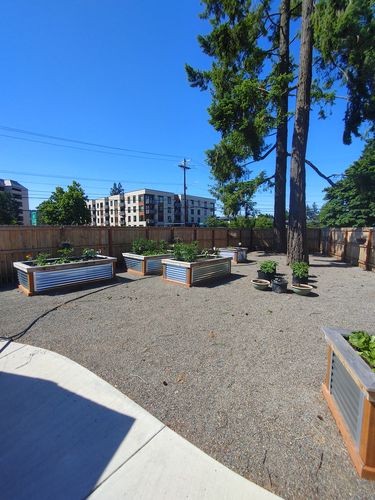
"I have used Elm Dirt products in my 1st time ever raised bed garden boxes. Each plant has their premier worm castings. I feed twice a month with Plant Juice and every 6 weeks with Bloom Juice. I'm very pleased with the progress of my garden and the natural organic products I use."

Signs Your Lawn Is Deficient (And What to Do)
Your lawn talks to you. Most of us just aren't listening. Here's how to read what it's trying to tell you:
- Pale yellow-green color: Usually nitrogen deficiency. Time for a feeding.
- Purple tinge on blades: Often phosphorus deficiency — common in cold soils where roots can't absorb phosphorus even when it's present.
- Thin, sparse growth: Could be low potassium, poor soil biology, or compaction. Try aerating and top-dressing with worm castings.
- Grass not recovering after stress: Soil biology may be depleted. A liquid microbial application — our Plant Juice contains 291 species of beneficial microbes — can restart the engine.
- Excessive thatch buildup: Lack of soil biology. Microbes break down thatch naturally. When they're absent, thatch piles up.
The Organic Lawn Fertilizer Products I Actually Use
I started Elm Dirt because I needed to know exactly what was going into the ground around my daughter. The backyard grass that little kids roll around in, that the dog licks, that you walk through barefoot on a summer evening — that should be something you feel good about. Not something you stand there worrying over.
So here's what I actually reach for when it comes to my own lawn:
Worm Castings — The Gentle Foundation
Our worm castings ($14.99) are Class A certified compost — that's the top rating there is for compost safety and quality. They're so gentle you literally can't over-apply them (trust me, I've tried), and they're full of naturally occurring good microbes. Top-dress the lawn in spring and fall and you'll build real soil health over time. Works on any grass type.
Plant Juice — The Microbial Powerhouse
Our CDFA Certified Organic Plant Juice ($19.95) is a concentrated liquid feed that the BiomeMakers lab verified holds 291 different microbe species. That's not me being cute with the marketing — it's lab-checked biology. When you pour it on the lawn, you're basically seeding the soil with a whole diverse little community that does the real grunt work of feeding your grass. Use it every 4–6 weeks through the growing season as a soil drench.
Ready to feed your lawn with living biology — not synthetic salts? Our Plant Juice is CDFA Certified Organic and lab-verified to contain 291 beneficial microbial species.
Shop Plant Juice — $19.95Frequently Asked Questions
When should I start applying organic lawn fertilizer in spring?
Start in early spring — around March or April — once soil temperatures reach 55°F and grass begins actively growing. Organic fertilizers rely on soil microbial activity to work, so timing with soil warmth is critical.
How often should I fertilize my lawn with organic fertilizer?
Most lawns benefit from organic fertilizer every 6–8 weeks during the growing season (spring through fall). Unlike synthetic fertilizers, organic options release nutrients slowly and won't burn grass with consistent applications.
Can I apply organic lawn fertilizer in summer?
Yes, but be mindful of heat and drought stress. Fertilize cool-season grasses lightly or skip July if temperatures are extreme. Warm-season grasses (Bermuda, zoysia) actually benefit from a mid-summer organic feeding.
Is organic lawn fertilizer safe around kids and pets?
Yes. Organic fertilizers made from natural sources like worm castings and plant extracts are safe for kids and pets once dry. There are no harsh synthetic chemicals or residues to worry about.
Should I fertilize my lawn in fall?
Absolutely. Fall is one of the best times, especially for cool-season grasses. A September application helps roots strengthen before winter and gives your lawn a head start on spring green-up.
The Bottom Line
You really don't need some complicated system to have a beautiful lawn without dumping chemicals on it. You just need to work with the seasons instead of fighting them.
Feed in spring when the soil wakes up. Ease through summer — gently for cool-season grass, a little more boldly for warm-season. Make fall your big push of the year. And let the whole thing rest over winter.
The biology in your soil takes care of the rest. That's the whole beauty of going organic — you're feeding a living system, not just whipping the grass to grow. And once that system's humming, it works for you season after season, year after year.
If you're stumped about your own lawn or your particular grass type, reach out. This stuff is genuinely what I love talking about all day.
Start building real soil biology under your lawn. Plant Juice + Worm Castings is the combination I'd start with for any organic lawn care program.
Shop Now at Elm Dirt