



That Soil Smell After Rain? Meet Streptomyces, the Microbe Behind It

Updated October 19, 2026 · By Lauren Cain
The earthy smell after rain comes mostly from geosmin, a compound made by soil bacteria called Streptomyces. Rain knocks tiny bits of soil and spores into the air, and people can smell geosmin at extremely low levels. Streptomyces break down tough organic matter, release nutrients, help hold back root diseases, and are the source of many antibiotics. An earthy smell is a sign of living soil.
You know the smell. Dry ground, a few fat drops of rain, and suddenly the whole yard smells like the inside of a forest.
I've loved that smell since I was a kid. What I didn't know, until I started reading microbiology papers for this company, was that I'd been smelling bacteria the whole time. A chemical engineer probably should have figured that out sooner. In my defense, nobody tells you.
This week's microbe spotlight is one you've already met with your nose. If you've ever dug into a good bed and thought now that smells like real dirt, you were smelling Streptomyces.
Meet the microbe: Streptomyces. A soil bacterium that grows in branching threads like a fungus, makes the earthy-smelling compound geosmin, breaks down stubborn plant material, and produces natural compounds that hold back plant disease.
What's in this guide
Why Does Soil Smell So Good After Rain?
The smell has a name, petrichor, which sounds like a villain from a fantasy novel. A big part of it is geosmin. Streptomyces makes it while it's busy forming spores.
When a raindrop lands on dry soil, it traps tiny air bubbles. They pop. Specks of soil get tossed into the air with geosmin along for the ride, and straight up your nose it goes.
Our noses are weirdly tuned for this stuff. We can pick up geosmin at a few parts per trillion, which is why one Kansas City thunderstorm can make the whole street smell like a garden center.
For a long time nobody knew why the microbe bothered making the stuff. Then a team publishing in Nature Microbiology worked it out (Becher et al., 2020). Streptomyces only makes geosmin when it's producing spores, and the smell pulls in springtails. Those are the tiny jumpy critters you've probably spotted in a bag of potting soil. They eat the microbe, the spores stick to them, and off they go to new ground.
So that smell you love? It's an ad. The microbe is calling a cab.

That "good dirt" smell is a sign of busy, living soil.
What Is Streptomyces?
Streptomyces is a bacterium that never got the memo about how bacteria are supposed to behave. Most bacteria are single cells floating around minding their own business. This one grows in long branching threads, like a fungus, and spreads by chains of spores.
That's why microbiologists file it with the actinomycetes, a group that blurs the line between bacteria and fungi, at least to the naked eye.
It shows up in pretty much every patch of good soil, part of the enormous crowd packed into a single tablespoon of garden soil. And it takes the jobs nobody else wants. Woody stems. Old roots. The tough, stringy stuff other microbes leave on the plate. It works through that pile alongside decomposers like Pedobacter until it's humus.

Streptomyces grow in branching threads, which makes them unusual among bacteria.
Do Soil Bacteria Really Make Antibiotics?
They do. This is the fact I can't stop bringing up at dinner parties, which tells you a lot about my dinner parties.
Soil is crowded. Streptomyces holds its spot with chemistry, making compounds that knock back the neighbors. Somewhere along the way we noticed, borrowed them, and started calling them antibiotics.
Streptomycin came from this group. So did neomycin. Chloramphenicol too. Streptomyces and its close relatives are the single biggest natural source of the antibiotics doctors prescribe (de Lima Procópio et al., 2012). Next time someone calls soil "just dirt," you can let them know where half their pharmacy came from.
Two famous names turned up in our bottle. DNA sequencing of Plant Juice matched Streptomyces avermitilis, the species behind avermectin. That discovery won William Campbell and Satoshi Ōmura a share of the 2015 Nobel Prize in Medicine. The same test found Kitasatospora aureofaciens (5.14×10³ cells/mL), a close cousin that gave the world its first tetracycline. I got a little too excited reading that report.
What Does Streptomyces Do in a Garden?
You're not going to brew antibiotics in a raised bed. (Please don't try.) But the traits that made this microbe a big deal in medicine are the same ones that make it a good neighbor for your tomatoes.
- Tough stuff gets broken down. Its enzymes digest cellulose and chitin, which is what stems, old roots, and fungal cell walls are made of. That's the slow road from garden debris to dark, crumbly humus.
- Disease has a harder time. Those natural compounds don't switch off underground. Around roots, they help hold back the pathogens behind damping-off and root rot. Trichoderma, Penicillium, and Lysobacter do similar work, and it doesn't hurt to have all of them on the job.
- Nutrients come loose. As it eats, nitrogen and phosphorus get released in forms roots can actually use.
- Better crumb. All those threads glue soil particles together, so water drains better and roots get some air instead of sitting in mud.

Around the roots, Streptomyces breaks down organic matter and helps keep disease pressure down.
Want the bigger picture of how this whole crew teams up? I walk through it in how soil microbes protect your garden without spraying.
Is Any Streptomyces Bad? (Potato Growers, Read This)
I'm not going to pretend every Streptomyces is a saint. A few species cause common scab on potatoes. You've probably seen it: rough, corky patches that make a potato look like it's had a hard life. The main culprit is Streptomyces scabies, and relatives like S. turgidiscabies can cause it too (University of Maine Cooperative Extension).
Scab is mostly a looks problem. Extension specialists say it hurts appearance far more than yield or storage. The scab-causing types already live in most soils, so you're managing conditions, not trying to wipe them out.
| Scab risk factor | What to do |
|---|---|
| Infected seed potatoes | Plant certified, scab-free seed potatoes. This is the most effective control. |
| Dry soil while tubers form | Keep soil evenly moist for several weeks after tubers start forming. |
| Soil pH above about 6.0 | Don't lime potato beds. Scab is worst between pH 6.0 and 7.5. |
| Fresh manure | Use finished compost instead of fresh manure in potato beds. |
| Potatoes in the same spot every year | Rotate potatoes to a new bed and choose scab-resistant varieties. |
Zoom back out, though. In diverse soil, the helpful members of this family vastly outnumber the troublemakers. It's one more reason diversity matters more than any single microbe.
How Do You Keep Streptomyces Happy?
The nice thing about Streptomyces is that it doesn't need babying. It wants what good garden soil wants.
- Give it something to chew on. Compost, worm castings, or Ancient Soil all work. Fall is prime time to amend your beds, and those pumpkins on the porch count once Halloween's over.
- Top up the crew. Plant Juice carries 291 DNA-verified species, Streptomyces included, so you're adding living microbes and not just nutrients.
- Mulch. A good layer keeps moisture steady and lets the soil breathe, which is right where Streptomyces is happiest. You'll usually catch that earthy smell strongest in well-mulched beds.
- Ease off the synthetics if you can. Salt-heavy fertilizers and broad-spectrum pesticides thin out the soil community. We rounded up the research in our organic vs. synthetic soil health post. Feeding the biology is a more forgiving way to garden, and a lot less fussy.

Organic matter added in fall gets turned into humus over the cool months.
Wondering what all these microbes do once the ground freezes? Read what happens to soil microbes in winter. Short version: they slow way down and wait you out.
Real Gardeners, Real Results
I'd rather you hear it from them than from me.
Lisa C.
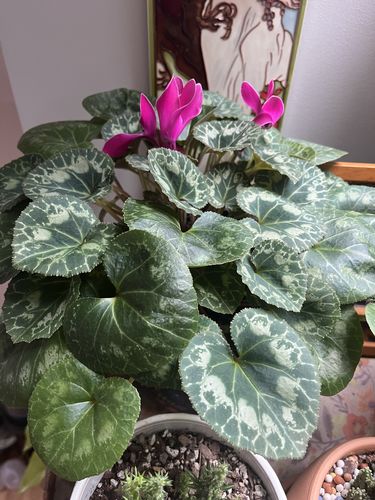
I give all my indoor plants (over 175 plants) & outdoor gardens Elm Dirt Plant Juice. My exotic, succulents & cactuses receive a weekly watering with the juice. Every plant is pushing new growth & is healthy thriving. This Cyclamen has been receiving weekly (as directed) waterings. She has flowered recently & I am delighted how healthy she has progressed. I advise all my friends & plant community by this weekly routine. I’ve also had a recently repotted well established fairy castle cactus that I nurtured with plant juice watering & she is revived, healthy & going strong. Thank you Elm Dirt for your continued commitment of sharing your knowledge & magic with us consumers. I will continue to give my plants the opportunity to thrive to the best of their potential by giving them the cleanest, healthiest nourishment from Elm Dirt Plant Juice.
Cynthia F.
We live in the mountains n soil is rocky. This is the only fertilizer that keeps my garden alive ❤️

Julie L.
Love your products! I use Plant juice on my outdoor and indoor plants, it’s amazing! Been adding worm castings to my flower beds on a regular basis, it’s seems my soil is improving!! Thank you!!
Patti S.
I am a snowbird to Florida, and the soil is terrible, sandy, no life. Redid flower bed and have added Plant Juice as a regular fertilizer. Plants are doing a lot better.
Frequently Asked Questions
What causes the earthy smell after it rains?
Most of that earthy smell is geosmin, a compound made by Streptomyces bacteria in the soil. Raindrops hitting dry ground throw tiny bits of soil and spores into the air, and people can smell geosmin at extremely low levels. The full after-rain scent, called petrichor, also includes oils released by plants.
What is Streptomyces?
Streptomyces is a large group of soil bacteria in the actinomycete family. Unlike most bacteria, they grow in branching threads like a fungus and spread by spores. They are among the most common microbes in healthy soil and are known for breaking down tough organic matter and making natural antibiotics.
Is Streptomyces good or bad for my garden?
Most Streptomyces are helpful. They break down tough material like cellulose and chitin, release nutrients, and make compounds that hold back many root diseases. A few species, including Streptomyces scabies and Streptomyces turgidiscabies, cause common scab on potatoes, which is managed with certified seed potatoes, steady moisture at tuber set, and avoiding high soil pH.
Do Streptomyces really make antibiotics?
Yes. Streptomyces and their close relatives are the largest natural source of antibiotics used in medicine, including streptomycin, neomycin, and the tetracyclines. Streptomyces avermitilis is the source of avermectin, which led to a share of the 2015 Nobel Prize in Physiology or Medicine. In soil, these compounds help the microbe compete with rivals.
Is Streptomyces in Elm Dirt Plant Juice?
Yes. Independent DNA sequencing of Plant Juice found Streptomyces among its 291 verified species, including matches to Streptomyces zaomyceticus (3.35×10³ cells/mL) and Streptomyces avermitilis (1.34×10³ cells/mL). It also found Kitasatospora aureofaciens, a close cousin of Streptomyces.
Does an earthy smell mean my soil is healthy?
A sweet, earthy smell is a good sign that soil is alive and well aerated, since Streptomyces thrive in moist soil with plenty of air and organic matter. A sour, rotten-egg, or ammonia smell usually means the soil is waterlogged and short on oxygen. Smell is a quick check, not a substitute for a soil test.
Next Time It Rains, You'll Know
That's my favorite part of learning what's actually in the soil. It changes ordinary moments. Next time a storm rolls through and the yard smells amazing, you'll know there's a microbe down there working the night shift for your plants. Same one that helped stock our medicine cabinets, by the way.
You're not gardening alone down there. If you want to meet more of the crew, start with how beneficial microbes help your plants grow. Or go say hi to Clostridium, which does its best work where the air runs out.
Your next small step: after the next rain, grab a handful of soil from your best bed and one from your worst. Sniff both. (Yes, the neighbors might look.) Whichever smells like a forest floor is the one your microbes love. Give the other one some compost and mulch this fall, then sniff again in spring.
Sources: Becher, P.G., Verschut, V., Bibb, M.J., et al. "Developmentally regulated volatiles geosmin and 2-methylisoborneol attract a soil arthropod to Streptomyces bacteria promoting spore dispersal." Nature Microbiology 5 (2020): 821–829 (link). de Lima Procópio, R.E., et al. "Antibiotics produced by Streptomyces." Brazilian Journal of Infectious Diseases 16(5) (2012): 466–471 (link). Johnson, S.B. "Common Scab Disease of Potatoes," Bulletin #2440, University of Maine Cooperative Extension (link). Nobel Assembly at Karolinska Institutet, 2015 Nobel Prize in Physiology or Medicine announcement, summarized by CORDIS (link). Plant Juice species data: independent BiomeMakers DNA sequencing report.

Lauren Cain
Founder & Chemical Engineer · Elm Dirt, Kansas City
Lauren started Elm Dirt after her 6-month-old daughter grabbed fistfuls of backyard dirt and ate them. As a chemical engineer and a mom, she couldn't shrug it off, so she dug into the science of what was really in garden soil. That led her to build a fertilizer line around beneficial microbes instead of synthetic chemicals, now used by home gardeners, rose show champions, and organic growers across the country.