



The Last Organic Lawn Fertilizer Application of Fall: Why Timing Matters More Than the Product

For cool-season grass (fescue, bluegrass, ryegrass), put your last organic lawn fertilizer down around your final mow of the year. The grass should still be green but barely growing, and the ground should not be frozen yet.
That is usually mid-to-late October in zones 3-4 and late October to mid-November in zones 5-6. Warm-season lawns (Bermuda, Zoysia, St. Augustine) get their last feeding in early fall, about six weeks before your first frost.
Use a gentle, microbe-rich organic feed, not a heavy nitrogen dose. Hitting the right window matters more than which brand you buy.
For years I'd stand in the garden center aisle reading the back of every lawn bag, comparing the three numbers and squinting at the fine print like the answer was hiding in there somewhere. I almost never thought about when the last one should go down.
Wrong question, it turns out.
Think about two yards on the same street. Same fescue, same crispy brown patches by the end of August (if you live around Kansas City, you know exactly the look). One owner buys the expensive stuff, puts it down in the July heat, then again in December when the ground's already hard as a driveway. The other buys a plain organic feed and puts it down once in late October, the weekend of the last mow.
By April, the second yard is the one people slow down to look at.
Your September feeding builds the lawn. The last one is what carries it through winter, and most of us either skip it or get the timing wrong, so that's what this whole post is about.
Why the Last Feeding Punches Above Its Weight
Somewhere around the first chilly nights, grass changes its priorities. It quits pushing out new blades and starts shipping sugars down into the roots and crowns, kind of like canning tomatoes in August so there's something to eat in February.
Your last feeding shows up right in the middle of all that packing.
What you get for it next year:
- Earlier green-up in spring
- Turf thick enough that weeds have a hard time finding bare dirt to sprout in
- More cushion when a cold snap or a dry July comes through
- Less catch-up work in April, which, if I'm being selfish, is the part I care about most
None of this is my idea, by the way. Our K-State Extension office here in Kansas City says September is the most important feeding for cool-season grass, and the late one around the final mowing comes in second, because it helps the lawn green up earlier in spring without a big flush of top growth.

Fall is when grass moves energy down into the roots. Your last feeding fuels that.
When to Put Down Your Final Feeding
Don't pick a date off the calendar. Look out the window instead and ask two things: what kind of grass is it, and is it still green?
| Grass type | When the last feeding goes down | The signal to watch for |
|---|---|---|
|
Cool-season, zones 3-4 (fescue, bluegrass, rye) |
Mid-to-late October, around your last mow | Grass still green, top growth has nearly stopped |
|
Cool-season, zones 5-6 (including Kansas City) |
Late October to mid-November, around your last mow and before the ground freezes | You're mowing every 10-14 days or less, but the lawn is still green |
|
Transition zone 7 (mixed lawns) |
Cool-season grass: early to mid-November. Warm-season grass: early fall. | Feed whichever grass is still green and growing. Ease off the one going dormant. |
|
Warm-season, zones 8-10 (Bermuda, Zoysia, St. Augustine) |
Early fall, about six weeks before your average first frost | Grass slows and loses a little color as nights cool |
I'm writing this the first week of October. If you're up north, you're right on time. If you've got Bermuda or St. Augustine in most of the South, that window has pretty much closed for the year, and that's fine, nobody's grading you. Put the effort into fall lawn recovery instead.
Check your local rules. Some states set a legal cutoff date for lawn fertilizer. Maryland, for example, requires your last application to be made no later than November 15.
If you want every USDA zone spelled out, our zone-by-zone fall lawn feeding guide has it. The month-by-month organic lawn fertilizer schedule covers the rest of the year, and the dos and don'ts of fall lawn care is the checklist I'd hand a neighbor.

The sweet spot: grass still green, growth slowing, leaves starting to come down.
Why Timing Beats the Product
This one took me an embarrassingly long time to accept, considering I'm a chemical engineer and should've known better.
A fertilizer doesn't just do one thing. Put it down in July heat and it forces soft, thirsty growth the grass then has to babysit all summer. Put that same bag on a green, slowing lawn in late fall and the roots soak it up and store it away; put it on frozen ground and it mostly sits there until the next hard rain carries it somewhere you didn't want it.
So a fancy bag at the wrong time loses to a plain organic one at the right time. Every time? Pretty close.
I'm not telling you to buy junk. What I'm saying is the calendar deserves at least as much of your attention as the label does. A forgiving organic feed helps here too, because when burning the lawn isn't a worry you can just focus on getting the weekend right.

A modest organic feed at the right moment beats a premium bag at the wrong one.
The "Too Early / Too Late" Trap
There are two ways to blow the last feeding. I've managed both.
Too early
Throw a big nitrogen dose down while it's still warm, and the grass puts out a flush of soft new blades right when it ought to be toughening up. Winter goes after that tender stuff first. So do lawn diseases.
The research leans the same way. A University of Wisconsin turf study found that heavy late-season nitrogen didn't buy much of anything in Wisconsin and Minnesota, and the October applications gave the best green-up the next spring.
Too late
Wait until the lawn has gone fully dormant and the ground is cold, and the roots just aren't pulling much in. With a synthetic salt fertilizer that's the worst case, because it dissolves and heads for the storm drain.
Organic feed is more forgiving, since its nutrients aren't sitting around as dissolved salt. Most of it stays put in the soil until the microbes wake back up in spring. The catch (and I don't want to oversell this) is that microbes slow way down in cold soil, too. A late organic feeding still pays off. Just slower.

Too much nitrogen at the wrong time causes more problems than it fixes.
My own rule is pretty low-tech. If the grass is green and I could still run the mower over it, there's time for one gentle organic feeding. Once it's brown and the ground is hard, the sprayer goes back in the garage until spring.
What's Working in the Soil All Winter
An organic feeding isn't only groceries for the grass. It's also a fresh crew for the soil underneath.
We had Plant Juice tested by BiomeMakers, a soil genetics lab, and they found 291 microbial species in it. A handful matter a lot for lawns:
- Herbaspirillum huttiense comes from a genus known for nitrogen-fixing bacteria that live in and around grass roots. I wrote a whole post on it: Herbaspirillum, the nitrogen fixer feeding your grass for free.
- Pseudomonas putida is the 4th most abundant species in the bottle at roughly 1.22 million cells per mL, and researchers study it for protecting roots from disease (more on Pseudomonas here).
- 82% of the species carry genes for ACC deaminase, an enzyme that helps plants ride out stress like cold and drought.
- About 84% can make exopolysaccharides. That's the sticky goo that glues soil into crumbs so water and air can move through.
Want the bigger picture? Our living soil explainer ties it all together.

The real work happens below the blades, down in the root zone.
How to Make the Last Feeding Count
Once the timing's sorted, the spraying is the easy part. A few habits help:
- Keep it gentle on nitrogen. This feeding is about roots and soil, not a big green flush. Our Regenerative and Sustainable Lawn Care comes in seasonal formulas, so pick Fall. You mix 2-3 oz per gallon, and each bottle covers 2,000 sq ft.
- Use a hose-end sprayer. No spreader to calibrate, no stripes when your hand wobbles. Ours is $6.50 with an empty mixing bottle.
- Water it in if no rain's coming, so the microbes settle down into the root zone where they do there work.
- Bare spots? Rake a little Ancient Soil into them before winter. It's Class A certified compost. If you already seeded this fall, read our organic overseeding guide first.
- Rather buy one bottle for everything? That's fine. Plant Juice works on grass, beds and houseplants, and one 32 oz bottle makes up to 32 gallons. The dilution calculator does the math.
Our lawn line is worm castings and beneficial microbes, with no synthetic pesticides or weed killers in the bottle. That matters to alot of the parents and dog owners I talk with. If that's you, lawn care and pet health is worth ten minutes of your time.

The kids help with the fall lawn work. Most of it even lands on the lawn.
Shop Regenerative Lawn Care, from $29.95
Real Gardeners, Real Lawns
I'd rather you hear it from them than from me.
Stephanie N.
Regenerative and Sustainable Lawn Care
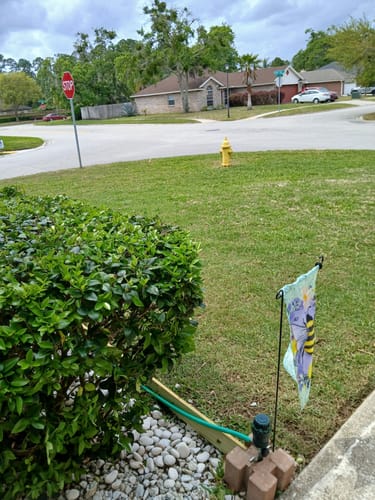
Love the way my lawn is the lovely green it is supposed to be coming out of winter.
Rebecca G.
Plant Juice
My plants are thriving and looking fabulous. But, I also put some of the fertilizer in my sprayer and I walked across my front lawn and sprayed my lawn twice a week for two weeks and the grass is so green, truly a deep green Saint Augustine front lawn. Everyone that passes by comments how green the grass is and ask what have I used.? I tell them about Elm Dirt . I'm a customer for life. Oh and let me not forget, my knockout roses are deep red. Beautiful.
Lori D.
Plant Juice
I've been using this on my houseplants and outdoor plants for 4 months and all are responding well. Plants are healthy, growing and green. I cut back my wisteria hard in early spring and thought I might have killed it, but after 2 applications of plant juice, it took off! Many new vines that grew like wild fire. I've even used it on some spots on our lawn that suffered from not enough sprinkler coverage and a very hot summer last year. Those areas are filling in nicely!! Love this stuff!!
Jennifer D.
Plant Juice
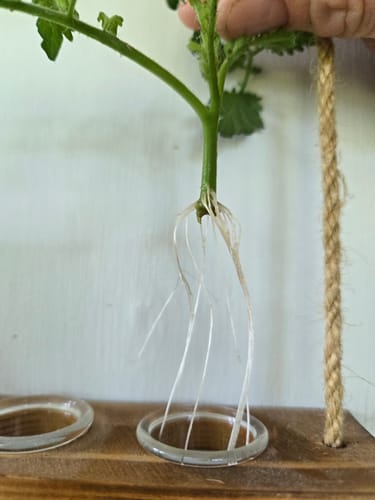
It makes everything better. My grass has filled in, my flowers are bonkers, my cuttings grow huge roots.
Sharon K.
Full Lawn Care Line
Second year I am using this, lawn care and it is by far the best i have ever used! So easy to use, just spray it on, perfect even coverage! Thank you Elm!
Plant Juice is rated 4.65 out of 5 across 1,793 customer reviews.
Frequently Asked Questions
When should I put down my last lawn fertilizer of the fall?
For cool-season lawns (fescue, bluegrass, ryegrass), apply the final feeding around your last mow of the year, while the grass is still green but barely growing and before the ground freezes. That is usually mid-to-late October in zones 3-4 and late October to mid-November in zones 5-6. Warm-season lawns (Bermuda, Zoysia, St. Augustine) should get their last feeding in early fall, about six weeks before your average first frost.
Is the last fall feeding the same as a winterizer?
Yes. University extension programs call the late-season application a winterizer. It goes down after top growth slows, around the final mowing, so the grass stores energy over winter and greens up earlier in spring. An organic winterizer feeds both the grass and the soil microbes that hold nutrients in the root zone.
Why does the timing of the last feeding matter more than the fertilizer I use?
The same fertilizer does different things depending on when it goes down. In the late-fall window it feeds roots that are storing energy for winter and spring. Applied too early it pushes soft top growth that is prone to winter injury and disease. Applied after the ground freezes it mostly sits unused. A modest organic feed at the right time outperforms a premium product at the wrong time.
Can I fertilize my lawn too late in the fall?
Yes. Once the grass is fully dormant and the soil is cold or frozen, roots take up very little. Soluble synthetic fertilizer can then wash off as runoff. Organic fertilizer is not soluble salt, so it mostly stays in the soil until microbes become active again in spring, but microbes slow down in cold soil too. Aim for while the grass is still green and the ground is workable, and check local rules: Maryland, for example, bans lawn fertilizer after November 15.
Is organic lawn fertilizer strong enough for the final fall feeding?
Yes. The goal of the last feeding is root and soil health, not a fast green flush. A microbe-rich organic fertilizer feeds the grass gently, builds living soil that holds nutrients over winter, and will not burn the lawn if you apply a little heavy.
Should the last fall feeding be high nitrogen?
No. A heavy nitrogen dose late in the season can force soft growth when the grass should be hardening off, and turf research has found few benefits from heavy late-season nitrogen in cold climates. A moderate, balanced organic feed focused on roots and soil biology is the better choice for the final application.
Is organic lawn fertilizer safe for kids and pets?
Elm Dirt's lawn care is made from worm castings and beneficial microbes with no synthetic pesticides or herbicides, which is why many parents and pet owners choose it. As with any lawn product, follow the label directions.
Get the Timing Right and the Rest Takes Care of Itself
So stop agonizing over the bag. Keep an eye on the grass instead, and when it's still green but hardly growing anymore, put down one gentle feeding.
That's it.
That one weekend in late fall does more for next spring than a whole season of the wrong stuff at the wrong time, and it's a lot less work than the four-step programs most of us grew up with. When spring rolls around, here's how to get a thicker lawn, and our complete guide to organic lawn care has the rest of the year mapped out.
Sources: K-State Research & Extension Johnson County, Fertilizing Cool-Season Lawns; University of Illinois Extension, Fertilizing Your Lawn; University of Maryland Extension, Fertilizing Home Lawns; University of Wisconsin-Madison, Late-Fall Nitrogen Applications (The Grass Roots, 2009); Golf Course Management, summary of a Crop Science 57:1001-1009 study on low-temperature nitrogen uptake; microbial data from BiomeMakers lab analysis of Elm Dirt Plant Juice.

Lauren Cain
Founder & Chemical Engineer, Elm Dirt, Kansas City
Lauren started Elm Dirt after her 6-month-old daughter grabbed fistfuls of backyard dirt and ate them. As a chemical engineer and a mom, she couldn't just shrug it off, so she dug into the science of what was really in garden soil. That rabbit hole led her to build a fertilizer line around beneficial microbes instead of synthetic chemicals. Today Elm Dirt's products are used by home gardeners, rose show champions, and organic growers across the country.