



Indoor Herb Garden in Winter: The 6 Herbs That Thrive on a Windowsill

By Lauren Cain · Updated October 13, 2026
The best herbs for an indoor herb garden in winter are chives, mint, parsley, thyme, oregano, and basil. Put them in a south- or west-facing window with at least 6 hours of direct light, or add a grow light for 12 to 16 hours a day. Keep them at 60 to 70°F, water only when the top inch of soil is dry, and feed every 3 to 4 weeks with a diluted organic fertilizer.
There's something a little defiant about pinching fresh basil off a plant in January. Snow on the deck. Garden asleep. And there you are, tearing leaves into a pot of soup that you grew on the kitchen sill.
I get asked about winter herbs more than almost anything else this time of year. Most people who give up on them didn't do anything dumb. They just picked herbs that hate being indoors, then treated a January window like it was June.
Both mistakes are easy to undo. So this is the short version: six herbs that will actually keep going, where to put them, and how little you have to do once they're settled in.
What's in this guide
Why Winter Herbs Act Differently Than Summer Herbs
In winter, your herbs aren't trying to grow fast. They're trying to hang on.
Think about what changed. Out in the garden in July, basil had fourteen-some hours of hard sun on warm soil, and now it's sitting on a Kansas City windowsill in January getting a fraction of that light, filtered through glass that's cold to the touch, while the furnace kicks on every twenty minutes and pulls the moisture right out of the air around it. Of course it slows down.
You don't need to fix that. Where people get into trouble (and yes, I've done it) is trying to force summer growth with extra water and extra fertilizer. The light can't back it up. So you end up with pale, floppy stems sitting in wet dirt.
Once I quit fighting it, winter herbs got a lot easier. Feed less. Water less. Give them the brightest spot in the house and then mostly leave them alone. It's the same reason behind not overfeeding your houseplants in winter, since a plant that's resting can't do much with a big meal. Hauling pots in off the patio? Read bringing outdoor plants indoors for winter first, because aphids love a free ride into a warm kitchen.

They're not racing to grow right now, so don't feed and water them like they are.
Which Herbs Grow Best on a Winter Windowsill?
Not every herb can handle a winter sill. These six can, listed roughly from easiest to fussiest.
| Herb | Why it works indoors | Light and care |
|---|---|---|
| Chives | Tough and forgiving; regrows after repeated cutting | Bright window; tolerates cooler temps. Snip from the outside in. |
| Mint | Very easy; grows readily indoors | Handles medium light. Keep in its own pot because it spreads. |
| Parsley | Cool-tolerant and steady once established | Bright window. Slow from seed in winter, so start with a plant. |
| Thyme | Compact and drought-tolerant; handles dry indoor air | Brightest, driest spot. Let soil dry between waterings. |
| Oregano | Mediterranean herb that does well with little care | Bright, warm window. Let soil dry between waterings. |
| Basil | Most popular, but the fussiest indoors | Warmest, brightest window, often plus a grow light. |
Brand new to this? Start with chives and mint. You'd have to work pretty hard to kill either one, and both come right back after you cut them down to nubs.
Parsley is a different story. From seed it takes forever to sprout in winter and sulks the whole time, so I just buy a plant for a few bucks and skip the waiting. Thyme and oregano are the odd ones out. They're Mediterranean, and that dry furnace air stressing everything else in your house doesn't bother them a bit. Wet feet will, though.
Then there's basil. Everybody wants winter basil, and I get it. You can have it! Just know going in that it's a warm-weather sun lover parked next to cold glass, and it will let you know when it's unhappy. Our guide to growing basil from seed covers getting it started, and if flavor is what you're after, read how to grow organic herbs that actually taste like something. There's a longer list of options in herb garden magic too.

Basil wants the best window in the house. Give it that and it'll pay you back.
How Much Light Do Indoor Herbs Need in Winter?
When winter herbs die, nine times out of ten it's the light. You can be sloppy about plenty of things with herbs. Not this.
Most kitchen herbs want at least six hours of direct light a day. Easy in June. In December the sun barely clears the neighbor's roof and it's getting dark by five, so which window you pick ends up mattering more than anything else in this post.
- South-facing: your best real estate all winter. Save it for basil, thyme, and oregano.
- West-facing: a close second, thanks to strong afternoon sun.
- East-facing: softer morning light, which mint, parsley, and chives don't mind.
- North-facing: not enough on its own. Plan on a grow light.
You won't have to guess. An herb that's short on light starts leaning toward the glass like it's trying to climb out the window, and the pale leaves and long, skinny stems aren't far behind.
If your best window still isn't cutting it, get a full-spectrum grow light. Iowa State Extension recommends hanging it 6 to 12 inches over the leaves and running it 12 to 16 hours a day. That's a lot longer than I expected the first time I read it. A cheap plug-in timer takes care of it so you never have to remember. For the why behind all this, see our guide to lighting for indoor plants. And if your only free window faces north, our list of low-light houseplants has better candidates for it than herbs.

In winter, a south or west window makes all the difference.
Quick test: if a plant is stretching toward the window instead of filling out, it needs more light. Fix that before you change anything else. Oh, and give each pot a quarter-turn every few days so it doesn't grow lopsided.
How to Water and Feed Herbs in Winter
More winter herbs die from too much love than from neglect. A slow plant in low light needs less water and less food than you'd think.
Watering
Check before you pour. Push a finger an inch into the soil. Still damp? Walk away.
An herb on a cool January sill drinks a fraction of what it did in August, and if you keep watering on the same schedule you used all summer, the soil stays soggy in low light for days at a time, which is how you end up with root rot, especially with thyme and oregano, plus a little cloud of fungus gnats hovering over your sink. Wait until the top inch is dry, then water deeply and let the extra drain out. I overwatered for years before that finally sank in. If that's you too, start with our guide to watering plants correctly, or jump to the overwatered plant recovery guide if you're already past that point.
One more thing. Don't park pots right over a heat vent, because that blast of dry air pulls water out of the leaves fast. Our post on humidity for houseplants has a few cheap fixes.
Feeding
They're barely growing, so they barely need feeding. A little still helps, though. It's the difference between herbs that keep producing and herbs that just limp along until spring.
Gentle is the word. University of Illinois Extension points out that over-fertilizing herbs can dull their aroma and taste, which kind of defeats the purpose of growing them. Strong synthetic fertilizers bring their own problems indoors. They can burn tender roots and leave a white salt crust on the soil, and the soft growth they push just flops over in weak winter light. There's more on that in organic vs. synthetic fertilizer and soil health.
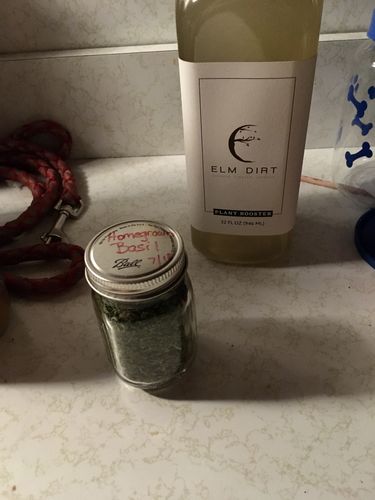
On my own windowsill herbs I use Plant Juice, our CDFA Certified Organic liquid fertilizer, about every 3 to 4 weeks at roughly an ounce per gallon of water. Yes, I make it. Take that for what it's worth! I built it around microbes instead of salts on purpose, though. It feeds slowly and won't scorch roots, and the live microbes keep the potting mix working so the plant can use what you give it.
"Live" isn't just a marketing word here. When BiomeMakers ran lab testing on Plant Juice, they found 291 microbial species. One of the most abundant is Pseudomonas putida, at about 1.22 million cells per mL. It belongs to a group of root-zone bacteria known for helping plants take up nutrients and handle stress (our Pseudomonas spotlight has the details). There are Mortierella fungi in there too, a group tied to healthy root zones, which you can read about in the Mortierella spotlight.
Research on basil points the same direction. A 2025 study in Scientific Reports found that certain beneficial bacteria roughly doubled basil's essential oil content, which is where its smell and flavor come from. Those were specific lab strains, not our product. Still, it's a nice look at why the life in your soil matters. For the bigger picture, start with living soil explained.
And remember, you're going to eat these leaves. As a mom, that's the part I think about most, so whatever I feed them has to be something I'm comfortable having around kids and pets. For the rest of your indoor plants, see organic fertilizer for indoor plants.

Water when the top inch is dry, feed lightly, and that's pretty much it.
How to Set Up a Windowsill Herb Garden
Setup is the easy part. Most of your time goes into hunting down pots that actually have holes in the bottom.
- Drainage holes in every pot. Not negotiable. Illinois Extension suggests going at least 6 inches across, too.
- A mix that drains but stays alive. A good indoor potting mix with a handful of worm castings stirred in gives roots air and a slow trickle of nutrients.
- Mint gets its own pot. Trust me on this one.
- Leave some space. Pots jammed shoulder to shoulder trap damp air, and that's how mildew gets started.
- Keep it around 60 to 70°F. On frosty nights, nudge the leaves back from the glass.
- Snip a little, often. Pinching the tips keeps herbs bushy. Go too long between harvests and they get tall and gangly.
Get healthy plants into good light and the whole thing pretty much runs itself.
Found this in January? You're not too late. A nursery herb you pick up mid-winter still gives you plenty of snipping before it's warm enough to plant outside.
Want the year-round version? Our guides to growing herbs indoors and windowsill herb growing go deeper, and so does the piece on a herb garden in a pot. If there's a sunny sill left over after all that, an indoor citrus tree makes a fun winter roommate.

A little elbow room and a drainage hole under every pot.
Real Gardeners, Real Results
I'd rather you hear it from them than from me, especially since I'm the one who makes the stuff. These are copied word for word, typos and all, from people growing herbs with Plant Juice.
Rosie H.
Trying to keep basil going, love my pesto! Only have one South facing window and due to time of year have a lot of gray days…
Do think regrowing after cutting back may have improved somewhat - need more time to really gauge, but overall I am encouraged!
Shipping was very fast - I am sure that results will really be seen when growing season starts this coming spring.

Lois K.
I added some of the diluted water to my herbs. I have big pots outside and yogurt containers of herbs inside on the kitchen window sill. The Basil was weak looking inside. I watered it and the next day the top leaves were bright green and stronger. The outdoor herbs are all healthier and growing better. Thanx
Carrie V.
This stuff is great! It’s the end of the season for me this year but my basil was fizzling out. I used this for a boost and it loved it! I was able to fill my basil jar up after that! I can’t wait to use it next year! It’s completely organic and goes a long way! I’m an organic gardener and live this product!
Teri C L.
See for yourself how awesome the strawberries and chives responded to the Plant Juice!

Frequently Asked Questions
What herbs grow best indoors in winter?
The most reliable herbs for a winter windowsill are chives, mint, parsley, thyme, oregano, and basil. Chives, mint, and parsley tolerate cooler temperatures and a bit less light. Thyme and oregano handle dry indoor air well. Basil is the fussiest and needs the brightest, warmest window or a grow light.
How much light do indoor herbs need in winter?
Most herbs need at least 6 hours of direct light a day. A south- or west-facing window is the best choice in winter. If herbs turn pale or leggy, add a full-spectrum grow light 6 to 12 inches above the leaves and run it 12 to 16 hours a day on a timer.
What temperature do indoor herbs need?
Indoor herbs grow best between 60 and 70 degrees Fahrenheit. Keep pots away from heat vents, which dry them out, and keep leaves from touching cold window glass at night. Basil is the most sensitive to cold.
How often should I fertilize indoor herbs in winter?
Feed lightly, about every 3 to 4 weeks. Herbs grow slowly in winter's short days, and over-fertilizing can reduce their flavor and aroma. A diluted organic liquid fertilizer such as Plant Juice at about 1 ounce per gallon of water is enough.
Why is my indoor basil dying in winter?
Basil is a warm-weather herb, so the usual causes are too little light, cold drafts from the window, and overwatering. Move it to your brightest, warmest spot, keep leaves off cold glass, let the top inch of soil dry before watering, and add a grow light if needed. Many gardeners replace basil once or twice over a long winter.
Can you grow herbs on a windowsill without a grow light?
Yes, if the window is bright enough. A sunny south- or west-facing window can carry chives, mint, parsley, thyme, and oregano through winter. Basil and any herb on a north-facing window usually need a grow light to stay full.
Fresh Herbs All Winter, No Greenhouse Required
Of everything you can grow in the off-season, a windowsill of herbs might be my favorite. It's real food you can snip while the rest of the garden sits under snow.
It doesn't take much, either. Get the herbs that like being indoors into your brightest window, then mostly stay out of their way. Come February you'll be reaching past the frost on the glass for a handful of chives.
Sources
- University of Illinois Extension, Herbs all winter: grow them indoors
- Iowa State University Extension, How can I provide more light for my herbs indoors?
- Iowa State University Extension, Can I grow herbs indoors over the winter?
- Isolated endophytic bacteria promoted growth, essential oil content, and antioxidant activity in basil (Ocimum basilicum L.). Scientific Reports, 2025. PubMed
- Plant Juice microbial species data: BiomeMakers lab analysis of Elm Dirt Plant Juice.

Lauren Cain
Founder & Chemical Engineer · Elm Dirt, Kansas City
Lauren started Elm Dirt after her 6-month-old daughter grabbed fistfuls of backyard dirt and ate them. As a chemical engineer and a mom, she couldn't just shrug it off, so she dug into the science of what was really in garden soil. That rabbit hole led her to build a fertilizer line around beneficial microbes instead of synthetic chemicals. Today Elm Dirt's products are used by home gardeners, rose show champions, and organic growers across the country.