



Bird of Paradise Care: Feeding for Faster Growth and Blooms

Updated October 16, 2026
A bird of paradise (Strelitzia) needs three things: bright, direct light (six or more hours of sun is ideal), steady watering (let the top inch or two of soil dry, then soak and drain), and regular feeding in spring and summer, because it is a heavy feeder. Use rich, well-draining soil and keep it at 65 to 70°F. Blooms usually come once the plant is mature, gets strong sun, and is slightly root-bound.
My first bird of paradise spent two years in a corner doing exactly nothing. No new leaves, no drama, just a big green plant quietly judging me. Then I dragged it four feet over into the sunniest window in the house and started actually feeding it. That spring it pushed out a new leaf so fast I swear I could watch it unroll.
Everybody warns you this plant is a diva. I don't buy it. It's greedy, in the nicest possible way: it wants more sun and more food than your average pothos, and it likes the house warm.
Meet it there and it stops sulking. Add some patience on top, and one day you get the flower. The orange-and-blue one that looks like a crane mid-squawk.
First, though, it helps to know which plant you brought home. The orange-flowered bird of paradise (Strelitzia reginae) stays around four or five feet tall and has a real shot at blooming indoors. Those tall floor plants labeled "white" or "giant" bird of paradise (S. nicolai) get much bigger and almost never flower inside. Nobody buys those for the flowers, though. You buy them for leaves the size of a surfboard. Everything below works for both.
What's in this guide
How Much Light Does a Bird of Paradise Need?
If you only remember one thing from this whole post, make it this: a bird of paradise needs the brightest spot you've got.
Back home in South Africa it grows in full sun. You can water perfectly and feed perfectly, and a dim corner will still beat you. Shoot for six or more hours of direct sun a day. A south- or west-facing window with nothing blocking it is ideal, and a big east window can get you there.
In low light it doesn't die. It just sort of waits. New leaves come in small and slow, and flowers are basically off the table. Not sure how bright your windows really are? Our guide to houseplant lighting will tell you, and the answer is usually "less than you think."
A note for fall
It's mid-October, and here in Kansas City the light is already getting thin and low. Your plant will slow down this winter. That's normal. It's a light problem, not a you problem, and growth picks back up in spring. If you'd rather not wait, a cheap grow light in the evenings keeps it ticking along.
Did yours summer on the patio? They love it out there. Bring it in before nights drop below about 60°F, and check the undersides of the leaves first, because bugs love to hitch a ride on these. Our guide to bringing outdoor plants indoors for winter has the whole checklist.

Outdoors in full sun, they bloom like this. Indoors, light is still the biggest lever you've got.
How Often Should You Water a Bird of Paradise?
Bird of paradise isn't a succulent. It wants to stay lightly, evenly moist while it's growing, but it really doesn't want wet feet.
My rule is to stick a finger in. If the top inch or two is dry, water deeply until it runs out the bottom, then dump whatever collects in the saucer. In a sunny summer window that's roughly once a week. Moisture meter people: water when it reads around 3 on the usual 1 to 10 scale. Come fall and winter, you'll water a lot less.
Too much water is how most of these die. Root rot, yellow leaves, that slow sad droop. If you can't decide, wait a day; the plant forgives "late" far faster than "soggy." There's more on the basics in our guide to watering plants correctly.
Hard or heavily chlorinated tap water can brown the tips, too. Letting a jug sit out overnight is the lazy fix (my favorite kind of fix). There are a few other easy ways to dechlorinate water if you want them.
Then there's humidity. This plant likes the air around 60 percent, and once the furnace kicks on, most of our houses sit way below that. That's where a lot of crispy edges come from. Cluster it with your other plants or park a little humidifier nearby. Our humidity guide for houseplants keeps it simple.
What Soil and Pot Does a Bird of Paradise Need?
You want soil that's rich but drains fast. Plenty of organic matter to hold water and nutrients, plus enough grit that the roots aren't sitting in a swamp.
A good all-purpose potting mix does the job, especially with a handful of perlite or bark stirred in. Drainage hole, always. Yes, even if the pretty pot doesn't have one. Our guide to the best potting mix for indoor plants covers what to look for on the bag.
This next part feels backwards: don't hurry to give it a bigger pot. A slightly cramped bird of paradise blooms better. Wait until the roots are truly crowding the pot (some will crack a plastic one), repot in early spring, and only go up one size. In the years between, scrape off the top inch of old soil and add fresh. Our repotting guide shows how to do it without tearing up the roots.

Rich soil, good drainage, and a pot that's a little snug. That setup pays off in leaves now and flowers later.
How to Fertilize a Bird of Paradise
This is where bird of paradise and your easygoing pothos part ways. It's a heavy feeder, and feeding is the biggest thing you control that changes how fast it grows. Fed and in good light, it keeps pushing leaves all summer. Hungry, it just sits there.
The trap is grabbing the strongest synthetic fertilizer on the shelf. Those leave salts behind in the pot, and salt is what scorches those long leaf edges brown. It's one of the most common reasons I see crispy edges on an otherwise healthy plant.
So I feed mine with a living, microbe-based food instead. Plant Juice feeds the soil biology rather than hitting the roots with a salt spike, which means you can feed on a regular schedule without worrying about tip burn.
Quick science detour, because I'm a chemical engineer and I can't help myself. One of the most abundant bacteria in Plant Juice is Pseudomonas putida, around 1.2 million cells per mL in our BiomeMakers lab report. It belongs to a group researchers have studied for an enzyme (ACC deaminase) that helps plants handle stress. Want the longer version? Our Pseudomonas spotlight has it.
Bird of paradise feeding routine:
- Spring and summer: Plant Juice about every two weeks.
- Fall: about once a month.
- Winter: stop, or once a month at most if it's under a grow light and still growing.
- Mature plants you want to flower: switch to Bloom Juice from late winter through spring.
Don't skip that last line. Clemson Extension points out that overfeeding a bird of paradise gets you plenty of leaves and few or no flowers, and too much nitrogen is usually why. Bloom Juice is brewed from a different microbial mix. About half its species can help free up phosphorus and potassium, which is what a plant leans on when it's building flowers.
For the full how-and-when on indoor plants, see our houseplant fertilizer guide and indoor plant food guide.
How to Get a Bird of Paradise to Bloom
This is the question I get most, by a mile. Can it bloom indoors? Yes. Will it happen fast? Nope. You need four things working at the same time:
- Age. Grown from seed, most plants need four to seven years before they flower. If yours is still small, a healthy new leaf is the win for now.
- Sun, and plenty of it. University of Wisconsin Extension lists too little light as one of the most common reasons grown-up plants won't bloom.
- A tight pot. Being a little root-bound nudges it toward flowering, while extra room mostly buys you more roots.
- Food that points toward flowers. Blooms take a lot out of a plant. Keep feeding steadily, and as it matures, lean on Bloom Juice so it doesn't pour everything into leaves.
Line all four up and you'll eventually get that orange-and-blue flower, usually somewhere between late fall and spring. When it happens, take a picture. Then send it to us, because we want to see it.

Worth every year of waiting.
Common Bird of Paradise Problems (and Quick Fixes)
| What you see | Likely cause | Fix |
|---|---|---|
| Brown, crispy leaf edges | Low humidity, hard water, or fertilizer salts | Raise humidity, use filtered or rested water, switch to a gentle organic feed |
| Yellowing, drooping leaves | Overwatering | Let soil dry more between waterings; check drainage |
| Curling leaves | Too dry or underwatered | Water more consistently; don't let it bake out |
| Slow or no new growth | Not enough light or food | Move to the brightest window; feed spring through summer |
| Lots of leaves, no flowers | Too young, too little sun, over-potted, or too much nitrogen | Give it time, direct light, a snug pot, and a bloom-focused feed |
| Sticky leaves, cottony spots, fine webbing | Mealybugs, scale, or spider mites | Wipe leaves with a damp cloth; treat with an indoor-safe organic spray |
| Leaves splitting | Normal | Nothing. It's how the leaves let wind pass through in the wild |
Yellow leaves and a nagging feeling you've been overdoing it with the watering can? Our overwatered plant recovery guide can usually get you back. For bugs, start with our organic indoor pest control guide. And skip the leaf-shine sprays on this one. They can mess up the natural matte finish, and a damp cloth works better anyway.

Most yellowing and crispy edges come down to water, humidity, or salt. Figure out which one, and it's usually fixable.
Real Gardeners, Real Results
You've heard enough from me. These are real customers growing big-leaf tropicals, in their own words.
CHARLENE M.
I am a serious plant lover acquired from my Mom who also loved plants. For YEARS, I have been looking for the best nutrients for my plant babies but have not found one that continuously worked and I have tried more than I can count. I decided to try Plant Juice and WOW! My plant babies are producing a new leaf nearly every week and I am seeing tremendous growth on plants that I thought I'd lost. I decided to use Plant Juice for growing healthy roots and WOWZER! It works for that also. So, I'm (my plant babies) hooked! Thank you!
Allison H.
I actually have two new leaves growing on my Monstera! This stuff is great. I am almost done with 1 bottle and all my house plants are starting to flourish.

Michelle M.
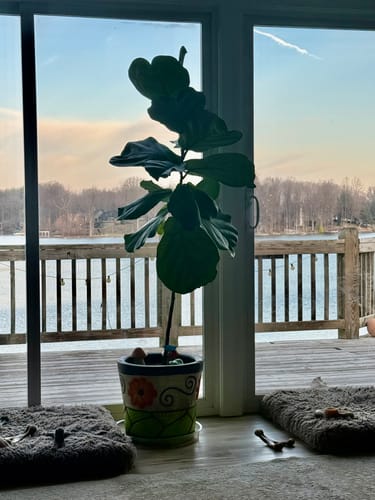
Yesterday my Fiddle plant leaves were down with only the top sticking straight up. Looked so sad. I gave her a big drink of Plant Juice and now look, her leaves are up and happy! Great ingredients!
Sameera A.
I have been using plant juice for a couple of months now and my plants are doing better. I can see new leaves popping up and less brown leaves
Frequently Asked Questions
How much light does a bird of paradise need?
A lot. A bird of paradise wants the brightest spot in your home, ideally six or more hours of direct sun a day from an unobstructed south- or west-facing window. In low light it grows slowly and will rarely bloom indoors.
How often should you water a bird of paradise?
Water when the top inch or two of soil is dry, usually about once a week in spring and summer. Soak the pot and let all the extra water drain. If you use a moisture meter, water when it reads around 3 on the usual 1 to 10 scale. Water less often in fall and winter.
Should you fertilize a bird of paradise?
Yes. It is a heavy feeder. Feed about every two weeks in spring and summer, about once a month in fall, and little or not at all in winter. A gentle, microbe-based organic food like Plant Juice feeds without the salt buildup that browns leaf edges.
Why won't my bird of paradise bloom?
The usual reasons are that the plant is too young, it is not getting enough direct light, it is in too big a pot, or it is getting too much nitrogen. Plants grown from seed often take four to seven years to flower. Mature, sun-drenched, slightly root-bound plants bloom best.
What temperature does a bird of paradise need?
Normal home temperatures work well, about 65 to 70°F during the day and 50 to 55°F at night. If your plant spends summer outside, bring it indoors before nights drop below about 60°F. Keep it away from cold drafts and heating vents.
Is bird of paradise toxic to pets?
Yes. NC State Extension lists bird of paradise as a problem plant for cats, dogs, and horses. The fruit and seeds cause most of the trouble, mainly stomach upset. Keep it out of reach of pets and small children.
Pets in the house? Our guide to pet-safe fertilizers covers what's safe to use around them.
Big, Bold, and Worth the Wait
So no, a bird of paradise isn't fussy. It's greedy in the best way. Put it in your sunniest window, water it when it's ready, keep the pot snug, and feed it like the hungry tropical it is.
The flowers make you wait. Meanwhile you get to watch those giant paddle leaves unroll one at a time, and that part never gets old for me.
When you feed the soil instead of just the plant, you also get help. Plant Juice carries 291 verified microbial species that work down in the root zone, unlocking nutrients while you're busy with the watering can. You handle the light and water. They handle the dirty work. Literally.
Your next step: if you're curious what's going on under the surface, start with our guide to beneficial soil microbes. Got more big tropicals? Try our monstera care or fiddle leaf fig care guides next. Then tell us your smallest plant win this week. We love hearing them.
Sources & further reading:
Clemson Cooperative Extension, Home & Garden Information Center. Bird of Paradise (HGIC 1562).
NC State Extension Gardener Plant Toolbox. Strelitzia reginae.
University of Wisconsin–Madison Division of Extension. Bird of Paradise, Strelitzia reginae.
Plant Physiology (peer-reviewed). Bacterial ACC deaminase affects ethylene production and plant growth under stress.
Microorganisms (2021, peer-reviewed review). Pseudomonas ACC deaminase and its role in beneficial plant-microbe interactions.

Lauren Cain
Founder & Chemical Engineer · Elm Dirt, Kansas City
Lauren started Elm Dirt after her 6-month-old daughter grabbed fistfuls of backyard dirt and ate them. As a chemical engineer and a mom, she couldn't just shrug it off, so she dug into the science of what was really in garden soil and built a fertilizer line around beneficial microbes instead of synthetic chemicals. Today Elm Dirt is used by home gardeners, rose show champions, and organic growers nationwide.