



What Happens If You Stop Feeding Your Plants Mid-Season (I Tested It So You Don't Have To)

If you stop fertilizing plants mid-season, plants in tired, depleted soil usually fade within two to three weeks: slower growth, fewer blooms, and pale or yellowing leaves. Plants in living soil, rich in organic matter and microbes, often keep growing normally because the soil keeps releasing nutrients between feedings. How often you need to fertilize depends mostly on how alive your soil is.
By the middle of July, I was worn out on mixing plant food. Jug in one hand, measuring cup in the other, and a little voice in my head asking whether these plants actually needed me this much or whether I'd just been told they did.
(I'm aware of how that sounds coming from someone who sells plant food.)
So I stopped. Not on everything, just a bunch of my plants, split into two groups. One group was growing in tired potting mix I'd been reusing for longer than I'd like to admit, and the other was in the living, microbe-rich soil our whole company is built around. Me and the watering can took a break, and I kept an eye on both for the next several weeks.
To be clear, this was a backyard test. Not a lab study, no clipboards. But the difference was big enough that it changed how I feed my own garden.
What's in this guide
What Happened in the Tired Soil
The plants in the worn-out potting mix held on for a bit. Somewhere around week two or three, though, they started looking tired. Kind of like me in August.
- Growth slowed to a crawl.
- The new leaves were smaller than the last batch, and paler.
- Buds dropped on the flowering pots, and they made less blooms overall.
- Lower leaves went yellow first. That's the plant quietly moving nitrogen out of its old leaves to keep the new ones going, which is clever of it, but it also means the tank is running low.
- And the bugs noticed. They always seem to find the stressed plant first.
No single day looked like a disaster. It was a slow fade, the kind I would've blamed on the heat if I hadn't known exactly what I'd done. If you've got yellowing going on right now, our guide to yellow leaves and their organic fixes covers the other usual suspects, since hunger isn't the only one.
I can't say I was surprised. Reused potting mix is often close to lifeless by its second or third year, which I get into more in living soil vs. sterile soil.

In tired soil, skipping feedings showed up fast: pale new growth and yellowing lower leaves within a few weeks.
What Happened in the Living Soil
Then there were the plants in living soil.
I kept checking on them, half expecting them to catch up to the others and start sulking. Three weeks in, nothing. A few weeks after that they were still green and still growing, still putting out flowers like nobody had told them the free meals had stopped. Set next to the plants I was still feeding, I'd have had a hard time telling you which was which, and I'll admit that bugged me a little after a whole summer of faithfully measuring out plant food.
It isn't magic, even if it kind of feels like it. Living soil is packed with microbes and organic matter that keep breaking down and handing nutrients to roots on their own schedule, whether I show up or not.

Living soil works like a buffer. It keeps feeding plants through the gaps between feedings.
Why Living Soil Keeps Feeding Plants Between Feedings
The way I think about it is a pantry.
Living soil keeps a stocked one. Nutrients are tied up in organic matter and in the microbes themselves, and they get let out a little at a time as soil life chews through that material. Soil scientists call it mineralization, which is a very serious word for "the soil crew eating and leaving crumbs for the roots." University of Minnesota Extension describes decomposing organic matter as a slow, steady supply of nutrients, and University of Maryland Extension calls soil organic matter a reservoir that releases nutrients over time.
Depleted soil is more like a kitchen with bare cabinets. The plant eats whatever you bring home that day, and when you stop bringing it home, well, you saw the yellow leaves. It's the same reason I keep harping on how living soil matters more than the numbers on the fertilizer bag.
| What changes | Tired or reused potting mix | Living soil |
|---|---|---|
| Where nutrients come from | Mostly what you add | Organic matter and microbes, released slowly |
| 2–3 weeks without feeding | Slower growth, smaller and paler new leaves | Little visible change |
| Leaf color | Lower leaves yellow first | Holds steady |
| Flowering | Fewer blooms, dropped buds | Keeps blooming |
| A missed week | Noticeable | Forgiven |
| Feeding needed | Frequent | Lighter, about every two weeks in active growth |

Organic matter and soil life are the pantry. Nutrients get released a little at a time.
Does Synthetic Fertilizer Kill Soil Microbes?
Okay, confession time. When I started this, I fully expected to write that synthetic fertilizer "kills" your soil. I've probably said it that way myself more than once. Then I sat down with the research, and it's more complicated than that.
A 2014 review that pulled together 64 long-term field trials found synthetic (mineral) fertilizer actually raised soil microbial biomass by about 15% on average compared with soil that got nothing, mostly because those fertilized fields were building up organic carbon too. The big exception was acidic soil: once pH dropped below about 5, fertilized soils tended to lose microbes instead, and ammonium-based fertilizers are one of the things that push soil in that direction. More recently, a 2026 study in Nature Communications that drew on long-term experiments from around the world found mineral fertilizer leaves a consistent mark on which microbes end up living there.
So, not a sterilizer. I was wrong about that part.
Where it falls short is the pantry. Synthetic fertilizer is a quick, dissolved meal that the plant either uses right away or that washes on through, and very little of it turns into the organic matter microbes live on. Nothing much gets put away for later. A garden running on it alone tends to slide fast once feeding stops, which is also why so many of us end up feeling married to a feeding schedule. We dig into the long-term numbers in organic vs. synthetic fertilizer: the long-term soil health study, and there's more on what gardens on synthetic fertilizer are missing if you want to keep reading.
How Often Should You Fertilize Plants in Living Soil?
Please don't read all this and banish your plant food to the garage. My potting-mix plants would like a word.
What changed for me is where the effort goes. I feed the soil first now, working compost, worm castings, or Ancient Soil into beds and pots, because a stocked pantry gives you a lot of wiggle room before anything goes hungry.
After that, I feed lighter than I used to. During active growth that's Plant Juice every two weeks, mixed at 2 to 3 ounces per gallon of water. It won't burn plants at label rates, so when I get heavy-handed or skip a week because life happened, nobody suffers for it. (Hose-end sprayer folks, our dilution calculator will save you the math.)
And I've mostly quit sweating the calendar. Living soil shrugs off a vacation.
If anything, I'd bet more of us are overfeeding than underfeeding. I sure was. For a month-by-month version, our garden feeding calendar lays out the whole year.

Feed the soil once and these keep blooming through the weeks you forget.
If your garden seems to need feeding constantly, I don't think that says anything about you as a gardener. It usually just means the soil isn't carrying much of the load yet, and once it is, the whole job gets lighter.
Should You Stop Fertilizing Plants in Fall?
For most perennials, roses, and shrubs, yes. Wind down feeding about 6 to 8 weeks before your first hard frost so any new growth has time to toughen up before winter.
Here in Kansas City we're zone 6, so I'm right in that window as I write this, which makes the timing of this post look a lot more planned than it was. Start with your USDA hardiness zone, then look up your own average first frost date. Averages are averages, and every gardener I know has a story about the year frost showed up three weeks early.
| USDA zone | Typical first frost | Stop feeding perennials and roses |
|---|---|---|
| Zones 3–4 | Early to late September | Mid to late July |
| Zone 5 | Late September to mid-October | Early to mid-August |
| Zones 6–7 | Mid-October to early November | Late August to mid-September |
| Zone 8 | Mid to late November | Late September to early October |
| Zones 9–10 | December, or rarely | Keep feeding lightly through fall as growth slows |
There's a few plants that don't follow the table, though.
- Trees and shrubs want more lead time than perennials, so in most zones I'd stop feeding them by late July or early August.
- Anything still producing, like container tomatoes, peppers, or that one zucchini that refuses to quit, can keep eating until frost shuts it down.
- Houseplants slow down when the days get short. Cut back to about once a month, or stop altogether for anything that goes dormant, and check our winter indoor plant care guide for more.
What I don't stop in fall is feeding the soil. Fall's actually my favorite time to spread compost and worm castings, because soil life keeps working on them any time the ground isn't frozen and the beds are ready in spring before I am. More on that in how to amend garden soil in fall and the fall fertilizer schedule for every garden type.

Fall is the time to ease off feeding plants and start feeding the soil.
Real Gardeners, Real Results
I'd rather you hear it from other gardeners than from me. Reading back through these, what jumped out was how many feed every couple of weeks. One only feeds once a month.
Susan Beth T.
I am a FIRM BELIEVER in Plant Juice!!! Been using it every season for a few years now and my gardens just EXPLODE with Color and Health!!! We've been having a drought the last few years, and I Do Believe that the Plant Juice and Bloom Juice are the Main reason my gardens suvive!
Highly Recommend!
I generally dose my gardens once a month all Season. Works out Well for me!
Charlene R.
This product saved my plants. The stores no longer carry compost. It just disappeared online too. I'm making my own but that takes time. There is not enough nutrition in the dirt you purchase for a raised bed garden. I tried this and every plant near death came back to life and had grown over night. I fertilize once every two weeks. I've transferred to Bloom now for the one's flowering. I also use this on my flowers and just to make a point. I purposely put them in the sandy bad dirt and used this to see. They are not only growing but are blooming.
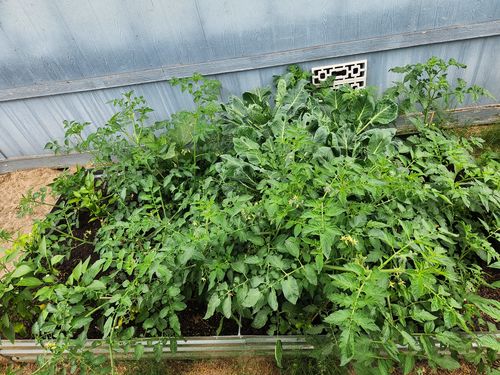
Julie L.
Love your products! I use Plant juice on my outdoor and indoor plants, it’s amazing! Been adding worm castings to my flower beds on a regular basis, it’s seems my soil is improving!! Thank you!!
Lou M.
This Epiphyllum (Orchid cactus) is about 15 years old. Every year it gets bigger and heavier (I can relate!) but has never, ever bloomed, until today. I bought some Elm Dirt plant booster which was delivered the 2nd week in April. I’ve given it to my houseplants every 2 weeks since it arrived, so 3 times so far, and today when I went out to our gazebo, I was surprised and delighted to see not one but TWO beautiful blooms. I am now an Elm Dirt convert!

Rated 4.7 out of 5 across 1,793 Plant Juice reviews.
Frequently Asked Questions
What happens if you stop fertilizing plants mid-season?
Plants in tired or depleted soil usually decline within two to three weeks, with slower growth, fewer flowers, and pale or yellowing lower leaves. Plants in living soil rich in organic matter and microbes often keep growing normally, because the soil keeps releasing nutrients between feedings.
Do plants need fertilizer to grow?
Plants need nutrients, but not always from a bottle. In soil rich in organic matter and active microbes, many nutrients are released naturally as that material breaks down. Plants in containers, reused potting mix, or depleted beds rely more on regular feeding.
How often should I fertilize plants in living soil?
Every two weeks during active growth is enough for most gardens and houseplants when using a gentle, microbe-rich liquid such as Plant Juice mixed at 2 to 3 ounces per gallon of water. Feed less often in fall and winter as growth slows.
Does synthetic fertilizer kill soil microbes?
Not outright. A 2014 review of 64 long-term field trials found synthetic (mineral) fertilizer raised soil microbial biomass by about 15% compared with unfertilized soil on average, but tended to reduce it in very acidic soils below about pH 5. Synthetic fertilizer adds little organic matter, so it does less than compost and organic inputs to build lasting soil life.
Why do plants fade quickly when synthetic feeding stops?
Dissolved synthetic nutrients are used up or washed out of the root zone quickly, and they add little organic matter to the soil. Without a reserve of organic matter and active microbes, little is left to feed the plant once feedings stop.
When should I stop fertilizing plants in fall?
Stop feeding perennials, roses, and shrubs about 6 to 8 weeks before your average first hard frost. In USDA zones 3 to 5 that is usually mid-July to mid-August, in zones 6 and 7 late August to mid-September, and in zones 8 to 10 light feeding can continue into fall. Trees and shrubs need an earlier stop, usually by late July or early August.
The Real Fix Is Underground
I went into this hoping for permission to be a little lazier. What I got was a better reason to feed the soil, because once it's alive the plants stop needing me to hover, and I get a few Saturday mornings back.
You're not doing it alone down there, either. Every bottle of Plant Juice carries 291 microbial species verified by BiomeMakers DNA analysis, and BiomeMakers groups 80% of them with nitrogen-releasing functions. One of the most abundant is Pseudomonas putida, at about 1.22 million cells per milliliter, a root-loving bacterium known for making auxin, the hormone that tells roots to keep growing. It shares the bottle with Rhizobium, best known for partnering with beans and peas, and Mortierella alpina, a soil fungus studied for helping free up phosphorus. That's the crew doing the unglamorous work between your feedings. For the plain-English science, start with how beneficial microbes actually help plants grow.
Before you go
I send one small garden win a week to the Elm Dirt email list, no lectures. And if you try the no-food test on a pot of your own, I'd love to know which plant surprised you.
Together we grow.
Sources
- Geisseler, D. & Scow, K.M. (2014). Long-term effects of mineral fertilizers on soil microorganisms: A review. Soil Biology & Biochemistry, 75, 54–63. Read the source
- Global long-term agricultural experiments reveal consequences of mineral fertilization for soil microbiomes (2026). Nature Communications. Read the source
- University of Minnesota Extension. Soil organic matter in cropping systems. Read the source
- Colorado State University Extension. The Living Soil. Read the source
- University of Maryland Extension. Organic Matter and Soil Amendments. Read the source

Lauren Cain
Founder & Chemical Engineer · Elm Dirt, Kansas City
Lauren started Elm Dirt after her 6-month-old daughter grabbed fistfuls of backyard dirt and ate them. As a chemical engineer and a mom, she couldn't just shrug it off, so she dug into the science of what was really in garden soil. That rabbit hole led her to build a fertilizer line around beneficial microbes instead of synthetic chemicals. Today Elm Dirt's products are used by home gardeners, rose show champions, and organic growers across the country.