



Serratia: The Chitinase-Producing Bacteria That Guards Your Garden From Fungal Attack

Okay, real talk. I've killed more plants to root rot than I care to admit. And for a long time I just… blamed myself. Too much water. Not enough water. Wrong pot. Wrong light. Maybe I just wasn't cut out for this.
Turns out it wasn't me. It was the dirt.
Once I started actually digging into soil microbiology — which, yes, is basically what chemical engineers do for fun — I kept coming back to the same thing: most garden soil is missing the microbial life that's supposed to be there. And without that life, plants are on their own against every fungal pathogen that wanders by.
Today I want to talk about one of those missing pieces. A bacterium called Serratia. It's not flashy. You won't see it on a fertilizer label. But it produces an enzyme that literally dismantles the cell walls of harmful fungi — before those fungi ever reach your roots.
It's basically a built-in fungicide that comes free with healthy soil. No spray bottle required. No chemicals your kids might crawl through. Just a tiny microorganism doing what it's evolved to do for millions of years.
What Exactly Is Serratia — And What Does It Do In Soil?
Serratia is a genus of gram-negative bacteria in the Proteobacteria phylum — which, for what it's worth, makes up 67% of the bacterial community in our Plant Juice, according to our BiomeMakers lab report CUX005. In soil, it acts as a decomposer and — more importantly for our purposes — a biocontrol agent.
Here's the thing that makes it special. It produces an enzyme called chitinase. Chitin is the tough structural material that makes up insect shells and, critically, the cell walls of most pathogenic fungi. When Serratia releases chitinase into the soil, it's essentially dissolving the armor that harmful fungi use to protect themselves.
It's not attacking your plants. It's attacking the things trying to attack your plants.
And there's solid research behind this. Studies in journals like Biological Control and Applied and Environmental Microbiology have documented Serratia suppressing some of the most common garden disease villains:
- Fusarium — responsible for fusarium wilt and crown rot, which can wipe out tomatoes, peppers, and cucumbers
- Pythium — the primary culprit behind root rot in both garden beds and indoor containers
- Rhizoctonia — causes damping off, which kills seedlings right after germination
- Botrytis — the gray mold that attacks strawberries, roses, and vegetables during cool, wet weather
- Sclerotinia — responsible for white mold that devastates beans, carrots, and brassicas
That's a lot of nightmares covered by one organism just living its normal life in your dirt. No spray bottle. No timing. No re-application schedule. Just biology.

Why Most Garden Soils Are Missing This Protection (And Why That Matters)
Here's the thing that really got me when I first started digging into this: Serratia isn't some exotic lab-created organism. It's supposed to be in healthy soil. It wants to be there. But the way most of us garden — and the way most commercial soil is made — has quietly wiped it out.
And we usually don't even know it happened.
Here's what strips beneficial microbes like Serratia out of garden soil:
- Synthetic fertilizers shift soil chemistry in ways that suppress the microbial populations that depend on a specific balance to survive
- Broad-spectrum fungicides — even the "safe" ones — don't discriminate. They kill the good guys right along with the bad
- Bagged potting mixes are intentionally sterilized so mold doesn't grow in the bag during shipping. Convenient for the manufacturer. Not great for your plants.
- Overwatering drowns out the oxygen that aerobic bacteria like Serratia need, while creating exactly the soggy conditions pathogenic fungi love
- Tilling shreds the underground networks that microbes use to move through soil and communicate with plant roots
So if you've ever had a plant just… give up — yellowing from the bottom, roots turning to mush, the whole thing gone in a week — it's very possible the soil had no defense system left. Not because you did something wrong. Because nobody ever told you to put one there.
Here's the good news though. Soil biology bounces back fast when you give it what it needs. Faster than most people expect, honestly.

Serratia's Role in the Bigger Biocontrol Team
This is one of my favorite things about soil biology — nothing works in isolation. Serratia isn't out there fighting fungi by itself. It's part of a whole community of organisms that, together, make soil genuinely disease-resistant.
Scientists have a name for this: disease-suppressive soil. And it's exactly what we're trying to create with every application of Plant Juice.
Our BiomeMakers lab report (CUX005) documented 291 species in Plant Juice. Here's who Serratia is working with on the antifungal side:
- Serratia — chitinase production, direct fungal cell wall destruction
- Pseudomonas putida — produces siderophores that starve fungal pathogens of iron; also produces antifungal compounds called 2,4-diacetylphloroglucinol (2,4-DAPG)
- Lysobacter oligotrophicus and Lysobacter soli — produce lytic enzymes that attack and kill fungal cells; among the most potent biocontrol bacteria found in healthy soils
- Bacillus species — produce lipopeptide antibiotics (iturin, surfactin) that disrupt fungal cell membranes
- Flavobacterium — associated with both disease suppression and plant growth promotion; found at 2.22 million cells/mL in our lab-verified formula
- Trichoderma — a beneficial fungus (not a bacterium) that directly parasitizes and outcompetes harmful fungi for space and nutrients
- Mortierella — soil fungi that support root health and contribute indirectly to disease suppression
- Comamonas terrigena and Chitinophaga sancti — additional chitinase-producing organisms that reinforce Serratia's cell-wall-degrading work

What This Means for Real Plants in Real Gardens
Okay, let's put the textbook away for a second. "Chitinase enzyme production" is a mouthful. Here's what Serratia actually does for the plants sitting in your yard right now — or on your windowsill, or in your raised beds.
For vegetable growers
Fusarium wilt is one of the most gut-punch moments in vegetable gardening. Your tomato plant looks totally fine in the morning. By afternoon it's wilting. By the next day it's gone, and there's nothing you can do once it's that far along. Serratia-rich soil doesn't make you immune, but study after study shows that biologically diverse, active soil is dramatically harder for fusarium to take hold in. You're building a defense system, not just feeding a plant.
For indoor plant parents
Root rot kills more houseplants than probably anything else. And it's almost always Pythium or Phytophthora — both oomycetes (think: fungal cousins) with chitin in their cell walls. Serratia's chitinase goes right after those cell walls. Which means even when you've watered a little too enthusiastically (no judgment — we've all done it), a biologically alive potting mix gives your plant a fighting chance it wouldn't otherwise have.
For flower and rose growers
Botrytis — gray mold — is the bane of rose beds and peony gardens every time we get a cool, wet stretch. Serratia and its antifungal teammates produce volatile compounds that can actually inhibit Botrytis spore germination in the soil before the mold ever gets established. It's not a silver bullet. But it shifts the odds.
For parents worried about what's in the yard
This is why I started Elm Dirt. My daughter ate a handful of dirt from our backyard when she was a baby — because babies do that — and I genuinely had no idea what was in it. Pesticide residue? Synthetic fertilizer salts? I had no clue. Beneficial bacteria like Serratia aren't chemicals. They're the living organisms that are supposed to be in healthy soil. Rebuilding that biology means your plants get protection from something natural — not something sprayed on from a bottle.
What our customers are seeing:

"This ivy has struggled to live. I've done everything I know to keep it alive. (I received this when my mother passed away) I've been ready to throw in the towel until I found your website. I read all the reviews and thought I'm going to try it. It was a bit pricey but I wanted to give it a shot."
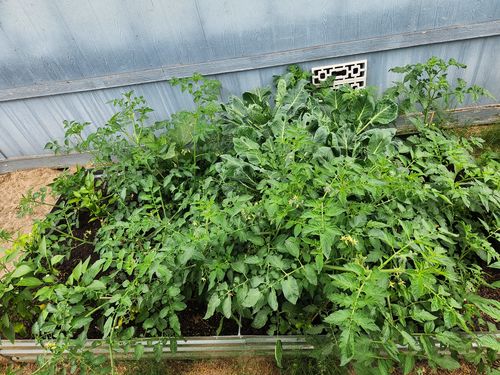
"This product saved my plants. The stores no longer carry compost. It just disappeared online too. I'm making my own but that takes time. There is not enough nutrition in the dirt you purchase for a raised bed garden. I tried this and every plant near death came back to life and had grown over night."

"The plant that was in my granddaughters room got some kind of a disease or something, was going on with it, lost most of its leaves, and my granddaughter was ready to throw it away, and I was bound and determined to save it. After I started using Elm Dirt the plant fertilizer, it has lots of new growth."

How to Actually Build Serratia Populations in Your Soil
You're not going to find a bottle on Amazon that says "Serratia — just add water." That's not how it works. What you can do is create the conditions where Serratia — and the community it belongs to — shows up and sticks around. Here's how I think about it:
- Use a living fertilizer with verified microbial biodiversity. Not one that just claims to have microbes. One that's been independently tested. Plant Juice has been third-party verified by BiomeMakers to contain 291 species with 56% antifungal biocontrol activity. That's something we can actually show you, not just say. (See Plant Juice →)
- Mix in worm castings. Worm castings are teeming with beneficial bacteria, including chitinase producers. Our Ancient Soil is Class A Certified with a verified microbiome. Think of it as long-term housing for the microbes you're introducing — they need somewhere to live and feed.
- Lay off the fungicides. I know. You've got a sick plant and you want to fix it fast. But broad-spectrum fungicides — copper sprays, high-dose neem, synthetic options — take out Serratia along with whatever you're targeting. Treat the acute problem if you have to, then commit to rebuilding what got wiped out.
- Feed the soil, not just the plant. Compost, mulch, organic matter — Serratia needs carbon-rich food sources to thrive. Soil with no organic matter is basically a desert as far as microbes are concerned. They can't establish if there's nothing to eat.
- Don't overwater. I say this gently because I've been guilty of it too. Pathogenic fungi love soggy, oxygen-depleted soil. Beneficial bacteria like Serratia need air. Moist and well-drained is the sweet spot — not wet.
- Give it time. Microbial communities don't rebuild overnight. A few consistent applications across a growing season will do more than one big dose. Be patient. The soil is working even when you can't see it.
Serratia vs. Synthetic Fungicides: Why Biology Wins Long-Term
I want to be upfront about something: synthetic fungicides work. If you've got an active fusarium infection spreading through your tomatoes or a botrytis outbreak on your roses, a targeted fungicide can stop the bleeding. I'm not going to pretend otherwise.
But here's what they don't do: they don't build anything. They destroy — indiscriminately.
That broad-spectrum fungicide killing Botrytis in your flower bed? It's also taking out the Serratia, the Trichoderma, the Pseudomonas — every organism that would have prevented the Botrytis if the soil had been healthier to begin with. So you spray, the bad fungi die, and so does your soil's defense system. Now the soil is even more vulnerable than before. So you spray again next season.
It's a cycle. And it's one that's genuinely hard to escape once you're in it.
Biological control breaks that cycle. Fungi can't evolve resistance to an enzyme that physically dissolves their cell wall. There's no way around it — it's structural. And Serratia doesn't get used up. It reproduces. It spreads. Its protective effect grows over time rather than fading.
Ready to Put Serratia to Work in Your Garden?
Plant Juice is our CDFA Certified Organic living fertilizer — third-party verified by BiomeMakers to contain 291 microbial species with 56% antifungal biocontrol activity. It's the easiest way to introduce and feed beneficial soil biology, including chitinase-producing bacteria like Serratia.
Try Plant Juice — $19.95 →Your Questions About Serratia, Answered
The Bottom Line
Serratia isn't glamorous. It's not going to make a good Instagram caption. You will never see it on a fertilizer label, because most fertilizers don't have living microbes in them at all.
But if you've been losing plants to root rot, to fusarium wilt, to mysterious decline — or if you just want to stop spraying things on your garden and trust that your soil can do its job — this little enzyme-producing bacterium is part of the answer.
Healthy soil has it. Depleted soil doesn't. That's the whole story, really. Once you understand that, it's hard to look at a bag of sterile potting mix the same way again.
You deserve a garden that works with nature. So do your plants.
— Lauren
Build Disease-Suppressive Soil Naturally
Plant Juice brings 291 documented species — including Serratia, Lysobacter, Pseudomonas putida, Trichoderma, and more — into your soil. CDFA Certified Organic. Third-party lab verified. Made right here in Grandview, Missouri.
Shop Plant Juice →