



The Seed Catalog Strategy: How to Plan Next Year's Garden Before Everyone Else Does

Plan next year's garden in the fall, not in February. Write down what worked this season while it's still growing, get on seed catalog mailing lists now, and test your leftover seeds before you buy more. Then order as soon as ordering opens, usually late fall into December, because popular varieties often sell out by late winter. Gardeners in warm zones (8–10) should order first, since their seed starting begins in December or January.
For years I ordered my seeds in February, late at night, in a bit of a panic.
And most years, half of what I actually wanted was sold out. I'd settle for whatever was left, click buy, and then spend the summer quietly annoyed at a row of perfectly nice beans. Which is a ridiculous thing to be annoyed at. I know.
The fix turned out to be almost embarrassingly simple. A gardener I know gets her whole order in by Thanksgiving, every year, and when I finally asked how, she just shrugged and said she plans next year's garden before this one is done. No system. No app. (I made a spreadsheet anyway. Engineer.)
It's mid-September and the tomatoes are still hanging on. This is the week to start.
What's in this guide
- Why planning early changes everything
- When seed catalogs come out (and when to order by zone)
- Step 1: Take stock of the seeds you already have
- Step 2: Choose what's actually worth growing
- Step 3: Order early, before the sell-outs
- Give those seeds the best possible start
- Real gardeners, real seedlings
- Frequently asked questions
Why Planning Early Changes Everything
Seed is a crop like anything else, and small seed companies only grow so much of each variety. When one catches on, it's gone.
So if you order in February, you aren't shopping the same catalog as the person who ordered in December. You're shopping her leftovers.
The other reason took me longer to figure out. Right now you can walk out the back door and see exactly which peppers produced and which ones just stood there looking decorative all summer. By February I can't remember any of that, and believe me, I've tried. Plan now and you're working from what actually happened in your own yard instead of what the catalog photo promises.
- You get first pick when ordering opens, not whatever's left.
- You'll stop buying seeds you already own. (Guilty.)
- Spring gets a lot quieter when the packets are already sitting on the shelf waiting for you.
When Seed Catalogs Come Out (and When to Order by Zone)
Most of us think of seed catalogs as a January thing, and sure, that's when the mailbox fills up. But plenty of companies open online ordering in the fall. The smart moves start about now.
| When | What to do |
|---|---|
| September | Take notes while the garden is still growing. Sign up for catalog mailing lists. |
| October – November | Catalogs start arriving. Test your leftover seeds. Draft your wish list. |
| Late November – December | Online ordering is open at most companies. Order for the best selection. |
| January – February | Peak catalog season. Popular varieties start selling out. |
| Late winter | Start seeds indoors or try winter sowing outside. |
Your USDA hardiness zone decides how early "early" has to be. Indoor seed starting usually begins 6 to 8 weeks before your last frost, so gardeners down south need seeds in hand first.
| USDA zone | Typical indoor seed start | Order seeds by |
|---|---|---|
| Zones 8–10 | December – January | November or early December |
| Zones 5–7 | February – March | December or January |
| Zones 3–4 | March – April | January (sell-outs still apply) |
Not sure of your zone or frost date? Check know your zone and our last frost date guide. Kansas City sits right around zone 6b, so for us December is the window.
Step 1: Take Stock of the Seeds You Already Have
Before you spend a dime, go find the seed stash. Mine is a shoebox that has gotten a little out of hand. Yours is probably a drawer.
A lot of those half-used packets are still perfectly good. How long seed lasts depends on the plant. University of Illinois Extension notes that onion and parsley seed fade fast, while melon, cucumber, and cabbage seed can hold up for five years or more. Most packets are best used within about three years.

Ten seeds and a paper towel. Cheapest test in gardening.
The only way to know for sure is a germination test, and it's about as low-tech as gardening gets:
- Roll 10 seeds up in a damp paper towel. Damp, not dripping.
- Seal it in a plastic bag and park it somewhere above 70°F. The top of the fridge works great.
- In 5 to 10 days you'll see little white roots poking out. Count them.
- Seven or more? Keep the packet and sow a bit thicker than usual. Anything under seven goes on the order list.
There's a full walkthrough in testing whether your old seeds are still good, and our year-end garden inventory covers what else is worth writing down before frost.
Inventory first, then order. I have absolutely bought basil seed I already owned. More than once. Ten minutes with the shoebox would have saved me the money.
Step 2: Choose What's Actually Worth Growing
This is where catalogs get dangerous. Every photo looks like a magazine cover, and before you know it there are forty packets in your cart for a garden that fits twelve.
My rules, which I break every year but still find useful:
- Grow what your people eat. The most productive tomato in the world is a waste if everyone at your table picks them out of the salad.
- Check days to maturity. A 110-day melon is a gamble in zone 4 and no big deal in zone 8.
- Disease resistance is worth a look, especially for whatever knocked your garden flat this August.
- Be honest about this year. If nobody picked it, don't reorder it out of guilt. (I'm looking at you, kohlrabi.)
- Leave room for one or two experiments, because that's half the fun. Just keep an eye on how fast "one or two" becomes eight.

A plain notebook still beats every garden app I've tried.
If choosing is the part that overwhelms you, how to choose what seeds to grow goes deeper. Torn between packets and nursery plants for certain crops? That's what seeds or starts is for. A local seed swap is a lovely, free way to fill the gaps, too.
Step 3: Order Early, Before the Sell-Outs
Once the list is done, don't sit on it. The whole point is being ready the day ordering opens.
People worry that seeds bought in November will be "old" by spring. They won't. A seed is basically a plant in hibernation, and a few months in a cool, dry cupboard doesn't bother it one bit. Waiting is the bigger risk.
A few things that make the order itself go smoother:
- Split it between two companies so one sell-out doesn't wreck the plan.
- If you've got a gardening friend, go in together and share the shipping.
- Keep a copy of the final list with the order date on it. You'll want it in March.
- Packets belong in a sealed container somewhere cool and dry. Not the cabinet over the stove.
Come planting time, that list plus a planting calendar tells you exactly what to start and when. Our zone-by-zone garden guide is a good place to map it out.
Give Those Seeds the Best Possible Start
You went to all that trouble to get the varieties you wanted. It'd be a shame to sprout them in a bag of sterile, lifeless mix and just hope.
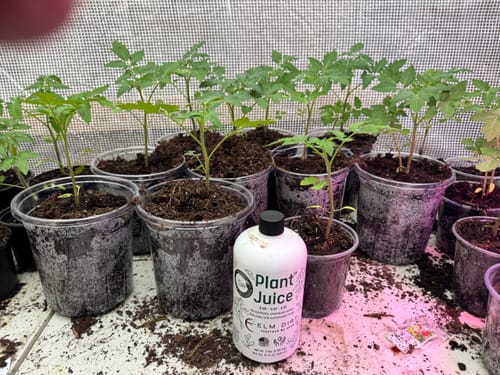
Seedlings get going faster with living biology around their roots. That first month matters most, and a gentle, microbe-rich start helps young plants root in and roll with the move outdoors.

These are the varieties you actually wanted. Not the leftovers.
- For seed starting soil, you want something light that drains well. Our Seedling Mix ($24.95) is made for tiny roots, and there's more on choosing one in the best potting mix for seed starting.
- Wait for true leaves before you feed. After that, a light dilution of Plant Juice won't burn tender roots.
- The Seed Starting Bundle puts both in one box, if you'd rather not think about it.
Now, I'm a chemical engineer, so I can't help myself here. Behind that bottle are about 291 verified microbial species doing the unglamorous part. In lab testing, 84% of them are linked to producing auxin, a root-growth hormone, and 82% to ACC deaminase, an enzyme that lowers the plant's stress hormone ethylene. One of the most abundant is Pseudomonas putida, at about 1.22 million cells per mL. A quieter one, Variovorax paradoxus, is a specialist in easing transplant shock. You don't need to remember a word of that. It's just nice to know you're not doing it alone.
When you're ready to sow, seed starting 101 covers the how-to from tray to garden bed.
Real Gardeners, Real Seedlings
I'd rather you hear it from them than from me.
Kathy R.
Very happy with Plant Juice! I sprayed it on seedlings that had been started in trays. They loved it and were ready to transplant much sooner! Later used it on established plants, it made a very noticeable difference quickly. Live in 5b and had a rough gardening year to begin with. Ordered more Plant Juice for next spring's plantings. Thanks for a great product!
Carla S.
We are growing our entire garden from seed in a greenhouse.. we will transplant new plants around the middle of April. Everything looks so green and the Elm booster seems to be working so well!

Sandy S.
The past two years my seedlings have been slow and sluggish. This year I started using Elm Dirt and I'm shocked at the difference. This year's seedlings are greener, fuller, stronger. I won't go back to any other plant food.
Daryl R.
I highly recommend this product. Tomato plants were 5” tall when I first added plant juice 3 weeks ago. Now they are about 12” tall with dark green foliage and thick stems
Gogi berry was thin last year. It’s exploding now. Dog rose seedling was barely breaking through dirt 3 weeks ago when I added plant juice. Very hard to grow from seed but looks great now
Rated 4.65 out of 5 across 1,793 verified Plant Juice reviews.
Frequently Asked Questions
When do seed catalogs come out?
Most seed catalogs arrive in mailboxes between late fall and January. Many seed companies open online ordering earlier, often in the fall. Signing up for mailing lists in September gets you on the list before the first mailings go out.
When should I start planning next year's garden?
Start in late summer or early fall, while this year's garden is still growing and you can see what worked. Write down your results now, check your leftover seeds in the fall, and have a wish list ready before ordering opens.
When should I order seeds for my zone?
Order by November or early December in USDA zones 8 to 10, where indoor seed starting begins in December or January. Order by December or January in zones 5 to 7. In zones 3 and 4 you start seeds later, but popular varieties still sell out, so order by January.
How do I choose which seeds to order from a catalog?
Start with what your household actually eats. Match each variety's days to maturity to your growing season, favor disease-resistant and regionally proven varieties, add one or two new things to try, and skip anything you grew this year that went unharvested.
Is it worth ordering seeds early?
Yes. Popular and hard-to-find varieties often sell out by late winter. Seeds are dormant and keep well for months in a cool, dry place, so ordering in the fall or early winter has no real downside.
How do I know if my leftover seeds are still good?
Do a germination test. Roll 10 seeds in a damp paper towel, seal it in a plastic bag, and keep it somewhere above 70°F. Count the sprouts after 5 to 10 days. Seven or more is usable. Fewer than seven means buy fresh seed. Onion and parsley seed fade after a year or two, while cucumber, melon, and cabbage seed can last five years or more.
Plan Now, Coast Into Spring
A good garden doesn't really start with a shovel in April. It starts on some September evening at the kitchen table, catalog open, while you can still remember which squash plant swallowed the path.

What a fall seed plan looks like come July.
Where to go next:
- Pull your notes together with the year-end garden inventory.
- Curious why soil life makes all of this easier? Read garden easier with microbes.
- Join our email list for one small garden win a week. And tell us the one variety you're ordering first. I'm always a little nosy about what other people grow.
Sources: University of Illinois Extension, Explore and assess your seeds this winter · Oregon State University Extension, Will your seeds grow plants? · Gamalero & Glick (2015), Bacterial modulation of plant ethylene levels, Plant Physiology

Lauren Cain
Founder & Chemical Engineer · Elm Dirt, Kansas City
Lauren started Elm Dirt after her 6-month-old daughter grabbed fistfuls of backyard dirt and ate them. As a chemical engineer and a mom, she couldn't just shrug it off, so she dug into the science of what was really in garden soil. That rabbit hole led her to build a fertilizer line around beneficial microbes instead of synthetic chemicals. Today Elm Dirt's products are used by home gardeners, rose show champions, and organic growers across the country.