



Organic Fertilizer for Containers: What Works When Your Soil Has Nowhere to Go

Container plants need more frequent feeding than plants in the ground. Water drains through the pot and carries nutrients out the bottom, and roots can't reach past the pot walls for more. The best approach is a gentle, microbe-rich organic liquid fertilizer applied lightly every one to two weeks during active growth. It replaces what washes out, is far less likely to build up salts than synthetic feed, and keeps the small amount of potting soil alive so it holds nutrients longer. In fall, taper off as growth slows. In winter, feed monthly or pause.
Every August somebody tells me their porch pots "just gave up." They looked like a magazine cover in May, and by Labor Day they're hanging on by a thread.
Nine times out of ten, the plant is fine. The pot just ran out of groceries.
We're in the middle of September now, so a lot of us are pulling out the leggy petunias and tucking mums, pansies and ornamental kale into those same pots. If there's a flat of pansies sitting by your back door waiting on you right now, good timing. Fall pots follow the same feeding rules as summer ones, they just move slower and you get to ease off sooner.
I love containers. They let you grow a tomato on an apartment balcony, or keep the basil close enough to the kitchen that you'll actually use it. The catch is that the soil inside a pot is on its own, with no ground around it to borrow from when it runs low, and once that clicks, feeding stops feeling like guesswork.
What's in this guide
- Why containers run out of food faster
- Why salt-based feeds get tricky in a pot
- Why organic feeding fits containers
- How often to fertilize potted plants
- Feeding pots in fall, by zone
- How to feed containers the easy way
- The signs your pot is hungry
- Real gardeners, real pots
- What's doing the work in there
- Frequently asked questions
Why Containers Run Out of Food Faster Than Garden Beds
A tomato in a raised bed and a tomato in a five-gallon bucket can be the same variety, planted the same afternoon, and they'll still live completely different lives. The one in the bed sends roots out a couple of feet in every direction.
The bucket tomato gets what's in the bucket.
So where does the food go?
- Out the bottom, mostly. Water runs through the mix and out the drainage holes, carrying dissolved nutrients with it, so the more faithfully you water, the faster the pot empties. Kind of unfair, really.
- Roots can't go looking for more once they hit the wall.
- Nobody's restocking the pantry. Out in the yard, worms and fungi are breaking down old roots and leaves all year long. A bag of fresh potting mix starts with a little of that life, but in a closed-off pot it gets used up and isn't replaced.
We wrote an older, longer post on choosing a container garden fertilizer (slow-release granules and all) if you want the full menu. This one sticks to organic feeding and, mostly, to how often.

Fall pots eat less than summer pots. Less isn't nothing, though.
Why Salt-Based Feeds Get Tricky in a Pot
Most of us who've gardened a while have a box of the blue crystals somewhere in the garage, and to be fair to them, they green things up fast.
In a garden bed, all the ground around the plant softens that jolt. A pot doesn't have any ground around it. Synthetic fertilizers are concentrated mineral salts, and when the salts have nowhere to spread out, they pile up a little more with every feeding.
You usually notice the symptoms long before anybody tells you the cause:
- a white, crusty ring on top of the soil or around the rim
- leaf edges going brown and crispy, which is maddening when you've been feeding like clockwork
- The plant perks up for about a week after you feed it. Then it looks hungry again.
That last one turns into a treadmill, and a tiring one. It's also really easy to overdo fertilizer in a small pot without meaning to, which is a big part of why so many gardeners are moving away from synthetics.
Got a crusty pot right now? Take it to the spigot and let plain water run through until it's pouring out the bottom for a good minute. That rinses most of the buildup out, and the plant will thank you for it.
Why Organic Feeding Fits Containers So Well
What made containers click for me was realizing I wasn't really feeding the plant at all. I was keeping a few gallons of soil alive, and the soil was feeding the plant.
That's the job an organic liquid like Plant Juice does in a single pour. It adds organic matter and beneficial microbes that move into the potting mix and keep releasing nutrients slowly, in between feedings, on the days you're not thinking about that pot at all. It's the living soil idea shrunk down to fit on a porch step.
It also isn't a concentrated salt, so it's very hard to overdo. Heavy-handed one week? A few days late the next? The pot mostly shrugs. For containers that forgiveness is my favorite part, because nobody waters their porch pots on a perfect schedule. I sure don't.
Think of it this way. A synthetic feed treats a pot like a glass of water with salt stirred in, and the plant has to drink it before the next watering washes it away. An organic feed treats the pot like a tiny garden bed: build up the soil, and let the soil do the feeding while you're busy with other things.
Worth knowing, too: a lot of bagged potting mix starts out pretty quiet, biologically speaking. Our post on living soil vs. sterile soil gets into why that matters.

A few gallons of living soil can hold on to a surprising amount.
How Often to Fertilize Potted Plants
Because pots drain, you feed little and often. Use this as a starting point, not a rulebook:
| Container type | How often to feed (active growth) |
|---|---|
| Flowering pots and hanging baskets | Every week |
| Vegetables and herbs in pots | Every 1 to 2 weeks through harvest |
| Leafy houseplants | Every 2 weeks in spring and summer |
| Succulents and cacti | Every 3 to 4 weeks, lightly |
| Fall annuals (mums, pansies, kale) | Every 2 weeks until 2 to 3 weeks before first frost |
| Everything in winter | Monthly, or pause if growth has stopped |
With Plant Juice, as little as an ounce per gallon of water will do it. If your watering can is one of those old ones with no markings on the side, the dilution calculator will do the math for you.
Watch the plant more than the calendar. A pot baking on a south-facing step is going to want food sooner than one tucked in the shade by the garage. For specific plants, we've got guides to houseplant fertilizer, succulent care and fertilizing tomatoes organically, or you can print the whole Elm Dirt feeding schedule and stick it on the fridge.

Fed a little at a time, container vegetables just keep going.
Feeding Pots in Fall, by Zone
September is when the schedule starts to bend, and how much it bends depends on where you live. Your USDA hardiness zone is a decent guide:
| USDA zone | Outdoor pots this fall |
|---|---|
| Zones 3–4 | Last regular feeding in early to mid September. Bring tender pots in before the first frost. |
| Zones 5–7 | Feed fall annuals every 2 weeks through early October, then taper off 2 to 3 weeks before your first frost. |
| Zones 8–10 | Fall is a second growing season. Keep pots on a 1 to 2 week schedule while they're actively growing. |
We're zone 6 here in Kansas City. In practice that means feeding porch mums every other week until about mid-October and then letting them coast, while anything that comes inside for the winter drops back to once a month.
How to Feed Containers the Easy Way
You don't need any special gear for this. A few habits cover almost all of it:
- Start the pot with something alive in it. A biologically active all-purpose soil mix works, or plain potting mix with a couple handfuls of worm castings stirred in. There's more ideas in our guide to the best soil amendments for containers.
- Water first, then feed, or just feed as part of your regular watering. Pouring any fertilizer onto bone-dry soil is hard on roots.
- Mix Plant Juice right into the watering can, so you're topping up food and soil life on the same trip.
- Flush with plain water every so often, especially pots that had synthetics in them before.
- Once or twice a season, scratch a fresh inch of castings or compost into the top.
Watering and feeding really work as a pair. Our post on watering container gardens covers how much and how often, and once you've got both of them dialed in, container growing stops feeling like a rescue mission. That's pretty much the whole idea behind gardening easier with microbes.
The Signs Your Pot Is Hungry
A hungry pot will let you know. Learn what to look for and you'll usually catch it before it stalls out completely.
- The lower, older leaves go pale or yellow first, because the plant pulls nutrients out of them to feed the new growth up top.
- Growth just stops. Warm weather, plenty of sun, and the thing hasn't gotten any bigger in weeks.
- Flowers get fewer and smaller, and sometimes buds drop before they ever open.
- Water shoots straight through and out the bottom. Usually that means the mix has broken down and lost its sponginess.
None of these are hard to fix once you spot them. Yellow leaves can have more than one cause, though, so if you want to rule things out, our guide to yellow leaves and their organic fixes walks through the usual suspects. And if a hot spell has your pots bone dry by suppertime, have a look at helping container plants through heat.

Deep green and still putting out new leaves. That's a pot that's eating well.
Real Gardeners, Real Pots
I'd rather you hear it from them than from me.
Susan J.
I have used the plant booster on my plants and look at what it has done to this container garden . The flowers are incredible and colors are almost psychedelic…I have never seen the vibrant orange and yellow and have planted these every year. I am now using this on everything!

Lisa C.
I give all my indoor plants (over 175 plants) & outdoor gardens Elm Dirt Plant Juice. My exotic, succulents & cactuses receive a weekly watering with the juice. Every plant is pushing new growth & is healthy thriving.
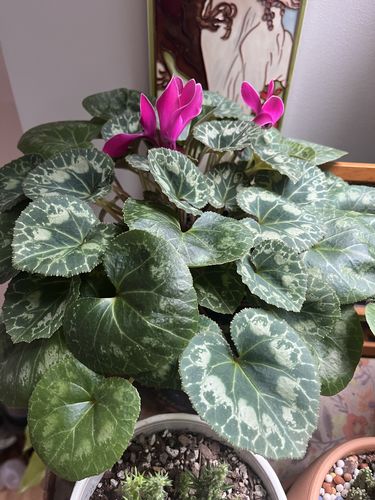
Lorie F.
Plant Juice is very easy to use. I'm using it once a week and my planters are blooming beautifully. I recommend!
Elizabeth R.
Love this stuff…. Really helps these plants survive ….. I love where summer is from June to Sept in the high 90’s to over 100 a 108 for weeks and my potted plants need to be watered Dailey so this plant Juice helps and noticed nice flowering and leaves turning a nice deep green. Thank you
Rated 4.65 out of 5 across 1,793 verified Plant Juice reviews.
What's Doing the Work in There
You don't need any of this to grow a great pot. But if you've ever wondered what's going on in there between feedings, this is the short version.
Plant Juice carries 291 species of beneficial microbes, confirmed by DNA sequencing, so you really aren't feeding that pot by yourself.
Pseudomonas is one of the most studied root-helping bacteria out there, and researchers have found that some Pseudomonas strains help plants handle salt stress. In a pot, where salts have nowhere else to go, that's a nice thing to have on your side. Our Pseudomonas spotlight goes deeper if you're a science person.
About 84% of the species in Plant Juice are linked to making EPS, which is basically a sticky natural glue that helps soil crumbs hang on to water and nutrients. Potting mix breaks down over a season, so that glue earns its keep. Others, like Devosia, set up shop right on the roots. The full breakdown lives on our nutrient and microbial analysis page.

About 291 species doing the unglamorous part, so you don't have to.
Frequently Asked Questions
What is the best organic fertilizer for container plants?
A gentle, microbe-rich organic liquid fertilizer is the best fit for containers. Potted soil is a closed system that loses nutrients every time you water, so you want a feed you can apply lightly and often without building up salts or burning roots. An organic liquid like Plant Juice also adds beneficial microbes that keep the small amount of soil alive, which helps it hold nutrients longer between feedings.
How often should you fertilize potted plants?
Feed most container plants with a gentle organic liquid fertilizer every one to two weeks during active growth. Flowering pots and hanging baskets do best weekly. Leafy houseplants need feeding about every two weeks in spring and summer, succulents every three to four weeks, and nearly all potted plants only monthly or not at all in winter.
Why do container plants need more fertilizer than garden beds?
A pot holds a small, fixed amount of soil. Water drains through and carries dissolved nutrients out the bottom, roots cannot grow past the pot walls to find more, and there is no surrounding soil ecosystem to replace what the plant uses. Container plants use up their food supply much faster than the same plant growing in the ground.
Can you use regular garden fertilizer in pots?
You can, but synthetic salt-based fertilizers build up quickly in a closed container. Signs include a white crust on the soil surface or pot rim and brown, crispy leaf edges. A gentle organic feed is lower in concentrated salts and feeds the soil life, so it is more forgiving in a pot. If you have used synthetics, flush the pot with plain water occasionally.
How do you know if a potted plant needs fertilizer?
Pale or yellowing lower leaves, growth that has stalled during warm weather, and fewer or smaller flowers are the common signs a container plant has run out of food. Because pots use up nutrients quickly, these signs often appear mid-season even when the plant started strong.
Should you fertilize container plants in fall and winter?
Yes, but less. Keep feeding fall annuals such as mums, pansies, and ornamental kale every two weeks while they are actively growing, then taper off two to three weeks before your first expected frost. Houseplants and pots brought indoors need feeding about once a month in winter, or not at all if they have stopped growing. In USDA Zones 8 to 10, many pots keep growing through fall and can stay on a one-to-two-week schedule.
Small Pot, Living Soil, Easy Season
Containers have a reputation for being fussy, and I don't think it's fair. A pot just can't hide it when the food runs out.
Feed it a little at a time, keep that small pocket of soil alive, and most of the fussiness goes away on its own. Then go enjoy your mums. Together we grow.
Where to go from here
- Want one small, easy garden win in your inbox each week? Sign up here. No lectures, promise.
- If feeding the soil is new to you, living soil, explained is the place to start.
- And tell us your smallest container win this season, like the pansy that bounced back or the one pepper off the balcony plant. Just reply to any of our emails. We read every one.
Sources: University of Illinois Extension, Fertilizing Container Gardens · University of Minnesota Extension, Fertilizing and Watering Container Plants · University of Maryland Extension, Maintaining Container-Grown Vegetables · Chu et al. (2019), Pseudomonas PS01 induces salt tolerance, BMC Research Notes

Lauren Cain
Founder & Chemical Engineer · Elm Dirt, Kansas City
Lauren started Elm Dirt after her 6-month-old daughter grabbed fistfuls of backyard dirt and ate them. As a chemical engineer and a mom, she couldn't just shrug it off, so she dug into the science of what was really in garden soil. That rabbit hole led her to build a fertilizer line around beneficial microbes instead of synthetic chemicals. Today Elm Dirt's products are used by home gardeners, rose show champions, and organic growers nationwide.