



Geodermatophilus: The Stress-Resistant Bacteria That Rebuilds Damaged Soil

Geodermatophilus is a group of soil bacteria that survives conditions which kill almost everything else — baking heat, years of drought, hard UV light. It lives in desert dirt and on bare rock, and it's one of the first organisms to show up on ground that has nothing living in it at all. Over time it helps turn plain mineral into something a plant can actually root into. It is not in Elm Dirt Plant Juice, but nine other stress-tolerant species that do the same job are.
So there's a bacteria that lives on rocks.
Not in soil. On rocks. Bare stone out in the desert, where the surface hits 150°F, it doesn't rain for eight months at a stretch, and there is nothing you'd call dirt for miles in any direction.
That's where Geodermatophilus makes its living, and I've been sitting on this one for a while because it answers the question I get more than almost any other. Some version of: "Lauren, my soil is basically dead. Is it even worth trying?"
The people asking usually fall into one of a few camps. New build where the developer scraped the topsoil off and sold it. That orange Kansas clay you could throw a pot with (my condolences, I've got it too). Or twenty-some years of granular fertilizer went down and now the ground is about as receptive as a driveway.
Anyway. Nature sorted this out a long time ago, and Geodermatophilus is a piece of how.
What Geodermatophilus Actually Is
It's a genus of Actinobacteria, which is the same big family that gives you that smell after rain. Most of them are filament-formers that sit in soil and chew through tough organic material, which is normal enough as bacteria go. Geodermatophilus is the one that wandered off and set up somewhere ridiculous.
Researchers first pulled it out of arid desert soil back in the 1960s. Since then it's turned up on limestone monuments around the Mediterranean, in the Sahara, in Central Asian salt deserts. There's a species described in 2024, Geodermatophilus maliterrae, that came off badland rock in the Red Desert of Wyoming — black-pigmented, growing right on the surface of sedimentary stone in about the harshest patch of ground we've got.
Under a microscope it doesn't look like a normal rod-shaped bacteria at all. It clumps into these dark packets of cells, sort of like a very small blackberry. And the pigment is doing a job, by the way. It's sunscreen.

Actinobacteria form clustered packets rather than single free-swimming rods.
Why It's So Tough
The part that got me, as an engineer, is what happens when you actively try to kill these things.
A 2012 study in FEMS Microbiology Ecology took stone-dwelling members of this family and hit them with the stresses that generate reactive oxygen species, which are the same destructive molecules that wear down cells in you and me. Drying them out, radiation, oxidative chemicals, the works. They held up under conditions that would sterilize most bacteria.
Think about what that means out in a yard. Most soil biology wants moisture and a moderate temperature and a bit of shade, and when you take those away the population crashes.
Geodermatophilus doesn't crash. It parks. Goes dormant, waits out the bad stretch — months, sometimes years — and then starts back up whenever a little water finally shows.
Which is a fundamentally different bet than the one your average garden microbe is making. It's also why these are the organisms you find sitting on ground that's got nothing else on it.

Stress-tolerant bacteria are usually the first colonizers on bare or degraded ground.
How It Rebuilds Damaged Soil
Bare rock isn't soil, and honestly bare subsoil isn't really soil either. Soil is mineral and organic matter and pore space and life, all tangled up together. Which means something has to go first, before there's anything for the next thing to live in.
Out in arid country, what forms on the surface is called a biological soil crust. The USGS calls it a living veneer covering the ground between the plants, and in a lot of dry areas that veneer is more than 70% of the living ground cover. It cuts erosion. It holds water. Over time it builds actual fertility where there wasn't any.
Geodermatophilus and its relatives are the bacterial side of that community. Roughly, the sequence runs:
- They colonize. The tough ones settle onto mineral surfaces nothing else will touch.
- They weather it. Slowly, chemically, they alter the rock or the mineral particle. It's the same process that eats away at stone monuments, which sounds bad until you realize that in soil it's how locked-up minerals get released to plants.
- Then the glue shows up. Sticky compounds that bind loose particles into crumbs.
- Crumbs make pore space, and pore space is simply where air and water get to go.
- Then they hand it off. Fungi move in. Less-hardy bacteria move in. Roots follow.
That last step is the whole ballgame. Utah State Extension puts it about as plainly as anyone: organic matter is the glue holding soil particles together, and structure is what lets roots grow and water drain and air get down there. We walk through the longer version of all this in our soil health guide.
Nature builds that glue biologically. It just takes decades if you leave it to do the job alone.
An Honest Note About This One
Geodermatophilus is not in Plant Juice.
I went and checked our BiomeMakers sequencing report before writing this, the way I do for every microbe in this series. Report #CUX005 identified 291 species in Plant Juice. Geodermatophilus isn't one of them — and it isn't in the Bloom Juice report (#CUX004) either.
I could've written around that. I'd rather just say it.
I still wanted to write it up, though, because Geodermatophilus is the clearest example I know of how beaten-up ground actually comes back. The life shows up first and the structure follows it, not the other way around. That's the part most of us have backwards.
And when I sat down and read our species list looking for that same job description, the stress-tolerant Actinobacteria and the crumb-builders and the mineral-workers, they're in there. Different names is all.
The Stress-Tough Microbes Verified in Plant Juice
These all come straight off BiomeMakers report #CUX005 — outside lab, DNA sequencing, nobody from marketing anywhere near it.
| Species | What it's known for |
|---|---|
| Marmoricola sp. | Actinobacterium first described from stone and marble surfaces. Closest thing on our list to Geodermatophilus's day job. |
| Nocardioides sp. | Breaks down stubborn organic compounds other microbes leave behind. |
| Terrabacter sp. and Conexibacter sp. | Soil Actinobacteria associated with degraded and low-nutrient ground. |
| Gaiella sp. | Deep-soil genus common in mineral-heavy, low-organic-matter horizons. |
| Streptomyces avermitilis, S. zaomyceticus, S. turgidiscabies, Kitasatospora aureofaciens | The classic soil-building Actinobacteria. Filament-formers that knit particles together. |
| Pseudarthrobacter oxydans | Genus known for surviving drying and long stretches of starvation. |
| Geobacillus stearothermophilus | A true thermophile. Built for soil temperatures that shut most bacteria down. |
| Cupriavidus metallidurans | Heavy-metal tolerant. Relevant if you're gardening on old industrial or urban fill. |
| Sphingomonas and Caulobacter | Both linked to plant stress tolerance. |
| Variovorax paradoxus | Helps regulate the plant stress hormone ethylene. |
A few of these have gotten their own write-ups: Sphingomonas, Caulobacter, Variovorax and transplant shock, and Gemmatimonadetes, the dry-soil specialist.
Plus the workhorses you'd expect: Rhizobium, Bradyrhizobium, Mesorhizobium, Lysobacter, and Trichoderma on the fungal side.
Across the whole report, Plant Juice scored 80% on inorganic nitrogen release and 80% on organic matter release, which are exactly the two functions you want working for you when you're trying to wake up dirt that's gone flat. There's more on that in our guide to living soil and our breakdown of how beneficial microbes help plants grow.
What This Means For Your Actual Yard
Nobody's suggesting you go inoculate your beds with desert rock bacteria. That's not the point.
The point is the order things happen in. Biology, then structure, then plants — and most of us run that backwards. We amend, we plant, we fertilize, and then we're standing out there in year three wondering why the ground is still concrete.
How to fix compacted, clay-heavy or scraped soil
- Stop tilling it. Oregon State Extension notes that repeated rototilling compacts the layer sitting just below tillage depth, and it kills earthworms besides. You're undoing the exact thing you're trying to build.
- Add organic matter that comes with biology already in it. Worm castings and finished living compost bring microbes and food in one shot. OSU specifically recommends composted material over fresh, because it raises organic matter for longer. Our organic soil amendment guide covers what each one actually does.
- Keep it covered. Bare ground bakes and crusts over. Mulch, a cover crop, even leaf litter.
- Feed the biology, not only the plant. A microbial drench is what keeps populations going in between amendments.
- Test before you guess. A basic soil test will tell you whether you're actually fighting compaction, or pH, or a real nutrient shortage. Those are three different problems.
- And then give it a season. Utah State says compacted soil may need a full season or more before aggregates even start reforming. Two to three seasons is the honest number for a real turnaround.
Start this fall, not next spring
Early September is the best window you get all year for this, and it's the one most people skip right past.
The ground's still warm, so whatever biology you put down stays awake instead of going dormant the day it arrives. Winter moisture handles the work of pulling organic matter down into the profile so you don't have to. And your beds are emptying out anyway. Nothing down there is competing for root space right now.
Amend this month and you've bought yourself five or six months of quiet underground work before you put a single plant in. Our full walkthrough is over here: how to amend garden soil in fall.

What you're after is crumb structure. Not dust, not clods.
What Gardeners Have Told Us
"When we planted the new section (Japanese garden) the soil was pure clay and no nutrients in the soil. After we added the ancient soil and plant juice, the camellias and maples immediately grew buds and started flowering. Best product ever! Thank you!"

"I live in Texas and the soil is really thick clay. We call it gumbo down here and there's a lot of plants that do not like my soil worm casting has really helped my plants through the tough soil."
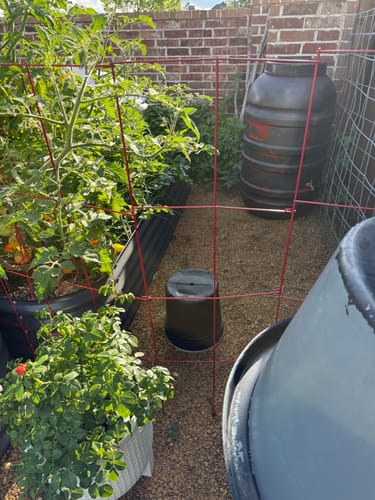
"my newly planted trees and shrubs were struggling with the heat and drought this year in spite of my frequent deep waterings. THEN I found elm dirt. The transformation was quite immediate and such a relief. I had spent thousands on my trees and shrubs and it was the Elm Dirt that kept them vigorous and beautiful"
Where To Start

Ancient Soil
Class A certified living compost and worm castings. This is the structure-and-biology piece — what you work into clay, fill dirt, or beds that have gone tired. Rated 4.8 out of 5 from 65 reviews.
From $29.95 (2 lbs) · up to $199.95 (25 lbs) Shop Ancient Soil
Plant Juice
CDFA Certified Organic living liquid plant food. 291 verified microbial species, independently sequenced. This is what keeps biology working between amendments. Rated 4.7 out of 5 from 1,793 reviews.
From $19.95 (16 oz) · 32 oz $29.95 Shop Plant Juice
Worm Castings
Straight castings. The simplest way to put biology and organic matter into hard ground. Rated 4.9 out of 5 from 46 reviews.
$14.99 (2 lbs) · $29.95 (10 lbs) Shop Worm CastingsWant the whole thing in one shot? The Elm Power Bundle ($89.90) puts the amendment and the liquid together, and it's sitting at 4.6 out of 5 from 141 reviews. You can also set any size to auto-deliver at checkout, which is what I'd personally do for a soil rebuild, because the whole thing falls apart if you skip a season and forget to reorder. Ask me how I know.
Frequently Asked Questions
What is Geodermatophilus?
A genus of Actinobacteria found in desert soils and on bare rock. It survives extreme drying, UV and ionizing radiation, heat and oxidative stress, and acts as a pioneer colonizer that helps convert bare mineral into the beginnings of living soil.
Is Geodermatophilus in Elm Dirt Plant Juice?
No. Our BiomeMakers report (#CUX005) identified 291 species in Plant Juice and Geodermatophilus isn't among them. Plant Juice does contain other stress-tolerant Actinobacteria that do similar work, including Marmoricola, Nocardioides, Terrabacter, Conexibacter, Gaiella, Kitasatospora aureofaciens and three Streptomyces species.
How do stress-resistant bacteria rebuild damaged soil?
They colonize bare ground first, slowly weather mineral particles, and release sticky compounds that bind those particles into crumbs. The crumbs create pore space for air and water, which lets roots, fungi and less hardy microbes move in behind them.
How long does it take to fix compacted or dead soil?
Most gardeners see real change in one season and substantial change over two to three. Utah State Extension notes compacted soil may need a full season or more just to begin reforming aggregates on its own. Adding organic matter and biology speeds that up considerably.
What are the best organic soil amendments for rebuilding bad soil?
Organic matter that carries biology with it — worm castings or a Class A living compost blend. Then feed that biology with a microbial liquid. Oregon State Extension recommends composted material over fresh because it raises soil organic matter for a longer period. See our complete soil amendment guide for the full comparison.
How much worm castings should I add to soil?
For garden beds, work castings into the top few inches at roughly 10 to 20 percent of the soil volume. For containers, mix about one part castings to four parts potting mix. For established plants, top-dress a half inch around the base and water it in. More detail in what are worm castings.
What is a biological soil amendment?
A biological soil amendment adds living microorganisms to soil rather than only adding nutrients. Worm castings, finished living compost, and microbial liquid inoculants are the common examples. They rebuild the soil food web that creates structure, cycles nutrients, and holds water.
Is fall a good time to rebuild damaged soil?
Yes, it's the best window of the year. The ground is still warm enough for microbial activity, winter moisture helps carry organic matter down into the profile, and roots aren't competing for the bed. Amendments added in fall have several months to break down before spring planting.
Does this work for container plants too?
Yes, and faster. A pot is a small closed system, so biology establishes quicker than in open ground. See our guide to soil amendments for containers.
Sources
- Gtari M, et al. "Contrasted resistance of stone-dwelling Geodermatophilaceae species to stresses known to give rise to reactive oxygen species." FEMS Microbiology Ecology, 2012. PubMed
- Belnap J. "Biological Soil Crusts: Webs of Life in the Desert." U.S. Geological Survey Fact Sheet 065-01. USGS
- U.S. Geological Survey, Southwest Biological Science Center — Biological Soil Crusts
- Oregon State University Extension — Improving Garden Soils with Organic Matter (EC 1561)
- Utah State University Extension — Solutions to Soil Problems: Soil Structure (Compaction)
- BiomeMakers Microbiome Analysis Report #CUX005, Elm Dirt Plant Juice, May 2024.

Lauren Cain
Founder & Chemical Engineer · Elm Dirt, Grandview, Missouri
I started Elm Dirt after my 6-month-old daughter grabbed a fistful of dirt out of our backyard and ate it, and I realized I had absolutely no idea what was in our soil. I'm a chemical engineer and a mom, so I couldn't just shrug and move on. I dug into soil science, learned about living soil biology, and built our whole fertilizer line around beneficial microbes instead of synthetic chemicals. Today Elm Dirt products are used by home gardeners, rose show champions, and organic growers across the country.