



Deinococcus: The Stress-Resistant Bacteria That Survives When Nothing Else Does

By Lauren Cain · Updated October 12, 2026
Deinococcus is a genus of soil bacteria and the most radiation-resistant life known. Deinococcus radiodurans survives about 5,000 grays of radiation with no loss of viability, roughly 1,000 times a lethal human dose. It also survives drought, freezing and oxidative stress. Scientists think this toughness evolved to survive drying out, because desiccation breaks DNA the same way radiation does.
Most of the microbes I write about in this spotlight series have a job. They're feeding roots or breaking down last year's leaves. This one doesn't really have a job. It just refuses to die.
Scientists actually call it "Conan the Bacterium," which I thought was a joke the first time I read it. It isn't. Meet Deinococcus, a genus of soil bacteria that walked away from things I'd have bet money no living cell could survive.
Meet the microbe: Deinococcus. A genus in the family Deinococcaceae, first found in 1956 in a can of meat that had been "sterilized" with radiation and still spoiled. Its type species, Deinococcus radiodurans, is the most studied radiation-resistant organism on Earth. More than 50 species have been described from desert sand, mountain soil, rice paddies and the high atmosphere.
What's in this guide
- What is Deinococcus?
- How much radiation can Deinococcus survive?
- Why would a soil bacterium survive radiation?
- How does Deinococcus repair itself?
- What Deinococcus teaches gardeners about drought
- Which stress-tolerant microbes are in Plant Juice?
- How to build a stress-resilient living soil
- Real gardeners, real results
- Frequently asked questions
What Is Deinococcus?
I love how this one was found. Back in 1956, food scientists in Oregon were trying to sterilize canned meat with radiation, which seemed like a great idea at the time. They blasted the cans with enough to kill anything inside.
The meat spoiled anyway.
Whatever was growing in there turned out to be Deinococcus radiodurans (Lim et al., 2019). The name is Greek for "terrible berry," and "terrible" here means the old-fashioned kind, as in awe-inspiring. The berry part is because the little round cells clump up in twos and fours. Researchers have since dug it out of desert sand in the Sahara and the Gobi and plenty of ordinary dirt in between. So no, not a delicate organism.

Those little round clumps are where the "berry" in the name comes from.
How Much Radiation Can Deinococcus Survive?
Quick unit lesson, because the numbers are the fun part. Radiation dose is measured in grays. Somewhere around 5 to 10 grays will kill a person, and a few hundred will wipe out most bacteria. Deinococcus radiodurans takes about 5,000 grays without losing a single step, and some cells make it through more than 10,000 (Cox & Battista, 2005).
Radiation is what gets it into textbooks, but for us gardeners it's the least useful trick on the list. It also handles:
- Drying out. It can sit bone dry for ages and wake up when water comes back, which most microbes can't pull off for more than a few days.
- Cold. A few species were first found living on Antarctic rock.
- Oxidative stress, meaning the reactive molecules that chew up ordinary cells from the inside.
- Space. Not a typo. Japan's Tanpopo mission bolted dried clumps of it to the outside of the International Space Station, and after three years up there some of it was still alive (Kawaguchi et al., 2020).
The official term is polyextremophile. I just think of it as the cockroach of the microbe world, and I mean that as a compliment.
Why Would a Soil Bacterium Survive Radiation?
OK, this is the part that hooked me. A bucket of garden soil has basically no radiation in it. Evolution doesn't usually build defenses against a problem nobody's ever had, so what's a dirt microbe doing with armor like this?
The best answer is drought. When a cell dries out all the way, its DNA cracks into pieces, and it looks a lot like radiation damage. Back in 1996, two researchers took 41 strains of Deinococcus that had lost their radiation toughness and dried them out for six weeks. Every single one struggled to come back (Mattimore & Battista, 1996). Turns out it's the same toolkit doing both jobs.
The engineer in me finds that really satisfying. It's not some freak of nature that wandered in from outer space. It's a drought specialist, and drought is something every one of us deals with. Think of the pot you forgot on the porch for a week in August. That's the world this thing was built for.

Drying out is hard on soil life. The tough microbes are how a living soil gets through it.
How Does Deinococcus Repair Itself?
There are two main tricks, and I'll keep the biochemistry light.
It puts its DNA back together, fast. A big dose of radiation can snap a genome into hundreds of pieces. For you or me, or for most bacteria, that's game over. Deinococcus keeps a few spare copies of its genome on hand and has the whole thing stitched back up within hours.
It protects the repair crew. This part surprised scientists. It turns out what really kills cells in radiation or drought is damage to the proteins whose job is fixing the DNA, more than the broken DNA itself. Kill the mechanics and the car never gets fixed. Deinococcus hoards manganese along with some small peptides, and that mix works like a shield over its repair enzymes (Daly et al., 2010). In that study, the protective mix kept enzymes active at 50,000 grays, a dose that destroyed the DNA outright.
What I take from it: Deinococcus doesn't avoid getting knocked down. It just gets back up better than anything else alive. I'd take that for my garden any day.

A living soil holds a whole cast of specialists, including tough survivors that keep working when conditions turn brutal.
What Deinococcus Teaches Gardeners About Drought
You might be thinking, great, Lauren, but my tomatoes aren't getting irradiated. Fair. So why do I still care about this little guy.
Your beds will never see gamma rays. They will see a dry spell that drags on two weeks longer than the forecast promised, or a heat wave in July, or a container on a south-facing patio that cooks every afternoon. Whether your soil bounces back from all that doesn't come down to the numbers on a fertilizer bag. It comes down to what's living in it.
I think of it like a sports team. Soil that's been run down to plain dirt and synthetic salts has no bench. Stress it and everything stalls. A diverse living soil has somebody on the roster for every kind of bad day, including tough little survivors that ride out winter and hang on through dry spells. It's the same reason living soil matters more than the number on the bag, and why living soil beats sterile potting mix when the weather turns.
Around Kansas City we can go from a dry, 90-degree September to a hard frost by Halloween, sometimes in the same couple of weeks. Soil that's alive handles that whiplash a whole lot better than soil we've treated like a sponge for fertilizer.
Which Stress-Tolerant Microbes Are in Plant Juice?
I want to be upfront about this: when we had Plant Juice independently DNA-sequenced, the lab found 291 verified species, and Deinococcus wasn't on the list. I'm writing about it anyway because it's the best example I've got of why diverse soil holds up under stress.
What the sequencing did find is a handful of microbes from groups with their own reputations for toughness. The cell counts below come straight from our lab report.
| Microbe in Plant Juice | Cells per mL | Its group is known for |
|---|---|---|
| Geobacillus stearothermophilus | 362,000 | Heat. Its spores are so heat-resistant they're used to test whether hospital autoclaves work. |
| Caulobacter sp. | 119,000 | Thriving in lean, low-nutrient conditions. Caulobacter spotlight |
| Sphingomonas (2 species) | 71,400 combined | Helping plants cope with drought and salt stress. Sphingomonas spotlight |
| Gemmatimonas sp. | 34,200 | Turning up in dry soils. Gemmatimonadetes spotlight |
| Cohnella laeviribosi | 10,100 | Staying active in cool-season soil. Cohnella spotlight |
| Cupriavidus metallidurans | 4,530 | Tolerating heavy metals that poison most bacteria. |
| Chryseobacterium taihuense | 1,210 | Cold tolerance. Chryseobacterium spotlight |
None of these are Deinococcus-level superheroes, and I'm not going to pretend otherwise. They're a few good players on a big team, which is kind of the whole point. And if you want to meet another tough customer from the spotlight series, check out Geodermatophilus, a desert-crust survivor (also not in our bottles, for the record).
How to Build a Stress-Resilient Living Soil
There's no magic microbe you can shake out of a bottle that makes your soil bulletproof. I wish there was. Toughness comes from the whole community, so the job is mostly about keeping the soil covered and keeping it fed.
- Cover bare soil. Two to four inches of shredded leaves or straw keeps the surface from baking. Fall leaves run through the mower are free and work great. Ohio State's soil health team notes mulch is one of the simplest ways to hold moisture in dry spells (OSU Extension). More in my mulching guide.
- Add organic matter. Compost, worm castings and Ancient Soil help soil act like a sponge. University of Minnesota Extension estimates each 1% increase in organic matter adds thousands of gallons of plant-available water per acre, depending on soil type (UMN Extension).
- Bring in living microbes. Obviously I'm biased here. Plant Juice has 291 DNA-verified species in it, and Bloom Juice adds another 192 for anything that flowers or fruits.
- Water deep, and less often than you think. Give it a real soak, then wait until the top inch feels dry before you go again. Roots chase that water down, and the microbes go with them. My drought-tolerant gardening guide covers the details.
- Go easy on the salts and sprays. Synthetic fertilizer salts and broad pesticides knock back the exact community you're trying to build. See what gardens on synthetic fertilizer are missing.
Reading this in late fall? You've still got time. Get mulch down before the ground freezes, and give your perennials and trees one last feeding while the soil's still above about 50°F. Spring-you will be glad you did.

Same garden, before and after some attention to the soil.
Real Gardeners, Real Results
You don't have to take my word for any of this. These folks went through real droughts and heat waves.
Anne S.
My trees had no leaves and I thought the drought we were having here in Texas had killed them. I saw your ad on Facebook and bought 3 bottles to try. I only put three quarters of a cup on each tree, not expecting much. But to my surprise, leaves began to show but the trees still looked really bad. So I ordered a second batch of the Elm Dirt and gave each tree a full measure according to the instructions on the bottle. I only have about 14 trees up and down my driveway that I planted over 10 years ago or more and the second treatment really made my trees come alive. All but one tree has all its leaves now and the one that is still struggling is beginning to recover too. I'm very happy with Elm Dirt and I will be a customer for life.

Terry C.
Plant juice has been invaluable in reducing the stress that an unusual heat wave, then temperature drop, caused. My houseplants that were just moved outdoors, and my new tender garden plants weathered it and are strong, healthy, and blooming!
Jeremiah M.
You're product doubled my plant size in one week... I had noticed healthier more colorful , huge leaves , almost within 24 hrs
Due to a light heat stress... They was a bit crispy but they Came back so strong ... Great product
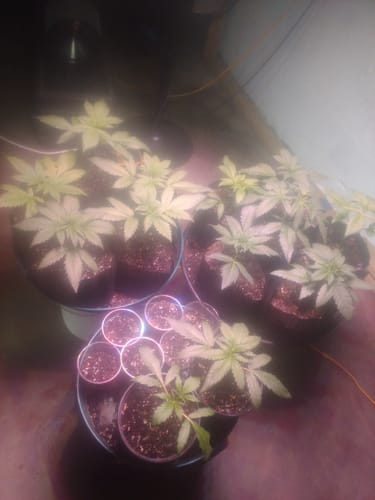
Susan Beth T.
I am a FIRM BELIEVER in Plant Juice!!! Been using it every season for a few years now and my gardens just EXPLODE with Color and Health!!! We've been having a drought the last few years, and I Do Believe that the Plant Juice and Bloom Juice are the Main reason my gardens suvive!
Highly Recommend!
I generally dose my gardens once a month all Season. Works out Well for me!
Plant Juice is rated 4.7 out of 5 across 1,793 verified reviews.
Frequently Asked Questions
What is Deinococcus bacteria?
Deinococcus is a genus of extremely tough bacteria in the family Deinococcaceae. Its best-known species, Deinococcus radiodurans, is often called the toughest organism on Earth because it survives massive radiation, drought, freezing and oxidative damage. Deinococcus species live in soils, deserts and other harsh places around the world.
How much radiation can Deinococcus survive?
Deinococcus radiodurans shows no loss of survival after about 5,000 grays of radiation, and some cells survive doses above 10,000 grays. About 5 to 10 grays is lethal to a person, so Deinococcus tolerates roughly 1,000 times a deadly human dose. That toughness earned it the nickname Conan the Bacterium.
Why is a soil bacterium resistant to radiation?
Soil has very little natural radiation, so scientists think Deinococcus evolved its toughness to survive drying out. Desiccation breaks DNA into pieces the same way radiation does. A 1996 study found that radiation-sensitive Deinococcus mutants were also unable to survive six weeks of drying, which links the two abilities.
How long can Deinococcus survive without water?
Deinococcus can stay alive in a dried state for long periods and revive when moisture returns. In the Tanpopo experiment, dried Deinococcus cell pellets mounted outside the International Space Station were still alive after three years and repaired their DNA once they were grown again.
How does Deinococcus survive damage that kills other microbes?
It repairs a shattered genome within hours, even when the DNA is broken into hundreds of pieces. It also stockpiles manganese and small antioxidant molecules that protect its repair proteins from oxidation. Protected proteins keep working, so the DNA repair can finish.
Is Deinococcus in Elm Dirt Plant Juice?
No. Independent DNA sequencing of Plant Juice identified 291 verified species, and Deinococcus is not one of them. Plant Juice does contain other stress-tolerant microbes, including Geobacillus stearothermophilus, Caulobacter, Sphingomonas and Gemmatimonas.
Resilience Lives in the Soil
Next time your garden gets clobbered by a dry spell or an early freeze, think about a bacterium that survived three years strapped to a space station. The toughest living things don't dodge the hits. They're just really good at recovering. Get enough of that kind of life into your soil, and the recovering mostly happens without you.
Sources: Mattimore & Battista, "Radioresistance of Deinococcus radiodurans: functions necessary to survive ionizing radiation are also necessary to survive prolonged desiccation," Journal of Bacteriology, 1996 (link). Lim et al., "Conservation and diversity of radiation and oxidative stress resistance mechanisms in Deinococcus species," FEMS Microbiology Reviews, 2019 (link). Cox & Battista, "Deinococcus radiodurans: the consummate survivor," Nature Reviews Microbiology, 2005 (link). Daly et al., "Small-Molecule Antioxidant Proteome-Shields in Deinococcus radiodurans," PLOS ONE, 2010 (link). Kawaguchi et al., "DNA Damage and Survival Time Course of Deinococcal Cell Pellets During 3 Years of Exposure to Outer Space," Frontiers in Microbiology, 2020 (link). Ohio State University, "Water Holding Capacity," Soil Health program (link). University of Minnesota Extension, "The connection between soil organic matter and soil water" (link). Plant Juice species data: independent BiomeMakers DNA sequencing of Elm Dirt Plant Juice.

Lauren Cain
Founder & Chemical Engineer · Elm Dirt, Kansas City
Lauren started Elm Dirt after her 6-month-old daughter grabbed fistfuls of backyard dirt and ate them. As a chemical engineer and a mom, she couldn't let that go, so she dug into the science of what was really in garden soil. That led her to build a fertilizer line around beneficial microbes instead of synthetic chemicals, with every formula independently DNA-sequenced. Today Elm Dirt is used by home gardeners, rose show champions, and organic growers nationwide.