



Best Organic Fertilizer for Tomatoes: A Side-by-Side Test With Real Results

Every summer, same question lands in my inbox: "Lauren, what's the best organic fertilizer for tomatoes?"
For years I gave a mushy answer. Lots of stuff works fine. Pick one. (Real helpful, I know.)
So a couple seasons back I quit guessing and ran the test myself. Same tomato variety. Same soil out of the same bag. Same watering can, same lazy schedule. Half the plants got an organic biofertilizer. The other half got nothing special.
Then I left them alone and watched.
That test changed how I feed my whole garden. And it matches what I hear back from folks running their own little version in a raised bed somewhere. So let me walk you through it — what happened, why it happened, and how to feed your tomatoes so they hand you fruit instead of excuses.
The Side-by-Side Test: What Actually Happened
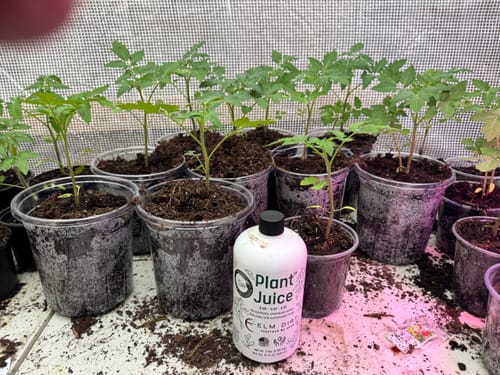
Here's the setup. My raised bed, starts all about a foot tall, nothing fancy. One side got Plant Juice every couple weeks. The other side got plain water and the same compost everybody starts with.
Three weeks in, there was a gap you couldn't miss.
The fed side was taller, bushier, already setting fruit. The other side was still… thinking about it. Now, I won't pretend this was a white-coat university trial — our real research partnership with the University of Missouri is just getting rolling. This was a mom with a watering can. But the difference was hard to argue with.
And turns out I'm not the only one who's tried this. A customer named James ran the same experiment and wrote it up better than I could:
Three times the fruit size. Same starting line. That's the point where you stop and think, wait — what's going on down in that soil?

Why Tomatoes Are So Picky in the First Place
Tomatoes are greedy. They want a lot, and they want it steady — not a nutrient feast one week and a famine the next.
Most of us grab a box of synthetic fertilizer with a big number on the front (the 10-10-10 stuff). Problem is, those numbers are salts. They hit fast, then they're gone. And too much nitrogen? You get a jungle of gorgeous leaves and barely a tomato in sight.
Been there. Cried a little. (If you've ever wondered what's really inside those blue boxes, I got into it in what's really in Miracle-Gro.)
What tomatoes really want:
- Steady, slow-release nutrition so they grow even instead of in spurts
- Good calcium uptake to dodge blossom end rot (that ugly black spot on the bottom)
- Healthy roots that can actually grab water and minerals during a heat wave
- Living soil that fights off disease before it spreads
A box of salt can't pull off most of that. Living soil can.
Which brings me to the part I nerd out over. (And if your plants are already flashing warning signs, here's why tomato leaves turn yellow.)
The Real Reason Living Fertilizer Wins
I'm a chemical engineer. I fell into all this because my daughter — a toddler at the time — grabbed a fistful of backyard dirt and ate it. As you do.
That little snack sent me down a rabbit hole: what's really in soil, and what's missing from the bagged stuff most of us buy?
The answer came back biology. Real soil is alive. Billions of microbes, quietly doing the heavy lifting a fertilizer number can't touch.
A few of the standouts, and what they do for your tomatoes:
- Azospirillum pulls nitrogen out of the air and hands it to your plant — free fertilizer, no salt buildup.
- Pseudomonas putida guards the root zone against the diseases that wipe out tomato beds.
- Trichoderma is a friendly fungus that crowds out the bad ones and helps roots reach further.
- Bacillus subtilis helps unlock phosphorus, which is what drives flowering and fruit.
Which is exactly why Brian noticed something I hear over and over:
 — Brian B., Verified Buyer
Fewer bugs. Healthier plants. When the soil's alive, the whole garden gets tougher. And because Plant Juice is CDFA Certified Organic, you can use it right up to harvest — around the kids, around the dog, no second-guessing.
How I Feed My Tomatoes (My Exact Routine)
You don't need a chemistry degree for this part. Here's my embarrassingly simple schedule:
- At planting: Mix a scoop of Ancient Soil (our Class A certified worm castings) into the hole. It gives roots a microbe-rich welcome.
- Every 2 weeks, early season: Water in Plant Juice to drive strong leaves and roots.
- Once flowers appear: Switch to Bloom Juice to push blooms into fruit.
- All season: Water consistently. Calcium can't move through a plant that's drought-stressed, and that's where blossom end rot sneaks in.
That's the whole thing. No beakers, no burned roots, no guilt about what's running off into the yard. Want the deeper how-to? I wrote a full guide on how to fertilize tomatoes organically, plus a rundown of the best tomato plant fertilizer options if you're the comparing type.

More Real Results From Real Gardeners
I could talk soil science till your eyes glaze over. But you probably just want to know if the stuff works. So here's what folks are seeing — their words, not mine, no cleanup:
 — Daryl R., Verified Buyer
Same story, over and over. More fruit. Faster growth. Plants that just look happier. (Wondering how an organic feed keeps up on speed? I broke that down in organic vs. synthetic fertilizer speed.)
Frequently Asked Questions
What is the best organic fertilizer for tomatoes?
A living liquid biofertilizer, because tomatoes are heavy feeders that need steady food and healthy soil. Plant Juice is a CDFA Certified Organic liquid fertilizer with 291 verified microbial species that feed the plant and the soil together.
How often should I feed tomatoes?
Every two weeks through the season. Plant Juice early on, then Bloom Juice once flowers set. Because it's gentle and organic, you can't burn your plants the way synthetic salts can.
Is organic tomato fertilizer really better than synthetic?
For long-term garden health, yes. Organic feeds the microbes that release nutrients slowly and protect roots — steadier growth and fewer pests. Synthetic feeds fast but can build up and leave your soil lifeless.
Will organic fertilizer stop blossom end rot?
It helps. Blossom end rot is a calcium-delivery problem made worse by uneven watering. Living soil helps roots take up calcium more reliably. Consistent water plus Plant Juice is your best defense — more on that in our blossom end rot fix.
Ready to Grow Your Best Tomatoes Yet?
If you take one thing from my little experiment, make it this: feed the soil, and the soil feeds your tomatoes. A number on a box can't compete with 291 living species doing the work while you sit on the porch.
Run your own side-by-side this year. My guess? You'll be a little thrilled and a little annoyed you didn't start sooner.
(I was both.)

— Founder & Chemical Engineer · Elm Dirt, Grandview, Missouri. A chemical engineer and mom, Lauren started Elm Dirt after her infant daughter ate a handful of backyard dirt and sent her digging into what's really in our soil. She builds fertilizers around beneficial microbes instead of synthetic chemicals — now used by home gardeners, rose show champions, and organic growers across the country.