



The Science of Why Organic Food Tastes Better (It Starts in the Soil)

You've noticed it before. You pull a tomato off the vine in your own backyard — or grab one at the farmers market — and it actually tastes like a tomato. Sweet. A little smoky. Complex.
Then you bite the grocery-store version. And it tastes like water. A little red. Nothing else.
That's not your imagination. There's real science behind why organic food tastes better, and it has everything to do with what's happening down in your soil. Specifically, the living things inside it.
I'm a chemical engineer. I'm also a mom who has spent an embarrassing amount of time thinking about what's in the ground our food grows in. So yeah, this one's kind of my thing. And fair warning — once you get it, you can't un-get it.
The Brix Factor: What Scientists Measure When Food "Tastes Better"

Taste is subjective. Obviously. But scientists found a way to measure something awfully close to it, and it's called Brix.
Brix measures the dissolved sugars and solids packed into plant juice — basically, how dense the flavor and nutrition are in what you're eating. Here's the simple version:
- Higher Brix = sweeter, richer, more nutritious produce.
- Lower Brix = watery, flat, forgettable.
And researchers keep finding the same thing. Organically grown produce tends to score higher on the Brix scale than conventionally grown produce.
A large 2014 review in the British Journal of Nutrition found organic crops carried meaningfully higher levels of antioxidants, including polyphenols — the exact compounds that give food its depth of flavor. If you want the deeper dive, we broke that down here: how growing organic increases polyphenols in your food.
Those flavor compounds have a nerdy name — secondary metabolites — but all you really need to know is that they're the stuff that makes food taste like food instead of like nothing.
So what drives a plant to make more of them? Nutrient complexity, a little healthy stress, and — this is the big one — microbial activity in the soil.
When a plant has to work a little for its nutrients, it builds flavor. When you hand it everything on a silver platter, it doesn't bother.
That's the whole problem with synthetic fertilizer in a nutshell. It floods the roots with soluble nitrogen, so the plant never has to work. It just grows. Fast. Lots of water, lots of size, very little flavor.
It's the difference between a hothouse strawberry pumped up in January and one your neighbor grew slow over a long Kansas City summer. You just know.
How Living Soil Microbes Build Flavor From the Ground Up
Okay, this is the part that got me. The part I keep bringing up at dinner parties until my husband gives me the look.
Better flavor isn't really about what you leave out. It's about what's actually in your soil that just isn't there in tired, synthetic-fed dirt.
A living soil food web is full of tiny organisms doing very specific jobs. A lot of those jobs shape how your food tastes. Here are a few of the key players:
- Azospirillum — a nitrogen-fixing bacteria that also makes auxins, the hormones that tell plants to grow bigger, stronger roots. Better roots means better nutrient uptake, which means more flavor.
- Pseudomonas putida — helps plants grab iron and fights off the soil pathogens that would otherwise stress your plant in a bad, damaging way.
- Flavobacterium — a phosphorus solubilizer. Phosphorus drives flower and fruit development. No available phosphorus, no Brix.
- Mycorrhizal fungi (including Mortierella) — extend the root system many times over, pulling trace minerals like zinc, manganese, and copper up from deep in the soil. Those minerals are the raw material for the enzymes that build flavor compounds.
- Rhizobium — a nitrogen fixer that turns air-nitrogen into a form plants can use, so your garden leans less on the harsh synthetic inputs that kill soil life.
- Bacillus subtilis — makes natural antifungals, which lowers disease pressure so the plant can spend its energy on sugars and aroma instead of defense.
Here's what's wild. A lot of these microbes make plant hormones directly — cytokinins, gibberellins, ripening signals — that shape flavor from the inside out.
Research out of the University of California, Davis found that adding certain plant-growth-promoting bacteria to the soil measurably raised the phenolic content of strawberries, tomatoes, and leafy greens. So no, this isn't me spinning a story to sell you a bottle of something. It's sitting right there in the research, has been for years.
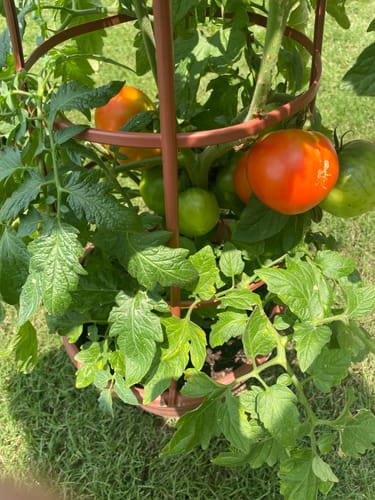
"I have been using Plant Juice on these tomato plants since I started growing them.They are really putting out .We tried one last night with dinner and it tasted like Candy. it was the best tomato I have ever eaten. I used Bloom Juice on these flowers and they are looking awesome."
Why Synthetic Fertilizers Actively Work Against Flavor
I don't want to demonize everything conventional agriculture does. But when it comes to flavor, there's a well-documented reason synthetic fertilizer works against you — even when your plants look green and healthy.
It comes down to two things.
First, the nitrogen rush. A big hit of soluble nitrogen tells the plant to grow, now, fast. So it does. It throws everything into leaves and size and bulk. Looks impressive. Tastes like not much. The plant just skips the slow work of building flavor compounds, because why bother when dinner's already on the table?
Second, it starves the soil. Plants normally feed nearby microbes with sugars they release through their roots — a trade called rhizodeposition. But a plant that's flooded with synthetic nutrients releases fewer of those sugars. Fewer sugars, fewer microbes. Fewer microbes, less of the biology that builds flavor. It's a downward spiral that thins out your soil's living workforce season after season.
If you want to see the fuller side-by-side, we walk through the research here: organic vs. synthetic fertilizer, and what the studies actually show. Short version — organic management does a much better job preserving the soil biology that grows food with real taste.
Honestly? This is exactly why I started Elm Dirt. When my daughter was six months old and happily eating dirt out of the backyard — like babies do — I started thinking hard about what was in that dirt. Not just what chemicals weren't there. But what living things were. Or weren't.
What This Means for Your Garden (And How to Actually Use It)

Good news: you don't need a farm, an agronomist, or a $5,000 soil plan to grow food that tastes like something.
You just need to flip one thing in your head. Quit feeding your plants. Start feeding your soil.
Here's what that looks like when you're standing in the garden with a hose:
- Ease off the flush-and-feed. Heavy watering with synthetic fertilizer leaches nutrients and washes out your microbes. With living soil, less is usually more.
- Add organic matter, often. Worm castings bring nutrition and microbial life at the same time. Our Ancient Soil worm castings are Class A certified and full of the slow-release organic food your soil microbes love.
- Inoculate with a diverse microbial biofertilizer. This is the step most home gardeners skip — and it's probably the biggest one for flavor. Adding a wide range of beneficial bacteria and fungi gives your soil the workforce it needs to build all that Brix.
- Be patient with the switch. If you've used synthetic fertilizer for years, your soil needs time to rebuild — usually a season or two. The flavor payoff is real. It's just not overnight.
Our Plant Juice was built for that inoculation step. It's a CDFA Certified Organic liquid biofertilizer with 291 verified microbial species — including Azospirillum, Pseudomonas putida, Flavobacterium, Rhizobium, Mortierella, and Bacillus subtilis, all the players we just talked about.
Think of it as a population transplant for your soil food web.
Feed Your Soil. Taste the Difference.
Plant Juice delivers 291 verified microbial species straight to your garden soil — the living workforce behind better-tasting, more nutritious homegrown food.
Shop Plant Juice — $19.95
"I have had vegetable gardens now for about 10 years. I have had pretty good success, but this year with the use of Elm dirt, the garden looks healthier than we have had, and the amount of produce has doubled. I will be using Elm Dirt annually! Very happy!"
Frequently Asked Questions
Why does organic food taste better than conventional?
Because healthy soil microbes help plants make more secondary metabolites — the compounds behind flavor, aroma, and sweetness. Synthetic fertilizers skip that biology and just push fast growth, so you get size without much taste.
What is Brix, and why does it matter for flavor?
Brix measures the dissolved sugars and solids in plant juice — basically how dense the flavor and nutrition are. Higher Brix means sweeter, richer produce. And healthy soil biology, like mycorrhizal fungi and nitrogen-fixing bacteria, is tightly linked to higher Brix in fruits and veggies.
How do soil microbes improve the taste of vegetables?
Microbes like Azospirillum, Pseudomonas putida, and mycorrhizal fungi help plants pull in phosphorus, make growth hormones like auxins and cytokinins, and build the amino acids and flavor compounds that make food taste rich. Without them, plants can grow fast but taste watery and flat.
Does synthetic fertilizer really affect flavor?
Yes. Synthetic nitrogen pushes fast, water-heavy growth that dilutes flavor. Over time it also disrupts the soil's microbial community, which cuts off the biology that builds taste, aroma, and nutrition in the first place.
Can I actually improve the flavor of my homegrown vegetables?
You can. Feed your soil with a living microbial biofertilizer — one that adds organisms like Azospirillum, Pseudomonas putida, and Flavobacterium — and you'll improve nutrient cycling and help your plants build more of those flavor and nutrition compounds.
The Bottom Line: Taste Comes From the Soil, Not the Seed
Ever grown your own tomatoes and felt let down — even though you bought good seeds, watered right, and did everything by the book? There's a good chance the answer is underground. Literally.
The flavor you're chasing isn't really in the plant. It's in the soil biology that feeds the plant.
Build a living, diverse soil food web, and the food that comes out of it tastes the way food is supposed to. The microbes have been quietly doing this the whole time. We're just finally paying attention.
Ready to start? A good first stop is our soil health guide, or the science of how beneficial microbes help plants grow. And if you want to inoculate your garden with the same kinds of species researchers study, Plant Juice is where I'd begin.
Your tomatoes will thank you. Honestly, so will everyone at your table.
