



Organic Fertilizer for Peppers: Why They Need More Calcium Than You Think

A loaded pepper plant isn't luck. It's calcium getting where it needs to go.
Let me guess. Your pepper plants look gorgeous up top—big bushy leaves, tons of flowers—and then you flip a pepper over and there's an ugly sunken brown spot on the bottom. You feel a little betrayed, honestly. You did everything right.
I've been there. And the answer surprised me, even as a chemical engineer who's supposed to know this stuff. Peppers need way more calcium than most of us give them credit for. Not nitrogen. Not some fancy bloom booster. Calcium. And the right organic fertilizer for peppers isn't about dumping more food on them—it's about getting calcium to actually move where it's needed.
The short version: The best organic fertilizer for peppers is a living, microbe-based one paired with worm castings. Peppers need a steady supply of calcium to prevent blossom end rot—but the fix isn't adding more calcium. It's building strong roots and keeping soil moisture even, so the calcium already in your soil can actually reach the fruit. Feed with Plant Juice every two weeks and mix in worm castings at planting.
So let's talk about what's really going on down in that soil, and the simple organic fix that grows peppers like the ones in your neighbor's bragging-rights garden.
The Real Reason Your Peppers Get That Brown Spot
That sunken brown patch on the bottom of your pepper has a name. Blossom end rot. And it shows up on tomatoes too, which is why I get asked about it constantly.
Here's the part that trips everybody up. Blossom end rot is a calcium problem—but it's almost never because your soil is out of calcium. Most garden soil has plenty.
The real issue is a delivery problem. Calcium can only travel through the plant with water. And once it lands in a leaf or a fruit, it stays put—it doesn't move again. So if your watering gets uneven, or the roots get stressed, or the plant grows faster than calcium can keep up, the fruit at the very end of the line gets shorted. That's the brown spot.
Quick truth bomb: You can have calcium-rich soil and still get blossom end rot. It's not about how much calcium is in the ground. It's about whether the plant can move it to the fruit, steady and on time.
So the fix isn't a calcium pill. It really comes down to steady moisture and healthy roots, growing in soil that's alive enough to hold water and hand calcium over gently. Get those working and the brown spots mostly just… stop showing up.

Why Peppers Are Extra Greedy for Calcium
Peppers build a lot of fruit on a fairly small plant. All that fruit needs strong cell walls, and calcium is basically the rebar in those walls. No calcium delivered on time, weak walls, mushy spots.
And they're in it for the long haul—peppers keep setting fruit for months. So they're not after one big calcium meal in the spring. They want a little bit, steady, the whole way through.
Here's what peppers are really after:
- Consistent calcium for firm fruit and no blossom end rot
- Moderate nitrogen—too much grows leaves instead of peppers (sound familiar?)
- Phosphorus and potassium for flowers, fruit set, and flavor
- Healthy roots that can actually pull all of that up out of the soil
Synthetic salt fertilizers actually make this worse, by the way. They dump a big slug of soluble salts that can scorch fine roots and throw off water uptake—the exact thing calcium delivery depends on. So the "more food" instinct backfires. (If you've ever wondered what's really in Miracle-Gro, that's a big part of the story.) I learned that the hard way in my own backyard.

What Actually Fixes It: Feed the Soil, Not Just the Plant
Okay, confession time. I didn't start Elm Dirt because I'm some gardening guru. I started it because my 6-month-old daughter grabbed a fistful of our backyard dirt and ate it, and I realized I had no idea what was actually in our soil. As a chemical engineer and a mom, I couldn't just shrug that off.
Here's what I learned once I actually dug into the soil science. The best organic fertilizer for peppers doesn't force-feed the plant. It builds living soil that hands over nutrients—calcium included—on the plant's own timeline instead of whenever you happen to remember to fertilize. Which, if you're anything like me, is not exactly a reliable schedule.
Two things do the heavy lifting here.
1. Worm castings for gentle calcium and water-holding soil
Worm castings are basically nature's slow-release multivitamin. Our Ancient Soil is Class A certified worm castings, and it does double duty for peppers. It adds a gentle, natural source of calcium and minerals, and it improves your soil structure so it holds moisture evenly. Even moisture means even calcium delivery. See how it all connects?
Work a few handfuls into the planting hole, then toss another handful around the base come mid-season. You can't really overdo it either—it won't burn your plants or leave that crusty salt buildup, and there's no waiting period before you pick.
2. Living microbes to build the roots that move calcium
This is the part most folks miss. Getting calcium to the fruit is really a root job—the more root you've got down there, the more water and calcium the plant can pull up, and the more evenly it happens. And the fastest way I know to grow a monster root system is with beneficial microbes.
That's exactly what our Plant Juice is built to do. It's a CDFA Certified Organic living liquid fertilizer, and it's not just "compost tea in a bottle." We had it independently lab-tested by BiomeMakers, and it came back with 291 verified microbial species. The ones that matter for your peppers:
- 84% auxin (IAA) production—auxin is the plant hormone that drives root growth. More roots, more calcium uptake.
- 82% ACC deaminase activity—this is a fancy way of saying the microbes lower the plant's stress, so it doesn't stall during heat or transplant shock (two big blossom end rot triggers).
- 80% nitrogen release and 27% phosphorus solubilization—steady, gentle feeding, not a salt bomb.
- 56% antifungal biocontrol—species like Bacillus subtilis, Pseudomonas putida, Trichoderma, and Azospirillum help protect those roots while they grow.
In plain English? The microbes grow you a bigger, less stressed-out root system, and that root system is the thing that quietly fixes your calcium problem for you. You don't have to do much of anything. If you want to go deeper down this rabbit hole, here's the organic fix for blossom end rot.
Elm Dirt Plant Juice
★★★★★
CDFA Certified Organic living fertilizer with 291 beneficial microbes. Builds the strong roots that deliver calcium to your peppers—steady, all season, no chemicals.
$19.95
Shop Plant JuiceHow to Feed Peppers Organically (The Simple Routine)
You don't need a spreadsheet for this. Here's the rhythm I use, and it keeps peppers happy from transplant to first frost.
| When | What to do |
|---|---|
| At planting | Mix a few handfuls of Ancient Soil worm castings into the hole for gentle calcium and water-holding power. |
| Every 2 weeks | Water with Plant Juice (1 oz per gallon) to build roots and feed steadily. |
| When flowers appear | Add Bloom Juice to support fruit set and bigger, better peppers. |
| Mid-season | Top-dress with another handful of worm castings around the base. |
| All season | Water deeply and consistently. Uneven watering is the #1 cause of blossom end rot. |
That's it. Mulch helps too, since it keeps soil moisture even—and even moisture is half the calcium battle right there.
Real Gardeners, Real Peppers
I could talk soil science all day (just ask my family), but here's what actually matters—what happens in your garden. These are real Elm Dirt customers.
"I bought a greenhouse and decided to start using Plant Juice and it did miraculous for my peppers and other varieties of plants—they shot up like a rocket!!"
— Joseph F., Verified Buyer ★★★★★
"I started using your product when my eggplant and pepper plants were only a couple inches tall. Now they are massive. The weather kept me in the greenhouse longer than I'd like, and I was afraid they'd suffer—but as you can see, I didn't have to move them to bigger pots. Best looking transplants I have ever grown."
— Melinda Y., Verified Buyer ★★★★★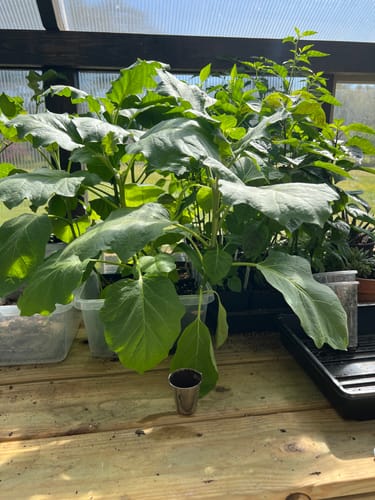
"This is the best vegetable garden yet! Even though my tomato plants have a virus, it's still producing leaves and fruit. My long sweet pepper plants are 5 feet high. Wow."
— Nancy S., Verified Buyer ★★★★★
Skip the Synthetic Chemicals on Food You're Going to Eat
Here's the thing I keep coming back to. Peppers go straight from your garden into your kitchen. Into salsa, into stir fry, into your kids' lunches. So why would you spray them with the same harsh salt fertilizers that stressed the roots in the first place?
Going organic isn't just about the brown-spot problem, though. It's better for your soil and easier on everything downstream—the bugs, the birds, the folks actually eating what you grow. That's the whole reason I started this company at my kitchen table. I wanted to know exactly what was going into my daughter's body. These days more than 100,000 gardeners feed their families with Elm Dirt, which honestly still catches me off guard when I stop and think about it.
If you want the whole pepper-and-tomato feeding routine in one place, here's how to fertilize tomatoes organically—same calcium rules apply. And if your peppers are blooming but not setting fruit, this guide on why pepper plants aren't producing will help.
The Easy Pepper Combo
Want it simple? The Elm Power Bundle pairs Plant Juice, Bloom Juice, and Ancient Soil—everything your peppers need for strong roots, steady calcium, and a big harvest.
$89.90
Shop the Bundle
Frequently Asked Questions
What is the best organic fertilizer for peppers?
The best organic fertilizer for peppers feeds the soil and helps the plant take up calcium steadily. Pair worm castings (gentle calcium and organic matter) with a living microbial fertilizer like Plant Juice. The microbes build a bigger root system, and bigger roots deliver calcium to the fruit consistently.
Why do peppers need calcium?
Peppers use calcium to build strong cell walls, especially in the fruit. When calcium can't reach the fruit fast enough, you get that sunken brown spot called blossom end rot. Calcium doesn't move around inside the plant once it's deposited, so peppers need a steady supply all season long.
Does adding calcium fix blossom end rot on peppers?
Sometimes, but not usually. Most soil already has plenty of calcium. Blossom end rot is normally a delivery problem from uneven watering, stressed roots, or harsh salt fertilizers—not a shortage in the ground. The real fix is steady moisture, healthy roots, and organic matter that holds water so calcium can travel to the fruit.
How often should I fertilize pepper plants organically?
Feed peppers with Plant Juice every 2 weeks through the growing season, mix worm castings in at planting, and top-dress again mid-season. This gentle, steady approach avoids the growth spurts that trigger blossom end rot.
Is Elm Dirt Plant Juice safe for vegetable gardens?
Yes. Plant Juice is CDFA Certified Organic and made from beneficial microbes instead of synthetic chemicals, so it's safe to use right up to harvest on peppers, tomatoes, and all your food crops. No waiting period, nothing harsh going into your soil or onto your plate.
