



Novosphingobium: The Organic Compound Breakdown Specialist That Detoxes Your Soil

Novosphingobium is a soil bacterium that specializes in breaking down tough, ring-shaped "aromatic" molecules that most microbes cannot use. These include phenolic compounds released by decaying leaves, bark and wood, and in lab studies, pollutants such as PAHs and the herbicide 2,4-D. In a garden, it is one of the specialists that keeps organic matter cycling so hard-to-digest material does not build up. Independent DNA sequencing found Novosphingobium resinovorum in Elm Dirt Plant Juice at about 1.69 × 10⁵ cells per mL.
The leaves are starting to come down here in Kansas City, and every year I have the same little argument with myself about what to do with them.
For a long time I bagged them. All of them. Neat brown paper sacks lined up at the curb like I'd accomplished something.
Now I mostly shred them and leave them on the beds, and I'd love to tell you that was a deep scientific decision, but mostly I got tired of raking. The science came later. It turns out a leaf is a lot tougher than it looks, chemically speaking, and the reason it eventually becomes soil instead of sitting there for a decade has a lot to do with a bacterium with a ridiculous name.
So welcome back to the microbe spotlight. This week it's Novosphingobium. (I say no-vo-sfing-GO-bee-um. I've heard plenty of people give up halfway through, which is fair.)
Meet the microbe: Novosphingobium. A soil and water bacterium in the family Sphingomonadaceae, the "sphingomonads." Its specialty is breaking down aromatic compounds and xenobiotics, the ring-shaped, hard-to-crack molecules that pile up when nothing else can digest them.
What's in this guide
What Is Novosphingobium?
Novosphingobium belongs to a family of bacteria called the sphingomonads, named for an unusual fatty molecule they build into their outer wall. Microbiologists carved it out of the older genus Sphingomonas in 2001 and, with all the creativity of a committee, called it "new Sphingomonas."
If you read our post on Sphingomonas, the stress-fighting bacterium, this is its cousin. The one who'll eat anything.
It turns up in soil, ponds, river mud and around plant roots. Where it lives isn't what makes scientists sit up, though.
| Novosphingobium at a glance | Details |
|---|---|
| Family | Sphingomonadaceae (the sphingomonads) |
| Type | Gram-negative bacterium |
| Named | 2001, split from the genus Sphingomonas |
| Where it lives | Soil, freshwater, sediments and the root zone |
| Specialty | Breaking down aromatic (ring-shaped) compounds and xenobiotics |
| In Elm Dirt products | N. resinovorum in Plant Juice (1.69 × 10⁵ cells/mL) and Bloom Juice (2.28 × 10⁶ cells/mL), verified by DNA sequencing |

Sphingomonads like Novosphingobium work in the busy soil around roots, taking on the molecules other microbes skip.
What Novosphingobium Actually Does
A lot of the carbon in your garden is stuck inside what chemists call aromatic compounds. Nothing to do with smell, despite the name. They're molecules built around rings of carbon atoms, and those rings are stubborn.
I drew enough benzene rings in engineering school to have a grudging respect for them. They do not like to come apart. That's why bark and wood last as long as they do: lignin, the stuff that lets a tree stand up straight, is basically a tangle of these rings, and most soil microbes can't do a thing with it.
Novosphingobium can. When researchers compared a batch of strains side by side, they found an unusually big set of genes for enzymes that pry those rings open (Wang et al., 2018). The list of things it's been caught eating is a little alarming:
- Soot and tar compounds. One strain broke down phenanthrene and pyrene, two of the multi-ring hydrocarbons in that family (Lyu et al., 2014).
- A dye ingredient. Novosphingobium resinovorum was the first single bacterium found that could live on sulfanilic acid as its only food (Hegedűs et al., 2017). That's the species in our bottle.
- Weed killer. A strain called DY4 was tested for clearing the herbicide 2,4-D out of contaminated soil (Dai et al., 2015).
Every ring it breaks frees up carbon that was otherwise going nowhere.
The species name made me laugh, by the way. Resinovorum is Latin for, more or less, "resin-eater." Somebody in that lab knew exactly what they had.
The receipt: I didn't want you to take my word for this one. Independent DNA sequencing found Novosphingobium resinovorum in our Plant Juice at about 1.69 × 10⁵ cells per mL, one of 291 verified species, plus a second Novosphingobium species. It's in Bloom Juice too, at about 2.28 × 10⁶ cells per mL.

A living soil is a team of specialists. Novosphingobium is the one that handles the hard-to-digest molecules.
How It "Detoxes" Your Soil
I want to be careful with the word "detox," because it gets thrown around a lot. Watering with Plant Juice is not going to clean an industrial spill out of your backyard, and as a chemical engineer and a mom I'm not going to promise you that.
What's true is smaller and, to me, more interesting. The enzymes that let Novosphingobium chew through pollutants in a lab are the same ones it uses on ordinary garden leftovers. In October, that means:
- the leaves you're about to rake
- bark and wood chip mulch, which is mostly lignin
- those tomato stems you pulled last week and haven't dealt with yet (no judgment)
- pine needles, if there's an evergreen nearby
As all that breaks down, the tough ring-shaped bits get released into the soil. In soil with a big, mixed population of microbes, something like Novosphingobium is usually around to handle them, and the carbon keeps moving. Tired soil that's short on life? The hard stuff tends to just sit there.
So when I say a living soil "detoxes" itself, that's all I mean. It has somebody on staff for nearly every molecule, including the difficult ones.

Clean, cycling soil comes from a full crew of microbes, each handling the inputs the others can't.
Why a Diverse Soil Matters
If I could get one idea across in this whole microbe series, it would be this one. The variety is the point.
Some microbes fix nitrogen. Chryseobacterium keeps working after the soil turns cold, long after I've gone inside for the year. A huge, mostly anonymous crowd handles the everyday decomposing that turns scraps into compost. And Novosphingobium gets the leftovers nobody else wants.
When soil loses variety, the specialists are usually the first to go. Easy carbon still gets eaten, but the tough stuff starts hanging around. Put the variety back and the whole crew shows up again, which is really the difference between living soil and sterile soil.
Your garden doesn't need perfect numbers on a soil test. It needs enough different microbes that whatever you throw at it eventually gets handled. That's what living soil buys you, and it's why you're not doing this alone.
How to Keep the Cleanup Crew Thriving This Fall
You can't exactly invite Novosphingobium over. You can make your soil the kind of place it wants to stay, though, and October happens to be a good month for it.
- Keep your leaves. Run the mower over them first, since whole leaves mat into a soggy sheet. Then spread about 2 inches on your beds. University of Illinois Extension says that layer turns into soft leaf mulch by spring.
- Mix up your mulch. Leaves, shredded bark and a little finished compost give the soil a range of carbon to chew on. Our mulching guide covers how deep to go.
- Add the microbes themselves. Plant Juice carries 291 DNA-verified species, Novosphingobium resinovorum included.
- Give them somewhere to live. Worm castings or Ancient Soil worked into the top inch or two adds organic matter and more microbes along with it.
- Feed with organic inputs when you can. Specialists need a steady, varied food supply, and soluble salts alone don't offer much. If you're curious what the research shows, this organic vs. synthetic soil health study is a good read.

A layer of mulch and shredded leaves gives the soil's specialists something to work on all winter.
Real Gardeners, Real Results
I could keep going, but other gardeners say it better than I do.
Tracy B.
"I bought this because I had rescued some plants and trees from my workplace that needed some love, some extra attention and these poor plants seemed stressed. I brought them home and I began treating them with this amazing product! Within days they perked up. They began new growth previously unseen. What appeared to be plants on their last legs were nearly twice the size within a month, healthy, vibrant and full."
Lisa C.
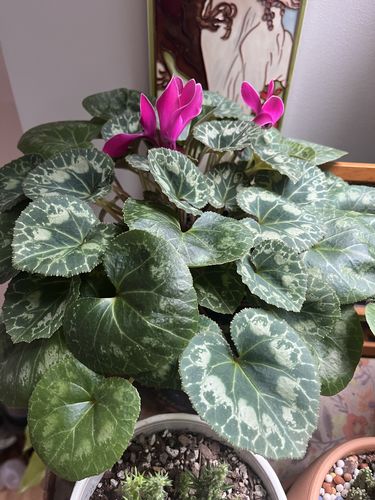
"I give all my indoor plants (over 175 plants) & outdoor gardens Elm Dirt Plant Juice. My exotic, succulents & cactuses receive a weekly watering with the juice. Every plant is pushing new growth & is healthy thriving. This Cyclamen has been receiving weekly (as directed) waterings. She has flowered recently & I am delighted how healthy she has progressed."
Linda L.
"After a surprise Texas cold snap, all the blooms fell off. The leaves looked healthy so I watered it with my Elm Dirt. Just days later it is once again covered in beautiful blooms!!"

Rated 4.7 out of 5 across 1,793 verified Plant Juice reviews.
Frequently Asked Questions
What is Novosphingobium bacteria?
Novosphingobium is a genus of Gram-negative soil and water bacteria in the family Sphingomonadaceae, a group known as the sphingomonads. It was split off from the genus Sphingomonas in 2001. Novosphingobium species are known as degradation specialists: they carry large sets of enzymes for breaking down tough, ring-shaped aromatic compounds that most soil microbes cannot use.
Can soil bacteria break down pollutants and residues?
Yes. Sphingomonads, including Novosphingobium, are widely studied for this. Documented strains degrade polycyclic aromatic hydrocarbons such as phenanthrene and pyrene, the herbicide 2,4-D, and industrial compounds such as sulfanilic acid. Researchers use them in soil and water cleanup work. In a home garden, the same enzymes help process the tough aromatic carbon released as leaves, bark and wood decompose.
How does Novosphingobium help my garden soil?
It handles the hardest part of decomposition. Leaves, wood chips and old roots release ring-shaped molecules, such as phenolics from lignin, that many microbes cannot digest. Aromatic-degrading bacteria like Novosphingobium take those molecules apart and return their carbon to the soil, so organic matter keeps cycling instead of stalling.
Is Novosphingobium in Elm Dirt Plant Juice?
Yes. Independent DNA sequencing identified Novosphingobium resinovorum in Elm Dirt Plant Juice at about 1.69 × 10⁵ cells per mL, one of 291 verified species. A second Novosphingobium species was also detected. Novosphingobium resinovorum is also present in Elm Dirt Bloom Juice at about 2.28 × 10⁶ cells per mL.
What should I do with fall leaves to feed soil microbes?
Shred them and keep them. A 2-inch layer of shredded leaves on garden beds breaks down into a soft leaf mulch by spring, according to University of Illinois Extension. Whole leaves can mat together, so run them over with a mower first. Shredded leaves can also be mowed into the lawn or added to a compost pile.
Your Soil Cleans Up After Itself
So that's Novosphingobium. Hard to pronounce, eats resin, and quietly busy under your mulch right now.
I think about it every fall when I'm out in the yard with a rake. Those leaves used to feel like a chore I had to get rid of. These days they feel more like groceries for the soil.
If you want the bigger picture of how all these microbes fit together, Living Soil, Explained is the place to start. And tell me in the comments what you're doing with your leaves this year. Bagging, mulching, one giant pile the kids or grandkids to jump in. All answers welcome.
Sources: Hegedűs et al., "Complete genome sequence of Novosphingobium resinovorum SA1, a versatile xenobiotic-degrading bacterium capable of utilizing sulfanilic acid," Journal of Biotechnology, 2017 (PubMed). Wang et al., "Comparative Genomics of Degradative Novosphingobium Strains With Special Reference to Microcystin-Degrading Novosphingobium sp. THN1," Frontiers in Microbiology, 2018 (link). Lyu et al., "Biodegradation of Polycyclic Aromatic Hydrocarbons by Novosphingobium pentaromativorans US6-1," PLOS ONE, 2014 (link). Dai et al., "Bioremediation using Novosphingobium strain DY4 for 2,4-dichlorophenoxyacetic acid-contaminated soil and impact on microbial community structure," Biodegradation, 2015 (link). University of Illinois Extension, "Don't Bag Your Fall Leaves, Use Them" (link).

Lauren Cain
Founder & Chemical Engineer · Elm Dirt, Kansas City
Lauren started Elm Dirt after her 6-month-old daughter grabbed fistfuls of backyard dirt and ate them. As a chemical engineer and a mom, she dug into the science of what was really in garden soil, and built a fertilizer line around beneficial microbes instead of synthetic chemicals. Every batch is independently DNA-sequenced, and the products are used by home gardeners, rose show champions and organic growers nationwide.