



The Truth About 'Natural' Fertilizers: What the Label Isn't Telling You

The Truth About 'Natural' Fertilizers: What the Label Isn't Telling You
"Natural" on a fertilizer bag is not a certification, and it does not mean organic. State fertilizer rules define "natural" broadly: mined minerals can count, and a "natural base" blend only needs a little more than half natural materials, so the rest can be synthetic. Phrases like "naturally derived," "plant-based" and "eco" have no official fertilizer definition at all. To know what you're buying, read the back of the bag. The "derived from" line names the real ingredients, and an OMRI Listed seal or CDFA Certified Organic registration means someone outside the company reviewed them.
I'm a chemical engineer, and I have absolutely bought the pretty bag. Leafy green font, a smiling tomato on the front, "natural" in letters bigger than my thumb. Never flipped it over once.
So if you've done the same, no judgment from me.
Fall is when a lot of us end up back in that aisle, grabbing something for the last lawn feeding or the garlic bed, or whatever jug got shoved onto the clearance rack to make room for the mums and plastic skeletons. The front of every bag there was designed to be read in about two seconds. It's very good at its job.
The back of the bag is where the real information lives. Once you know which two lines matter, it takes maybe ten seconds to read, and I'll walk you through both.
What's in this guide
Is "Natural" Fertilizer the Same as Organic?
No.
I'll admit I went into this post planning to tell you that "natural" means nothing on a fertilizer bag, and that turned out to be wrong. It does mean something. It's just a lot looser than you'd guess.
Fertilizer is regulated state by state, and the state regulators share a common rulebook through a group called AAPFCO (the Association of American Plant Food Control Officials, which is a mouthful, so AAPFCO it is). Many states adopt its official terms, and a few of those terms use the word natural:
- Natural organic fertilizer: plant or animal material that hasn't been chemically changed, such as bone meal, feather meal or kelp.
- Natural inorganic fertilizer covers minerals dug out of the ground and only crushed or screened. Rock phosphate is one.
- And then there's natural base fertilizer, a mixed product where just over half the materials (and just over half the nutrients) come from natural sources.
That last one is the sneaky one. Just over half means a big chunk of the bag can be synthetic, and the word "natural" still gets to ride on the front.
Past that, you get into the words with no official fertilizer definition at all: "naturally derived," "eco-friendly," "plant-based," "earth-safe," "premium." Some are printed on lovely products. Some are printed on a bag of mineral salts with a watercolor leaf on it, and you can't tell which from the front. I don't think that's an accident.
To be fair to the industry, plenty of honest companies use "natural" and mean it. The word just doesn't promise anything on its own. If you want the long version, our guide to eco-friendly fertilizer labels goes through the green-marketing words one at a time.

Fertilizer granules all look about the same. You find out what they are on the back.
How to Read a Fertilizer Label in 10 Seconds
Turn the bag over. The stuff that legally has to be true is on the back, usually in print small enough that I need my readers for it.
First, the guaranteed analysis. These are the three N-P-K numbers: nitrogen, phosphate and potash, as a percent of the bag's weight. The company has to stand behind them, so they're honest. They just don't tell you where the nutrients came from or what they'll do to the life in your soil. A 5-5-5 made of salts and a 5-5-5 made of plant and animal meals act like two different products once they're in the ground. (There's more on that in what the N-P-K numbers on organic fertilizer mean.)
Second, the "derived from" line. This is the one I care about. Regulators call it the nutrient source statement. It sits right under the numbers, and many states require it whenever a bag claims organic or slow-release nutrients, because it names what's actually in there.
- If you see "derived from urea, ammonium phosphate, potassium chloride," those are synthetic salts, however green the front looks.
- "Derived from worm castings, kelp meal, feather meal, bone meal" is real organic matter, the kind soil life can eat.
- Biosolids or "processed sewage sludge" means what it says. I'll come back to that one.
After you've read a few of these, you'll catch yourself skipping the front of the bag completely. Same way you'd read the ingredients on a cereal box and ignore the cartoon. If you want to go line by line through the whole back panel, that's in how to read an organic fertilizer label.
What a "Natural" Label Can Leave Out
A wholesome front and a set of honest numbers can still leave a fair amount unsaid. I look for four things.
Filler. Low numbers on an organic product don't bother me, because organic feeds are supposed to be slow. What gets me is remembering that those numbers only describe a slice of the bag. Everything else is carrier and filler, and on a cheap blend that can be most of what you paid for.
Synthetic salts under a green label. "Naturally derived" on the front, a derived-from line full of mineral salts on the back. I've seen that combination more times than I can count. Every season. Used heavily, those salts can knock back soil life, which leaves the plants waiting on the next dose. I wrote about that cycle in synthetic fertilizers vs. organic fertilizers.
Biosolids. Some fertilizers sold as natural or organic are made from treated sewage solids. It's legal, it's regulated, and yes, there are nutrients in it. There's also whatever went down the drain. In January 2025 the EPA released a draft risk assessment saying that in some scenarios, land-applied sludge containing PFOA and PFOS (two of the "forever chemicals") may exceed the agency's risk thresholds. Those findings are still preliminary. Whether that matters to you is your call, and I just think you should get to make it. The derived-from line is where biosolids will show up.
Nothing alive. Even careful shoppers miss this one. A fertilizer can be 100% organic and still be completely inert, just dried meals in a bag. Nutrients help, sure. But it's the microbes, the bacteria and fungi you'll never see without a microscope and most of us never think about, that turn dirt into soil that keeps feeding your plants between waterings, and plenty of organic products don't have any. New to that idea? Start with living soil, explained.

What a good organic feed is supposed to build. Dark, crumbly, and you can't dig a hole without hitting a worm.
What "Organic" Means on a Fertilizer Label
"Organic" can mean something real on a bag. It needs backup, though.
In fertilizer rules, organic mostly means the material contains carbon, which is a pretty low bar. Chemists technically count urea as an organic compound, and urea comes out of a factory. Some states set the bar higher. Florida, for example, requires at least 60% of any nitrogen labeled "organic" to be the slow, water-insoluble kind. But the rules vary, and no state puts a seal on the bag for you.
A seal is what you want. Two you can look up yourself:
- OMRI Listed. The Organic Materials Review Institute is an independent nonprofit that checks products against the national organic standards and lists the ones allowed in certified organic growing.
- CDFA Certified Organic comes from the California Department of Food and Agriculture, which reviews what's in an organic input material before registering it for sale in California. It's the one I went after for Plant Juice. I wanted "organic" on our bottle to be something you could check without taking my word for it.
With one of those, organic is a verified claim. Without one, I'd treat it the way I treat "natural," as a reason to flip the bag over. The two programs are compared side by side in CDFA vs. OMRI organic certification.

Same aisle, very different products. The seal is the quickest way to sort them.
The Buzzword Decoder
All of it on one page. I'd snap a photo of this before your next garden center run.
| What the bag says | What it actually guarantees | What to check |
|---|---|---|
| "Natural" | A broad state definition. No seal, no ingredient review. | Read the "derived from" line. |
| "Natural base" | Just over half natural materials. The rest can be synthetic. | Read the "derived from" line. |
| "Naturally derived" / "plant-based" / "eco" | Nothing. Not official fertilizer terms. | Look for a certification seal. |
| "Organic" (no seal) | Contains carbon. State rules vary. | Is it OMRI Listed or CDFA Certified Organic? |
| "OMRI Listed" | Ingredients reviewed for certified organic growing. | Trustworthy. |
| "CDFA Certified Organic" | Ingredients reviewed and registered as organic inputs. | Trustworthy. |
| N-P-K numbers | Honest nutrient percentages. | Says nothing about source or soil biology. |
| "Derived from biosolids" | Made from treated sewage sludge. | Your call, especially for food gardens. |
If you build only one habit, make it this: skip the front of the bag, read the "derived from" line, and look for a certification seal.
How to Spot a Good Organic Fertilizer
Turn all of that around and you've got a short checklist. When I'm deciding whether a fertilizer is worth the money, this is what I'm looking at:
- A certification I can look up. OMRI Listed or CDFA Certified Organic beats any adjective on the front.
- Ingredients I recognize on the derived-from line: worm castings, kelp meal, alfalfa, fish, compost. No mineral salts. No biosolids.
- Something alive in it. The best organic feeds bring beneficial microbes along with the nutrients, and that's the difference between feeding a plant once and building soil that keeps feeding it all season (more in how beneficial microbes help plants grow).
- It should be gentle enough not to burn. Salts pull water out of roots, which is why overdoing a synthetic feed scorches leaves, and a mild organic feed used as directed won't do that. Curious where the line is? See how much fertilizer is too much.
Full disclosure: I built our Plant Juice to pass that list on purpose. It's CDFA Certified Organic, and the ingredient list is short enough to read out loud: worm castings, dechlorinated water, organic alfalfa meal, organic kelp meal, lactobacillus extract, and calcium from eggshells. No synthetic salts, no biosolids.
It also smells like a barn. Our reviewers have been very honest with us about that, and one compared it to the devil's toe jam, which I've decided to take as a compliment. That smell is the biology.
And it's alive. We sent it off for lab DNA testing, and the report came back with 291 verified microbial species. One of the most plentiful is Pseudomonas putida, at around 1.2 million cells per milliliter, a root-zone bacterium known for helping plants fend off disease (meet Pseudomonas here). There are nitrogen fixers in there too, like Rhizobium and Bradyrhizobium, plus a protective fungus called Trichoderma. The full numbers are on our nutrient and microbial analysis page, if you enjoy reading lab reports as much as I do.

Read the back of the bag, pick a feed with something alive in it, and let the soil do the heavy lifting.
Real Gardeners, Real Results
The label test only gets you so far. What convinces most people is seeing it work on somebody else's windowsill.
Lisa C.
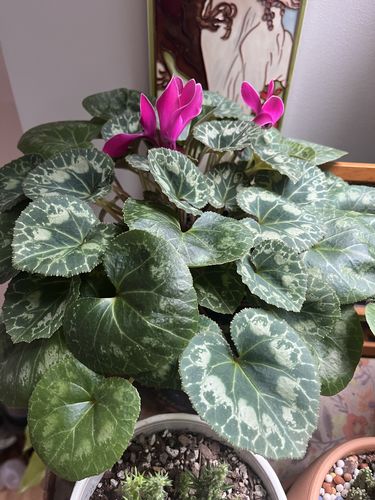
"I give all my indoor plants (over 175 plants) & outdoor gardens Elm Dirt Plant Juice. My exotic, succulents & cactuses receive a weekly watering with the juice. Every plant is pushing new growth & is healthy thriving. This Cyclamen has been receiving weekly (as directed) waterings. She has flowered recently & I am delighted how healthy she has progressed."
Linda W.
"The plant that was in my granddaughters room, got some kind of a disease or something was going on with it, lost most of its leaves, and my granddaughter was ready to throw it away, and I was bound and determined to save it. So you can see from the video That after I started using El dirt the plant fertilizer that it has lots of new growth and one steam got so tall almost to the ceiling and I wouldn't want it that tall so I cut off one of the main stands and it already has new growth"

Kathy R.
"Very happy with Plant Juice! I sprayed it on seedlings that had been started in trays. They loved it and were ready to transplant much sooner! Later used it on established plants, it made a very noticeable difference quickly. Live in 5b and had a rough gardening year to begin with. Ordered more Plant Juice for next spring's plantings. Thanks for a great product!"
Rated 4.65 out of 5 across 1,793 Plant Juice reviews.
Frequently Asked Questions
Is natural fertilizer the same as organic fertilizer?
Not necessarily. "Natural" on a fertilizer bag is not a certification. State fertilizer rules define it broadly: mined minerals can count as natural, and a "natural base" fertilizer only needs a little more than half of its materials to be natural. "Organic" carries real weight only when a third party has reviewed the ingredients, such as an OMRI Listed seal or a state organic input registration like CDFA Certified Organic.
What does organic mean on a fertilizer label?
In fertilizer rules, "organic" mostly means the material contains carbon. Some states add requirements, such as Florida requiring at least 60% of the nitrogen labeled organic to be water-insoluble. The word tells you more when it is backed by an OMRI Listed seal or a state organic input registration like CDFA Certified Organic, which confirm the ingredients are allowed in certified organic growing.
How do I read a fertilizer label?
Read two things on the back of the bag. First, the guaranteed analysis, which lists the N-P-K percentages. Second, the nutrient source statement, usually printed as "derived from," which names the actual materials. "Derived from urea, ammonium phosphate, potassium chloride" means synthetic salts. "Derived from worm castings, kelp meal, feather meal" means organic matter. The front of the bag is marketing.
Can a fertilizer labeled natural contain sewage sludge or synthetics?
Yes. Some fertilizers sold as natural or organic are made from biosolids, which is treated sewage sludge. A "natural base" blend can also include synthetic materials, as long as natural materials make up just over half. The derived-from line on the back of the bag will name biosolids or synthetic salts if they are in there.
How can I tell if a fertilizer is good for my soil?
Look for four things: a certification you can look up (OMRI Listed or CDFA Certified Organic), a derived-from line of recognizable organic ingredients, living beneficial microbes rather than nutrients alone, and a gentle formula that will not burn roots when used as directed. A biological feed builds living soil that keeps feeding plants between applications.
Is Elm Dirt Plant Juice certified organic?
Yes. Plant Juice is CDFA Certified Organic. Its ingredients are worm castings, dechlorinated water, organic alfalfa meal, organic kelp meal, lactobacillus extract and calcium extract from eggshells. Lab DNA testing verified 291 beneficial microbial species in it. It contains no synthetic salts and no biosolids.
Read the Back of the Bag
That's all there is to it. Ten more seconds in the aisle.
The front of the bag is a billboard, and "natural" is its favorite word because it's broad and cheap to print and hard to hold anyone to. Let it go right past you. Flip the bag, find the derived-from line, look for a seal, and if you're still curious, ask whether anything in there is alive, because the living part is what keeps working in your beds long after the bag is empty and folded up in the garage. You won't pay organic prices for a green costume over a bag of salt again. Your soil will notice before you do.
Want one small garden win in your inbox each week? Join the Elm Dirt email list and grow along with us. If you're still feeding anything before frost, the fall fertilizer schedule for every garden type covers what to feed and when to quit, and how to amend your soil in fall gets beds ready for spring. Oh, and if you catch a "natural" bag in the wild that turns out to be mostly salt, send it our way. We love those.
Sources: Association of American Plant Food Control Officials, AAPFCO Product Label Guide; Clemson Cooperative Extension HGIC, Reading a Fertilizer Label; UF/IFAS Extension, Fertilizer Label Guidance (SS170); Michigan State University Extension, Fertilizer Basics for the Smart Gardener; U.S. EPA, Draft Sewage Sludge Risk Assessment for PFOA and PFOS (fact sheet, January 2025).

Lauren Cain
Founder & Chemical Engineer · Elm Dirt, Kansas City
Lauren started Elm Dirt after her 6-month-old daughter grabbed fistfuls of backyard dirt and ate them. As a chemical engineer and a mom, she couldn't just shrug it off, so she dug into the science of what was really in garden soil. That rabbit hole led her to build a fertilizer line around beneficial microbes instead of synthetic chemicals. Today Elm Dirt's products are used by home gardeners, rose show champions, and organic growers across the country.