



How to Keep Flowers Blooming All Summer Long Without Deadheading Every Single Day

Can I be real with you for a second? I love my flower garden more than just about anything. But standing out there every morning before work, snipping dead blooms one by one? That's not the hobby I signed up for. I wanted something pretty to look at, not a part-time job.
And I hear this constantly from other gardeners. "My petunias were gorgeous in May and by July they looked like sticks." Or "I deadhead all the time but the minute I miss a week, everything goes to seed and I want to cry." Sound familiar?
Here's the thing nobody tells you: keeping flowers blooming all summer has way more to do with what's happening underground than what you're snipping off at the top. Get the soil biology right, and your flowers basically take care of themselves. Less work. Way more blooms. I promise it's actually this simple.
Let me show you what I mean.
Why Flowers Stop Blooming Mid-Summer (It's Not What You Think)
Most gardeners blame themselves. "I didn't deadhead fast enough." And sure, deadheading matters — when a plant sets seed, it stops pouring energy into new flowers. But if you've been out there every other day with your scissors and your garden still fizzles by August? There's something else going on.
Here's what's actually happening:
- Phosphorus runs out. Phosphorus is what makes flowers happen. When it gets depleted — or gets locked up in forms your plants can't even use — blooms just stop. Here's the wild part: most yards actually have plenty of phosphorus sitting in the soil. The problem is that without the right microbes, your plants can't get to it.
- Heat shuts everything down. When summer really cranks up, plants flip into survival mode. Without good soil biology making stress-fighting compounds (specifically something called ACC deaminase), your flowers basically decide that blooming is a luxury they can't afford right now.
- The nitrogen runs dry. That spring feeding? It's long gone by July. Synthetic nitrogen burns fast, and once it's used up, your plants are running on empty. Flowering takes a lot of energy and they just don't have it anymore.
- The soil itself gets tired. This is the one that trips people up the most. Soil organic matter feeds everything underground — all those microbes doing good work for your plants. By midsummer in a garden that's been relying on synthetic fertilizers, it's often pretty well depleted.
Fix those four things and your garden keeps going strong — even if you miss a few rounds of deadheading. (I know that's what we're all hoping for.) Not sure if your soil is the problem? Our guide on 5 signs your garden soil needs help will tell you pretty quick.
The Soil Biology Secret Behind Long-Lasting Blooms
Okay, this is the part most gardening advice skips right over. And honestly, it's the part that changed everything for me.
The secret to flowers that keep blooming all season isn't more fertilizer. It's living fertilizer. The difference is massive. What I'm talking about is the microbial community living right around your plant roots — billions of tiny organisms doing jobs your plants absolutely depend on.
Here's what that living community actually does for your flowers:
- They unlock the phosphorus that's already there. Bacteria like Pseudomonas putida and Flavobacterium produce acids that break phosphorus loose from the soil particles where it's been stuck. Your plants can suddenly access nutrients that were sitting right there the whole time. More available phosphorus means more blooms — it really is that direct. I've got a whole post on how Pseudomonas works if you want to go deeper.
- They keep nitrogen coming all season. Microbes like Azospirillum literally pull nitrogen from the air and convert it into a form your plants can use — slowly and steadily, all summer long. No big spike, no crash. Just a consistent supply. Read the full breakdown on Azospirillum and how it feeds your plants — it's pretty fascinating.
- They help roots grow bigger and stronger. Certain microbes produce auxins — plant hormones that drive root growth. More roots means your plant can drink up more water and nutrients, which means it keeps producing blooms even when July gets brutal.
- They calm your plants down during heat stress. I love this one. Microbes with something called ACC deaminase activity actually break down the compounds that trigger your plant's stress response. That stress hormone tells plants to stop blooming. The right soil bugs short-circuit the whole thing and keep your flowers going.
- They protect against disease. Trichoderma and other beneficial fungi compete with the pathogens that cause root rot and leaf disease — the stuff that cuts the season short before it should. We've got a good post on Trichoderma as your garden's fungal guardian if you want to know more.
This is exactly what Bloom Juice was built to do. It's not a bag of mineral salts dressed up with a pretty label. It's a living organic fertilizer — independently verified to contain 192 distinct microbial species, all with measurable activity in your soil.
BiomeMakers Lab Report CUX004 — percentage of microbial species in Bloom Juice with each functional capability verified.
Bloom Juice — Organic Bloom Fertilizer
192 verified microbial species. Fuels flower production from spring through first frost. Safe for kids, pets, and pollinators.

How to Use Organic Bloom Fertilizer for Maximum Summer Blooming
Good news: the schedule is really simple. No spreadsheet, no alarm reminders, no complicated mixing ratios. Here's what actually works:
Give them a good start before you even plant
Mix Bloomin' Soil into your beds or containers before anything goes in the ground. Starting with biology-rich organic matter means your plants hit the ground running instead of spending their first month just trying to survive. If you're growing in pots or planters specifically, our guide to the best soil amendments for containers is worth a quick read.
Feed every week or two, all season
Add Bloom Juice to your watering can every 1–2 weeks and just water like normal. That's really it. The microbes multiply and build up in your soil over time, so each feeding compounds on the last. By July you'll notice your plants just keep going when everything else in the neighborhood is slowing down. If you're not sure whether you need Plant Juice or Bloom Juice for your setup, we laid it all out in our Plant Juice vs. Bloom Juice guide.
Water deep, not often
Shallow watering every day actually makes your plants weaker — roots stay near the surface where it's hot and dry. Give them a good deep soak less frequently, and the roots will follow the water down where the soil stays cooler and more consistent. Soil with good organic matter holds that moisture way longer too, which is another reason the biology stuff pays off. Our post on how to water right is a good bookmark if you've ever wondered whether you're doing it correctly.
Deadhead when you can, not when you have to
Here's my real, honest take: I deadhead when I'm already out there. A quick pass once or twice a week, snipping the obvious ones while I'm watering. It helps, and I enjoy it. But I don't stress if I miss a week. With solid soil biology underneath, your plants are resilient in a way they just aren't when they're running on synthetic fertilizer fumes.
The Best Flowers That Keep Blooming All Summer (With Less Effort)
Plant selection is honestly half the battle, and most people don't think about it until they're already frustrated. Some flowers are "self-cleaning" — the old blooms just fall off on their own and new ones come right behind them. Others need more regular attention, but they respond so well to good feeding that they're still worth growing.
If you're planning a new bed and aren't sure whether to go annuals or perennials, we broke that down in our annuals vs. perennials guide. But here's a quick rundown of what I'd plant if I wanted maximum blooms with minimum fuss:
| Flower | Self-Cleaning? | Why It's Great |
|---|---|---|
| Calibrachoa (Million Bells) | ✅ Yes | Blooms non-stop spring through fall with almost no maintenance |
| Impatiens | ✅ Yes | Self-cleaning, loves shade — a workhorse for difficult spots |
| Begonias (wax type) | ✅ Yes | Handles heat beautifully, blooms continuously. See our full begonia fertilizer guide for feeding tips. |
| Torenia (Wishbone Flower) | ✅ Yes | Self-cleans readily, gorgeous in containers and beds |
| Lobularia (Sweet Alyssum) | ✅ Yes | Masses of tiny blooms all season, great ground cover |
| Zinnias | ❌ Needs deadheading | But responds so fast to feeding — worth the occasional snip |
| Geraniums (Pelargonium) | ❌ Needs deadheading | Huge payoff with biology-rich soil — customers rave about the bloom count |
| Marigolds | Partial | Some varieties are self-cleaning; all respond well to organic feeding |
The strategy I use: lead with self-cleaners so there's always something looking great, and sprinkle in the ones that need more attention for variety and impact. You get a beautiful, full garden without having to commit to daily rounds with the scissors.
Real Gardeners, Real Results
I could talk about microbes all day (ask anyone who knows me). But nothing is more convincing than hearing it from real gardeners who've seen it themselves:
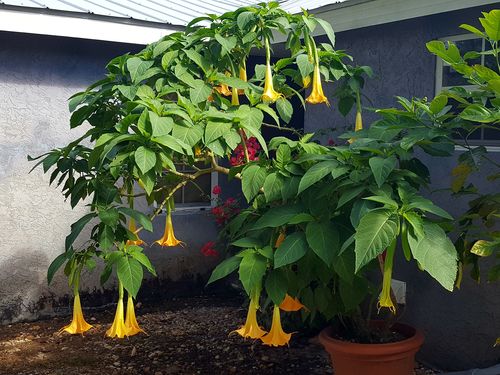
"This product took my rooted out, pale, struggling Golden Trumpet Plant to a prize winning specimen. I utilized 1 oz of both Plant Booster & Bloom Booster per gallon of non-chlorinated water, two times a week for 8 weeks. The plant was suffering from pH imbalance and nutrient burn out from synthetic fertilizers. This plant is currently so heavy due to its restoration and massive flower production that it must be pruned or transplanted!"
— Garrett R., Verified Buyer · Myakka City, FL
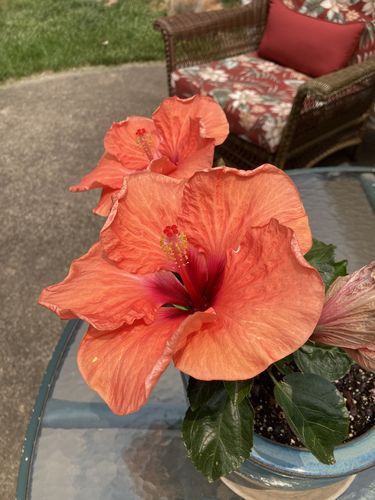
"I got this hibiscus as a Mother's Day present. Soon all the blooms fell off and no new buds developed. I really thought it would be another victim of my black thumb! After watering with Bloom Juice a couple of times, it suddenly started to develop flower buds. It is thriving and I give all the credit to your great product!"
— Susan E., Verified Buyer
"We are committed to no fertilizer, no chemicals on our property. The Bloom Juice was just what I was looking for and oh my goodness it was unbelievable! I gave my flower beds a dose while they were almost emerging from the winter season. The results were astounding and the beds are super happy!!"
— Leslie T., Verified Buyer · Western NC
"I applied Bloom Juice to several of my rose bushes. One of them that had seemed pretty dormant showed some new growth that had not occurred with previous fertilizers. And now it has a bud beginning. I am very pleased with these results."
— Carolyn Z., Verified Buyer

My Actual Summer Flower Routine (The Real One, Not the Perfect One)
This is genuinely what I do. Not what I aspire to do, not what I'd tell someone in a gardening class. The real thing:
- Once a week: I water deeply and do a casual deadheading pass while I'm already out there. The whole thing takes maybe ten minutes. I'm usually in my pajamas and coffee in hand, to be fully transparent.
- Every week or two: I add Bloom Juice to my watering can. Thirty extra seconds. That's genuinely it.
- Once a month: I top-dress my containers with some Bloomin' Soil or a scoop of worm castings. Pots burn through nutrients faster than beds do, so this one's worth the two minutes it takes.
- Whenever I notice something off: I check for pests. Plants with healthy soil biology are genuinely tougher — they can handle more pressure before things go sideways. Not invincible, but resilient in a way you'll notice.
That's the whole thing. No daily deadheading patrols, no seven-product mixing sessions, no elaborate schedules. Just consistent living biology and plants that are set up to succeed.
If you want the bigger picture of what to do all season long, our summer garden maintenance guide and essential summer garden tasks posts cover it month by month. And if your garden is already looking rough out there — don't panic. Read our mid-summer garden rescue post. It's exactly what it sounds like, and it works.
Questions I Get Asked All the Time About Summer Blooming
Do I have to deadhead flowers to keep them blooming all summer?
Nope — not if you pick self-cleaning varieties and give them the soil biology they need. When you've got the right microbes producing auxins and feeding your plants nitrogen steadily all season, flowers become a lot more naturally self-renewing. Deadheading still helps when you do it. But it's not the whole story, not even close.
What is the best organic bloom fertilizer for continuous flowering?
Something with living microbes in it — not just an N-P-K number on a bag. Bloom Juice has 192 verified microbial species and independent BiomeMakers lab testing showing 94% nitrogen release activity and 52% phosphorus solubilization. Those aren't marketing numbers — they're measured functional activity in the product. Check out our breakdown of 10 things Bloom Juice does for your garden if you want to see exactly what you're getting.
Why do my flowers stop blooming mid-summer?
Almost always a combination of things — depleted phosphorus, heat stress, and a nitrogen crash all hitting at the same time. The good news is that healthy soil biology fixes all three at once. That's why living organic fertilizers just outperform conventional stuff for long-season flowering. It's not magic, it's microbes.
What flowers bloom all summer without deadheading?
Million bells (calibrachoa), impatiens, wax begonias, torenia, and sweet alyssum are all naturally self-cleaning — the old blooms fall off without you having to do anything. Put them in good biology-rich soil and water them consistently, and they'll go all season with very little from you.

The Bottom Line: Your Soil Can Do a Lot of This Work For You
A gorgeous flower garden all summer doesn't have to cost you an hour of labor every morning. I know that's what a lot of people think it takes — deadheading, fertilizing, fussing. But when your soil biology is actually doing its job, your plants become so much more capable on their own. They bloom harder, bounce back faster from heat, and keep producing even when life gets busy and you miss a week.
That's the whole idea behind Elm Dirt. Not just fertilizer — living fertilizer. The kind that works with your garden, not against your schedule.
Grab a bottle of Bloom Juice, use it for a few weeks, and see what your flowers look like by July. I think you'll be really glad you did — and your garden will be even gladder.
Ready for a Garden That Blooms Itself?
Bloom Juice — 192 microbial species verified by BiomeMakers lab testing. Safe for kids, pets, and pollinators. Ships fast from Grandview, Missouri.
