



Chemical-Free Vegetable Garden: Feed Plants Without Synthetic Fertilizers

Can you really grow a vegetable garden without synthetic fertilizers? I get some version of this question every single week. And my answer is always the same: yes, and you'll wish you'd done it sooner.
Here's my honest confession — I didn't set out to start a fertilizer company. I set out to figure out what the heck was in my garden soil after my baby daughter ate a fistful of it. (Classic toddler move. Terrifying mom moment.) The more I dug into it — literally and figuratively — the more I realized that conventional fertilizers were creating problems I didn't even know I had. Chemical salts. Dead soil. Runoff. A garden that needed more and more inputs just to stay afloat.
That's what pushed me to build something different. And what I found on the other side? A chemical-free vegetable garden that's genuinely easier to manage, produces better food, and doesn't make me nervous when my kids are playing in it.
Why Synthetic Fertilizers Are Working Against You
I know the bag looks appealing. "Feeds plants for 3 months!" Big promise, very tidy. But what the label skips over is kind of important.
Most synthetic fertilizers are salt-based. They deliver a fast hit of nitrogen, phosphorus, and potassium — those three numbers on the bag — and that's about it. Three nutrients. Your plants actually need more than 50 to really thrive. So right out of the gate, you're leaving a lot on the table.
But here's the part that got me when I first learned it: those chemical salts slowly kill the microbial life in your soil. And those microbes are the whole game. They're the ones breaking down organic matter, moving nutrients into forms plants can actually absorb, protecting roots from disease, and keeping your soil loose and spongy instead of hard and compacted. Wipe them out, and your soil becomes completely dependent on you to supply everything synthetically. Forever. It's exhausting just thinking about it.
And then there's the obvious stuff — if you've got kids or pets in your garden (or you're eating what comes out of it), chemical fertilizer residue is just something you don't want to be dealing with. Our post on pet-safe fertilizers goes into this more if it's a concern for you.
The case for stopping synthetic fertilizers isn't really about labels or feel-good gardening. It's about building a garden that gets easier every year instead of harder. And if you want to see what the runoff from all those chemicals actually does downstream, our piece on fertilizer runoff is worth a read.

So What Do You Use Instead?
Living soil science. That's the short answer. Plants evolved alongside soil microorganisms for millions of years. When that relationship is intact, your plants feed themselves way more efficiently than any bag of fertilizer could manage. Your job is just to support the biology — not replace it.
Here's what that actually looks like in practice.
1. Worm Castings — Your Slow-Release Foundation
Okay, worm castings are worm poop. I know. But stay with me — it is genuinely the most perfect plant food nature produces. When organic matter passes through a worm's gut, it comes out loaded with beneficial microorganisms, natural growth hormones, and nutrients in forms plants can absorb immediately. It sounds too simple. It really works.
Our Worm Castings are Class A compost certified — that's third-party verified, the highest safety standard for vermicompost. Pathogen-free, safe for edibles, and (this one matters to me) won't burn seedlings no matter how generously you apply it. Mix into your soil before planting, side-dress around your tomatoes mid-season, or brew them into a worm tea. Flexible stuff. And if you want the actual science behind why they work so well, our worm casting science post breaks it all down.
The big difference from synthetics: worm castings feed slowly and consistently over months. No spike, no crash. Just steady nourishment for your whole growing season.
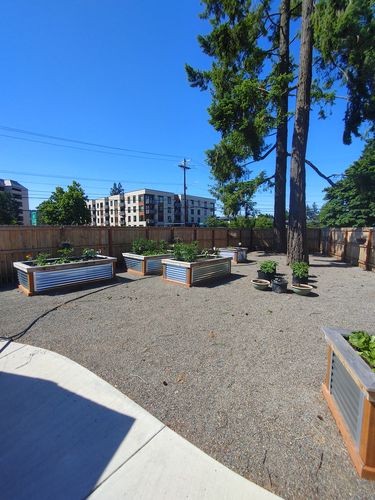
"I have used Elm Dirt products in my 1st time ever raised beds garden boxes. Each plant has there premier worm castings. I feed twice a month with Plant Juice and every 6 weeks with Bloom Juice. I started my garden in mid May from 2" starter pots. I'm very pleased with the progress of my garden and the natural organic products I use."
Worm Castings
Class A certified vermicompost. No burning, no chemicals, just living nutrition your vegetable garden can actually use.
2. Living Liquid Fertilizer — The Fast-Acting Half of the Equation
Worm castings handle your slow release. But during peak growing season — when your tomatoes are loaded with flowers or your peppers are finally starting to set — your garden needs something that can deliver nutrition fast. That's where a living liquid fertilizer comes in.
Our Plant Juice is CDFA Certified Organic and contains 291 lab-verified microbial species, independently confirmed by BiomeMakers (one of the leading soil science labs in the country). You can see the full breakdown on our nutrient and microbial analysis page. I'm proud of that data. It's the kind of thing most fertilizer companies can't show you because they don't actually have it.
🔬 What's Actually in Plant Juice
BiomeMakers Report CUX005 (May 2024) found that the microbial species in Plant Juice perform the following functions:
- 84% of species produce auxin/IAA — the natural hormone that drives root and shoot growth
- 80% of species release inorganic nitrogen — making nitrogen available without any synthetic inputs
- 82% of species express ACC deaminase activity — helping plants push through drought and transplant stress
- 56% of species provide biocontrol activity — natural fungal and disease protection
- 27% of species solubilize phosphorus — unlocking nutrients already sitting in your soil
- 70% of species produce cytokinin — supporting cell division, fruit set, and vigorous growth
Key species include Azospirillum, Pseudomonas putida, Flavobacterium, Trichoderma, Lysobacter, Sphingomonas, Mortierella, and hundreds more — each one doing a specific job in your soil.
In plain English: you're adding a whole community of living microbes to your soil that help your plants grow stronger, fight off disease, handle dry spells, and get more nutrition out of what's already down there. You mix it with water. Apply every two weeks. That's genuinely the whole routine. Our post on how beneficial microbes help plants grow explains exactly why this works if you want to nerd out on the science.
"I love this juice. My garden has grown much faster than ever before. I just fertilize with it every two weeks then stand back and watch it grow!"
"This is the best vegetable garden yet!! Even though my tomato plants have a virus it's still producing leaves and fruit. My long sweet pepper plants are 5' high. Wow."
Plant Juice — CDFA Certified Organic Liquid Fertilizer
291 lab-verified microbial species. Safe for people, pets, and pollinators. Over 1,626 reviews averaging 4.8 stars. 180-day money-back guarantee.

3. Compost — Boring Name, Incredible Results
Everybody knows compost is good. Not everybody does it. If you're not composting yet, I want to encourage you — it doesn't have to be elaborate. Kitchen scraps, yard waste, a corner of your yard, and time. That's it. And if yours keeps stalling out, we've got tips for why compost goes slow and how to fix it.
Compost matters in a chemical-free garden because it rebuilds soil organic matter — the stuff synthetic fertilizers quietly deplete over time. If you want all the benefits without waiting a year to harvest your first batch, our Ancient Soil is a worm casting blend with 250+ verified microbial species already active and ready to go. Think of it as composting on fast-forward.
4. Cover Crops — Free Fertilizer from Your Own Soil
This one takes some patience, but it's worth knowing about. Planting clover, buckwheat, or hairy vetch between seasons does something kind of amazing: it adds organic matter back into the soil, smothers weeds, and — if you're using a nitrogen-fixing legume — actually pulls free nitrogen out of the air and deposits it in your beds. You just till it in before planting season. It costs almost nothing and your soil ends up genuinely better than it started. Our post on the nitrogen cycle in your garden explains the mechanics if you're curious how legumes pull that off.
5. Mulch — The Thing Most Gardeners Underdo
Straw, wood chips, shredded leaves — pile it on. Seriously, most people use way too little. Two to three inches around your plants holds moisture in, keeps soil temperature stable, suppresses weeds, and feeds your soil biology as it slowly breaks down. It's not glamorous, but it will cut your watering time noticeably and your plants will show it. We wrote a whole guide to mulching for a healthier garden if you want the full breakdown.
A Simple Feeding Schedule (Because I Know You Want This)
If you're coming from a synthetic fertilizer routine, this might feel like a lot of moving pieces. It's really not — once you've done it once, it becomes second nature. Here's the system thousands of our customers use. Low effort. High payoff. You can also grab the full Elm Dirt feeding schedule for a printable version with timing by crop.
- Before planting: Mix worm castings or Ancient Soil into your beds at about 10–20% of total soil volume. You're seeding the soil with microbes and giving your transplants a rich, fluffy place to root into.
- At planting: Drop a handful of worm castings into each planting hole. The microbes immediately start building a protective zone around the roots. Takes 30 seconds per plant.
- Every 2 weeks: Water in Plant Juice per the dilution instructions. This keeps your soil's microbial population active and restocks all those beneficial organisms continuously throughout the season.
- When flowering starts: Switch to Bloom Juice. It's formulated with 192 microbial species specifically helpful during the reproductive stage — 94% that perform nitrogen release and 52% that solubilize phosphorus, right when your plants need it most for fruit set.
- Every 4–6 weeks: Side-dress with fresh worm castings. As your plants pull nutrients from the soil, you're quietly topping it back up.
- End of season: Top dress your beds with compost or worm castings and leave them for the winter. You're building your soil, not just using it. Our fall garden prep guide walks through the whole close-out process.
No measuring grams of chemical powder. No burned seedlings. No second-guessing. Just organic inputs, living soil, and a garden that rewards you more every single year.
Want more help building this from scratch? Our organic vegetable gardening guide is a great starting point, and our guide to prepping soil before spring planting gets very specific about what to do and when.

Why Organic Works Better in the Long Run (And I Mean Actually Better)
Your soil is alive. That's not a metaphor — there are billions of bacteria, fungi, nematodes, and protozoa in every teaspoon of healthy garden soil, and they're the engine behind everything that makes plants grow well. When that system is intact, it works for free. When you disrupt it with synthetic inputs, you end up doing all the work yourself. Indefinitely.
Synthetic feeding bypasses the biology entirely. You're delivering nutrients directly to the plant while slowly starving the microbial community. Over time — and I've seen this in the soil science — your dirt gets harder, less absorbent, and more prone to disease. You need more fertilizer to get the same results you used to get. It's the opposite of what you want. Our comparison of organic vs. synthetic fertilizers and soil health research goes deep on this if you want the data.
Organic feeding — especially with living inputs — goes the other direction. Azospirillum pulls nitrogen straight from the air. Pseudomonas putida suppresses soil-borne pathogens. Trichoderma acts as a natural fungal biocontrol. Flavobacterium breaks down organic matter and keeps nutrients cycling through the system. They do this automatically, every day, once your soil biology is healthy. And they don't send you a bill.
This is why gardeners who go organic don't usually rave about their results at week two. They rave at the end of year two or three, when their soil has had time to fully come back to life. The results compound. Your garden gets richer, your harvests get bigger, and the whole thing gets easier — not harder — over time. Our post on gardening easier with microbes is one of my favorites if you want to dig into this more.
And if you want to connect what's happening in your garden soil to your family's health — not in a scary way, just in a "this actually matters" way — check out my piece on human health and soil health. It changed how I think about gardening entirely.
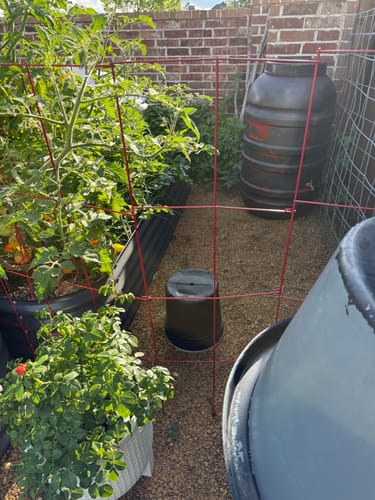
"I live in Texas and the soil is really thick clay. We call it gumbo down here and there's a lot of plants that do not like my soil — worm castings has really helped my plants through the tough soil."
Questions I Get All the Time
Can I actually grow vegetables without any synthetic fertilizers?
Yes — completely. Worm castings, compost, and living liquid fertilizers like Plant Juice will feed your vegetable garden through an entire season without a drop of synthetic chemistry. Millions of gardeners do this every year, and a lot of them will tell you their best harvests came after they made the switch, not before.
What's the best organic fertilizer for a vegetable garden?
Honestly? It's not one thing — it's the combination that does it. Worm castings give you slow, steady nutrition and a living microbial foundation. A liquid fertilizer like Plant Juice (CDFA Certified Organic, 291 lab-verified microbial species) delivers fast-acting nutrients when your plants are working hard. Use both together and you've covered all the bases for a truly chemical-free vegetable garden.
Are organic fertilizers actually safe for kids and pets?
Yes. Ingredients like worm castings, compost, and plant extracts are safe for kids, pets, and pollinators. Synthetic fertilizers contain chemical salts that you genuinely don't want in contact with the people you love. Our products are explicitly made to be safe for everyone who shares your garden. See our pet-safe fertilizer guide for specifics.
How do I transition from synthetics to organic?
Stop the synthetic applications, amend your soil with worm castings or compost to start rebuilding the microbial life that's been depleted, and get on a regular liquid fertilizer routine (every two weeks is a great cadence to start with). Your soil biology will come back. Year one might feel modest. Year two is usually when people get excited. Just be patient with it.
What exactly are synthetic fertilizers doing to my soil?
Over time, they kill off the beneficial microorganisms your soil depends on — leaving it reliant on chemical inputs just to function at a basic level. The chemical salts also accumulate and make it harder for plant roots to absorb water. And excess fertilizer leaches into groundwater, which is a whole other problem. Organic methods build soil biology instead of depleting it. See our post on the hidden costs of ignoring soil health for more.
How often should I apply organic fertilizer to my vegetable garden?
A reliable rhythm: mix worm castings into your soil at planting, then refresh with a side dressing every 4–6 weeks. Apply Plant Juice every two weeks throughout the season. That combo keeps your soil biology active and your plants consistently nourished without overwhelming the system. The full Elm Dirt feeding schedule has timing broken down by crop if you want something more specific.
You Really Can Build Something Better Here
I want to be clear about something. Going chemical-free isn't a sacrifice. You're not giving up yield or convenience or results for some abstract sense of doing the right thing. You're trading a system that slowly drains your soil for one that slowly builds it. That's a genuinely better deal.
The payoff is real. Tomatoes that actually taste like tomatoes. Peppers that produce all season without drama. Soil that smells earthy and alive because it is alive. A garden you feel good working in — and good feeding your family from.
Start wherever you are. A bag of worm castings. A bottle of Plant Juice. One season of skipping the synthetic stuff. I'd be shocked if you wanted to go back.
Start Your Chemical-Free Garden Today
Plant Juice + Worm Castings is the foundation every organic vegetable garden needs. CDFA Certified Organic, third-party verified, 180-day money-back guarantee. Free shipping on orders over $50.
Shop Plant Juice — $19.95 → Shop Worm Castings — From $14.99 →